Feeds:
Posts
Comments

Not everyone’s favourite month as the light of the year reduces towards winter. But more often than not this transition offers a sweet spot, a ‘slack tide’ in the season before the next big change. Admittedly, Storm Claudia rather interrupted that vision and we were lucky and thankful to emerge (on Sunday 16 November) into a gentle weekend.
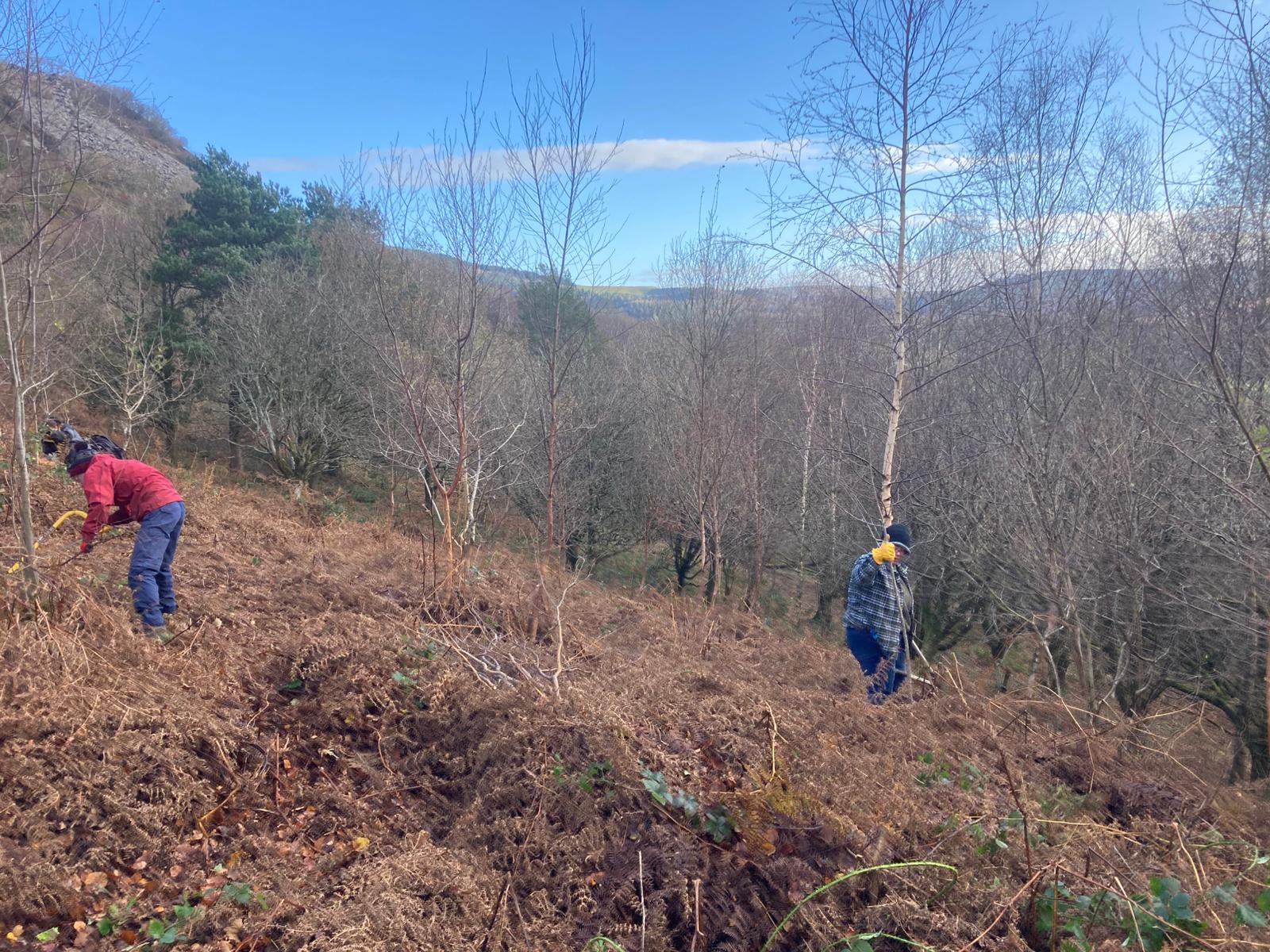
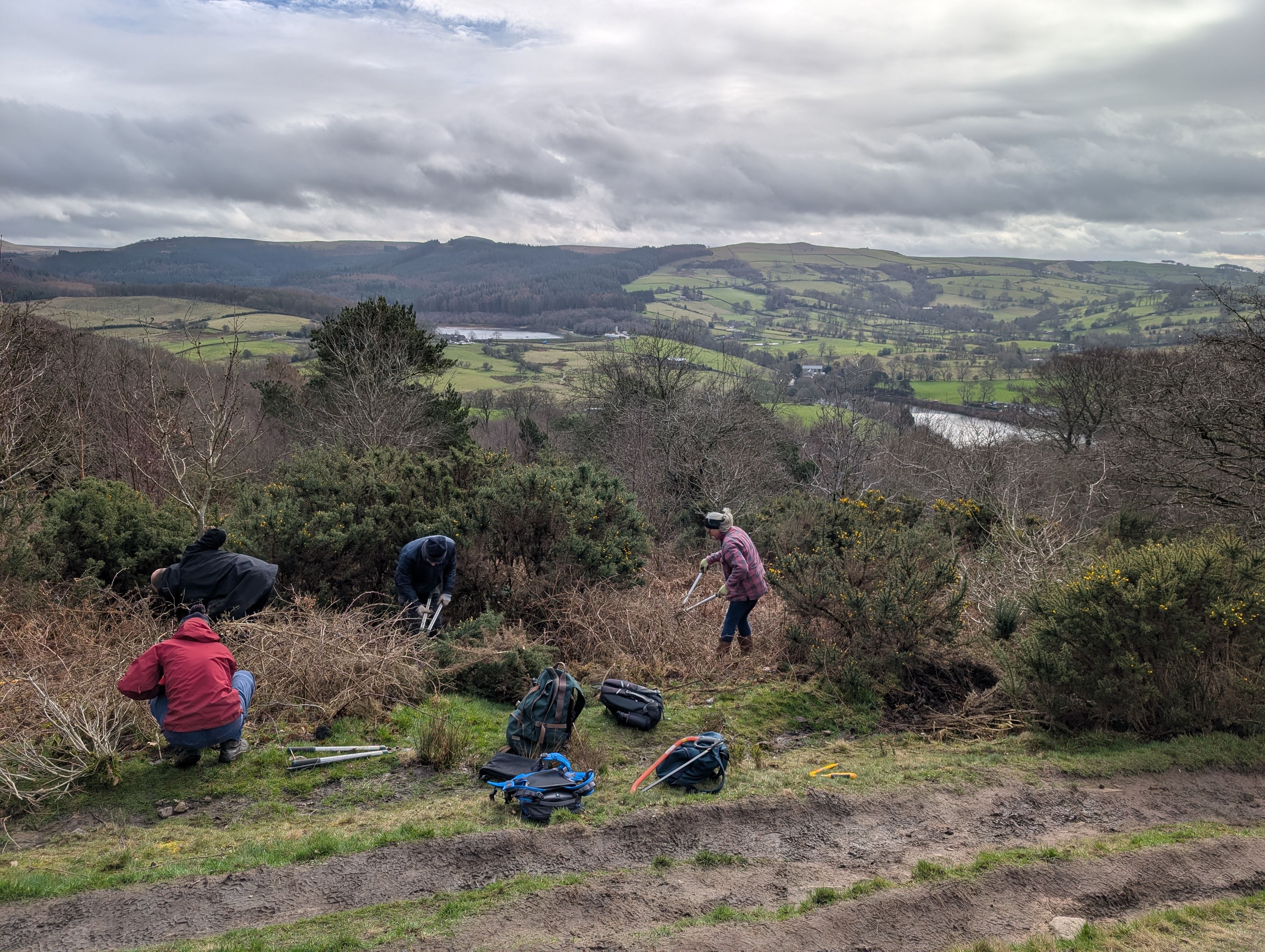
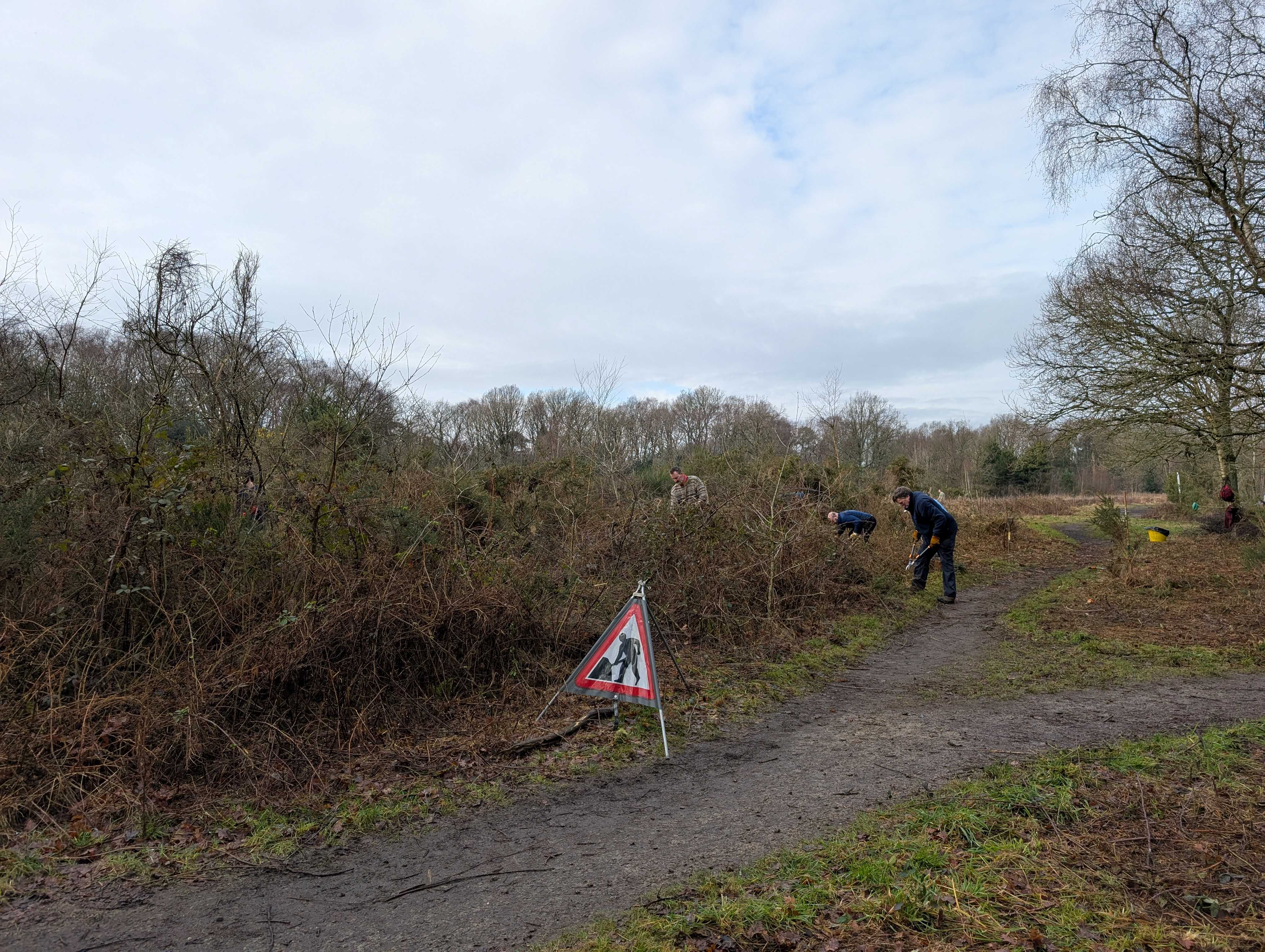
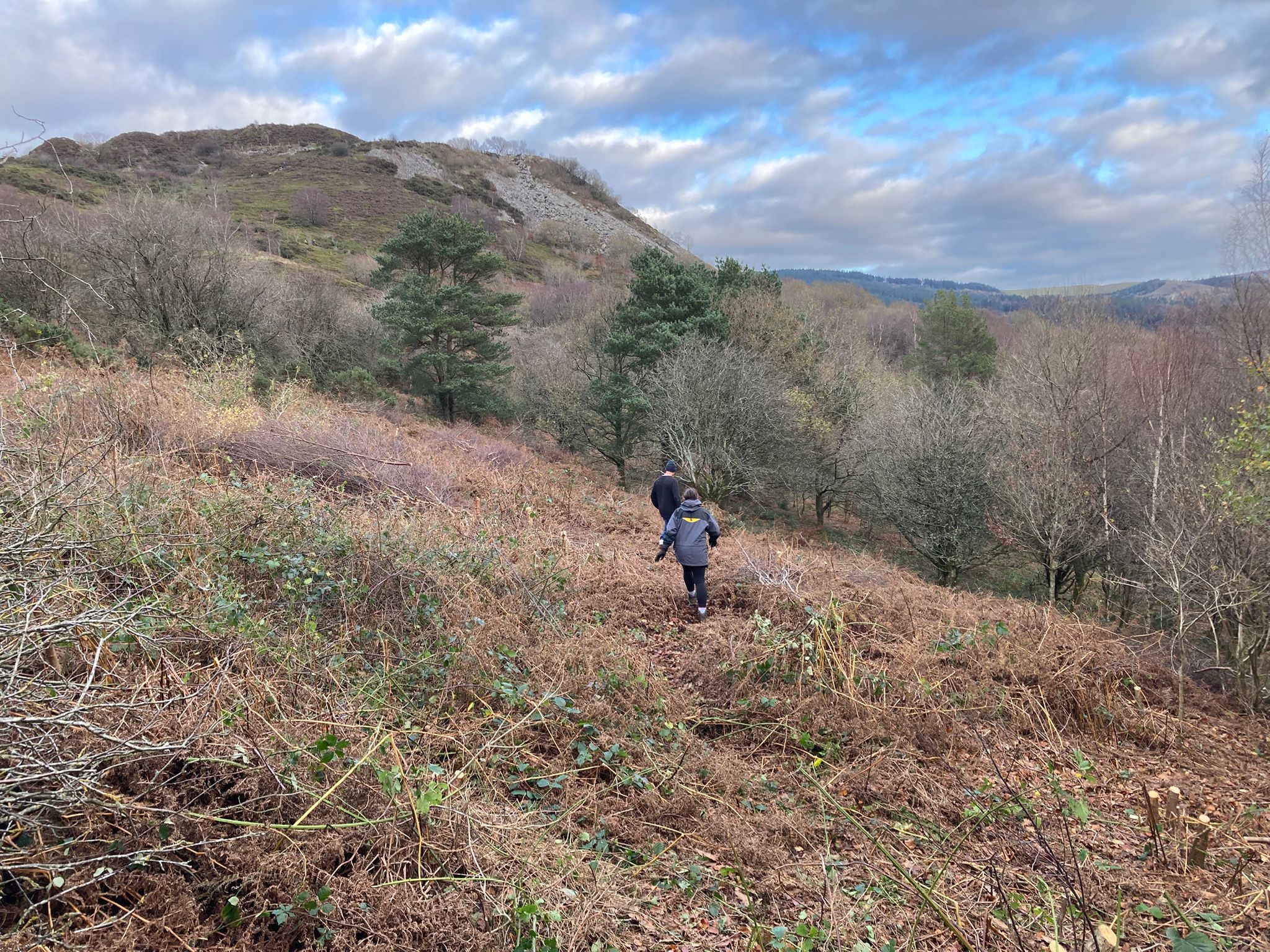
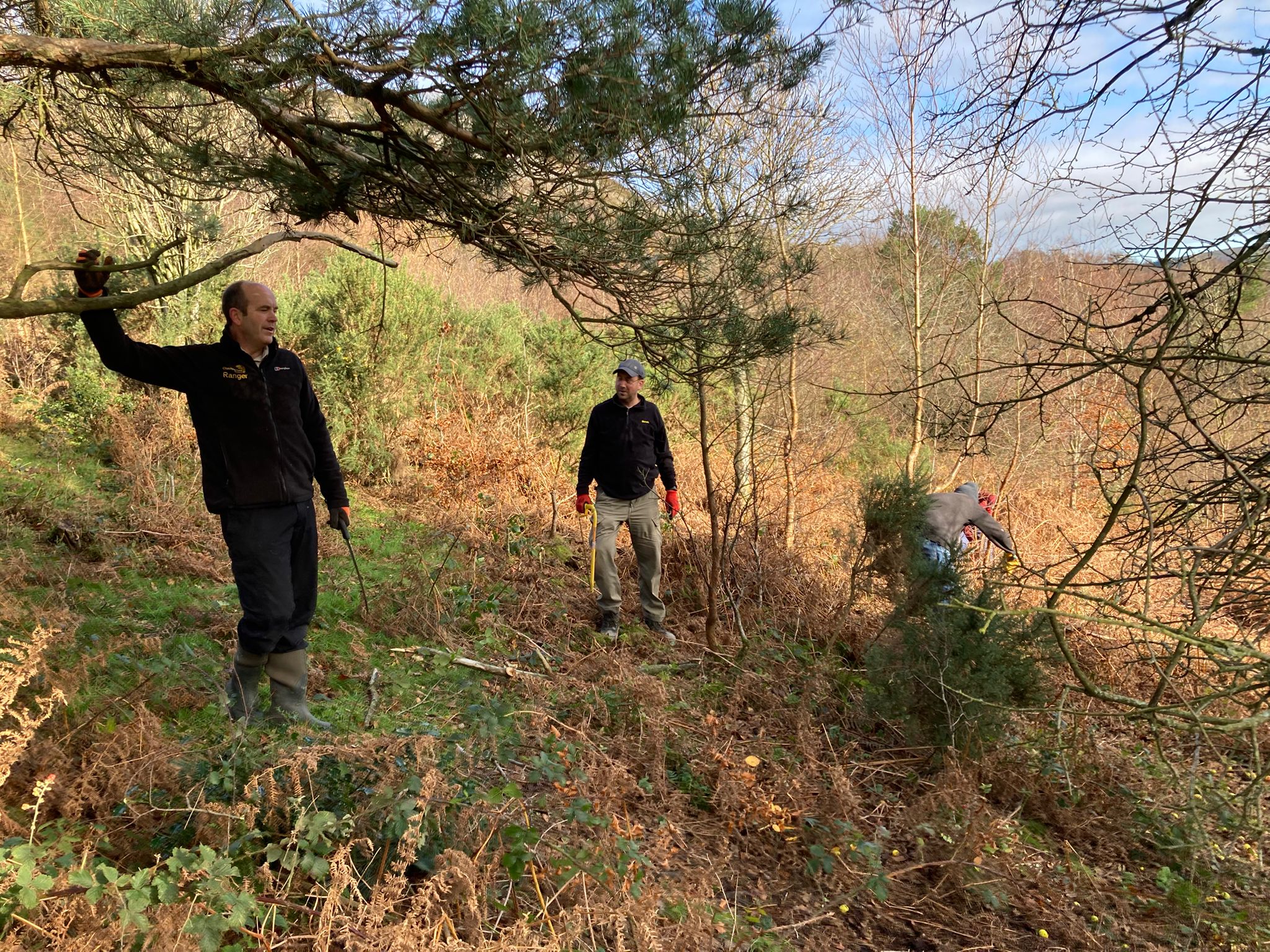
A cool start saw the eager team of eight SMCV volunteers meet up at the muddy car park below the woods of Tegg’s Nose where Ranger Martin welcomed us back. He described the task – nominally Heathland Regeneration. In terms of Tegg’s Nose this means reducing the spread of the lower wood upslope into the heather-covered heath that covers these southerly slopes of the rocky ‘Nose’.
Our site of work was to be at the top edge of the wood and involved a steep walk up the trail through the mature oaks and beech. Wildlife was present before we left the cars; we watched a scurrying stoat zigzag between holly trees and mounds of fallen leaves, and a mewing buzzard swooped across the woodland edge by the reservoir.
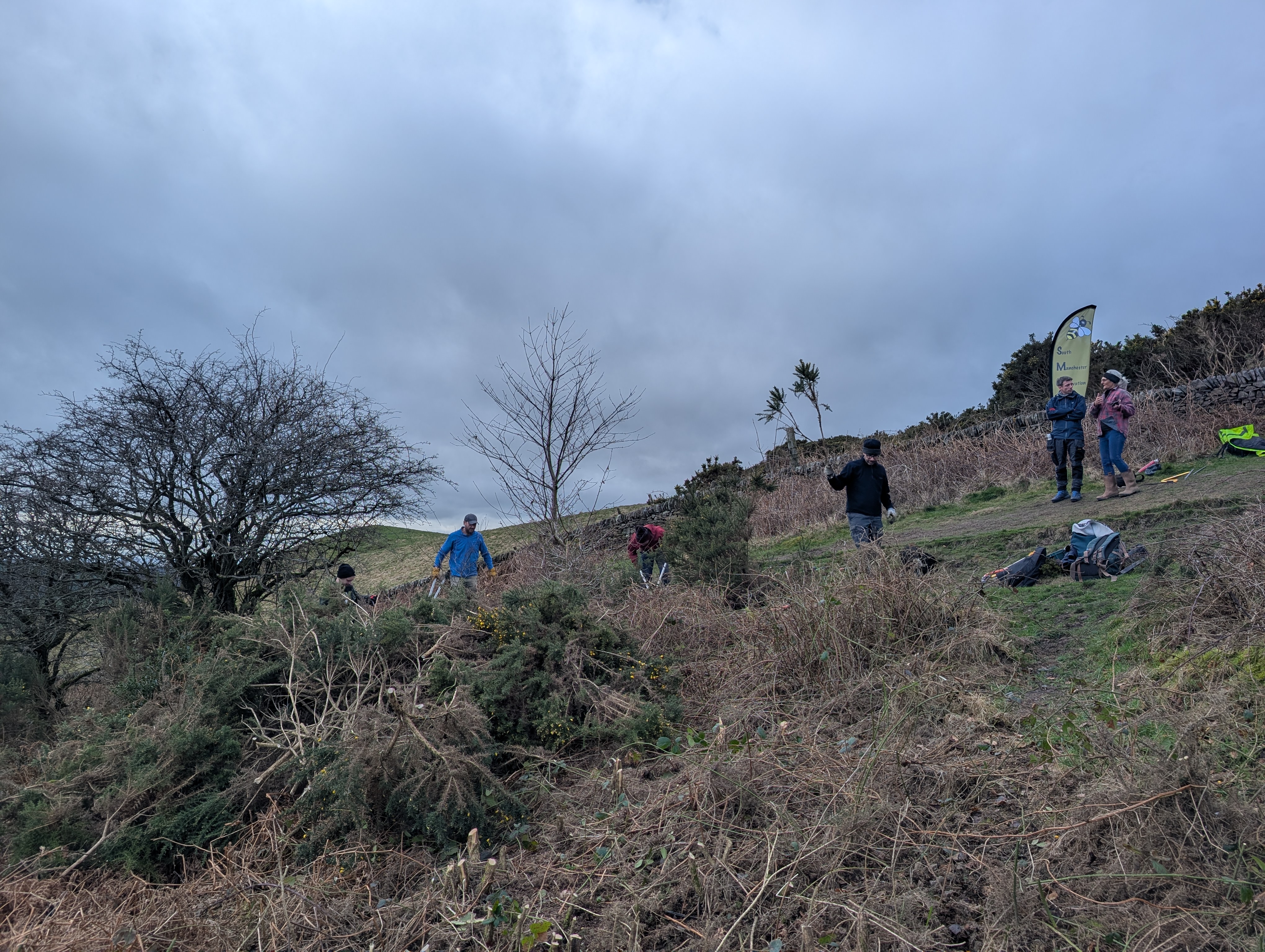
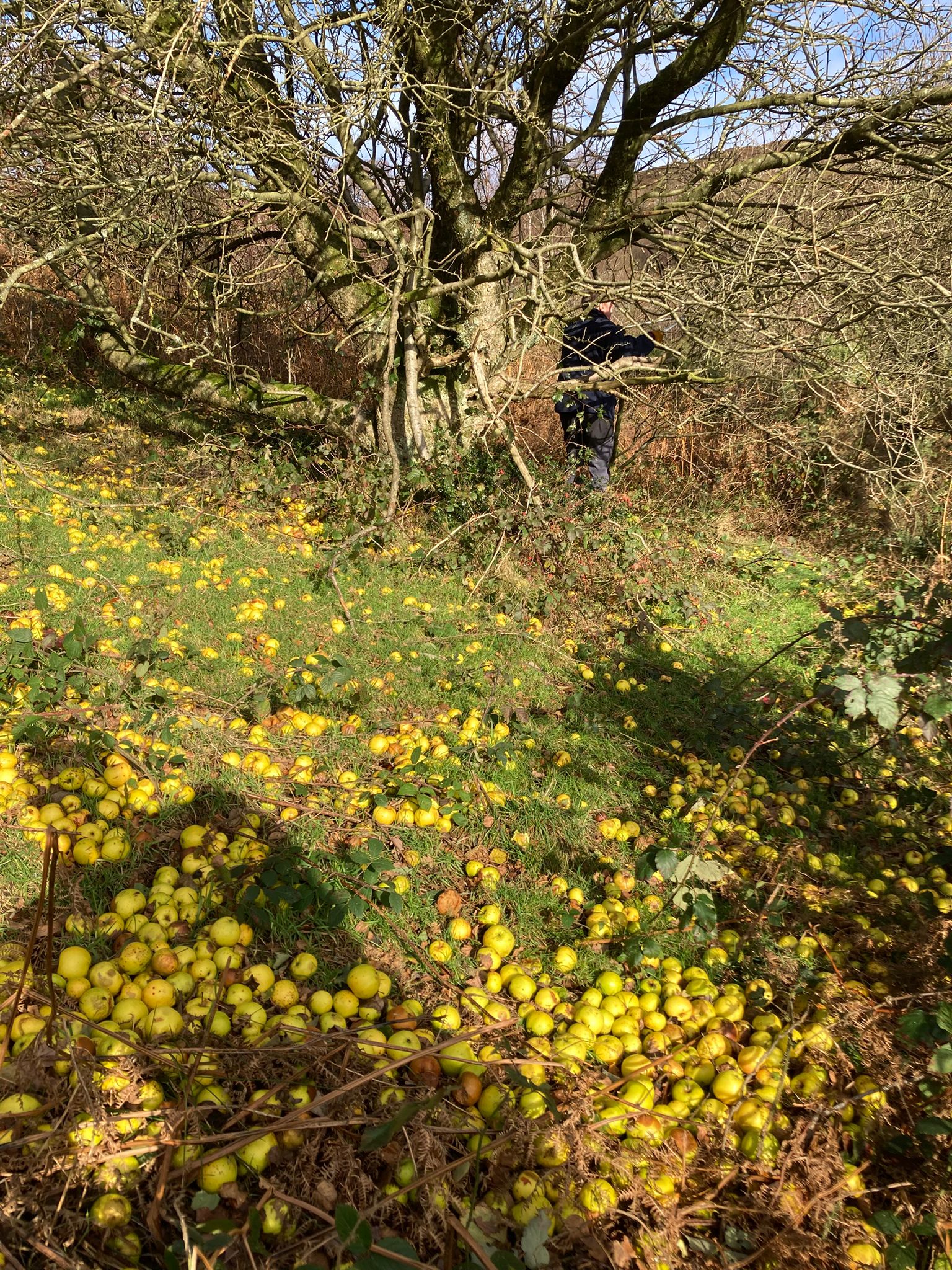
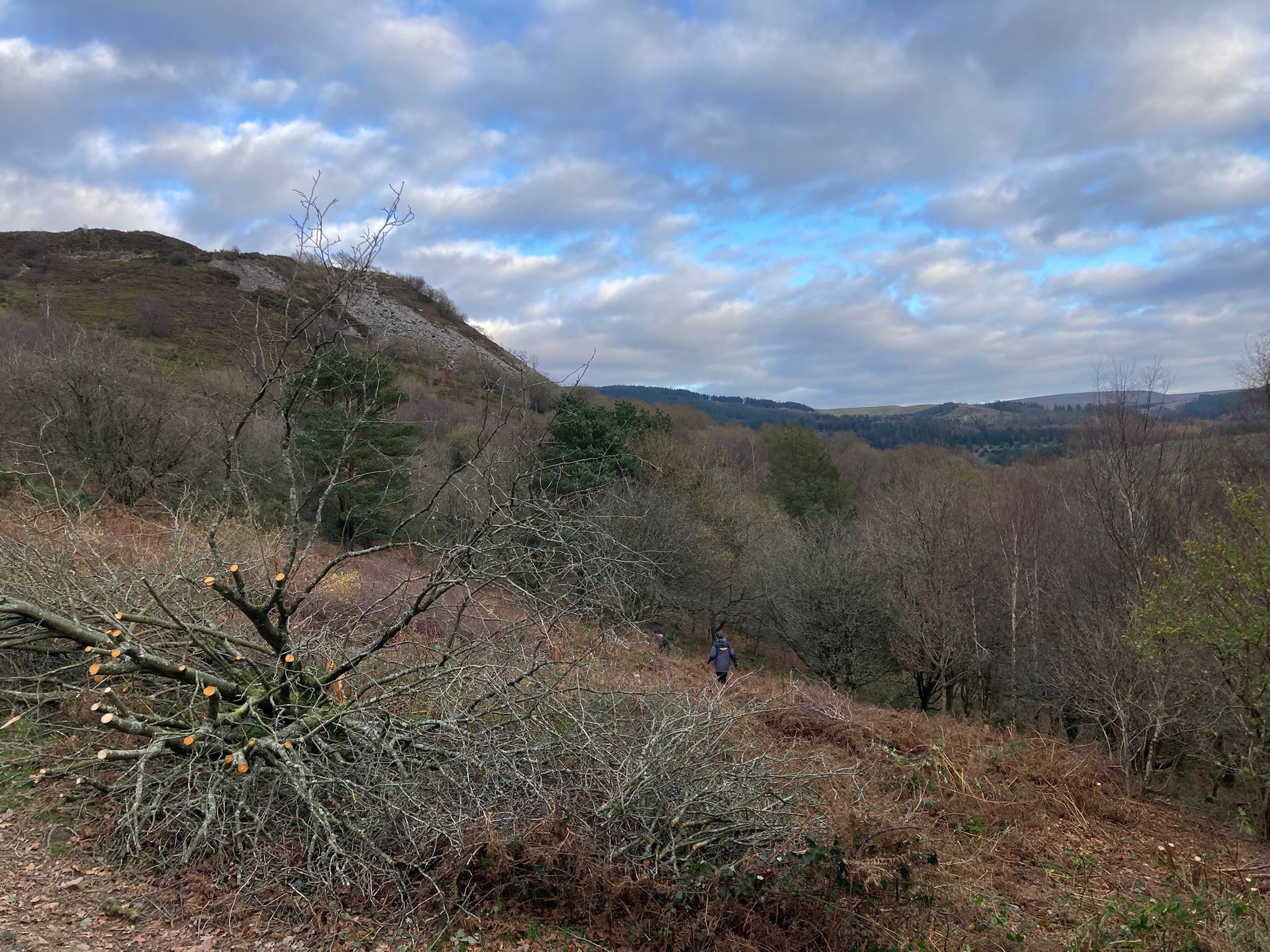
The aftermath of Claudia was demonstrable in the nearby village of Langley, with stoved-in rooves sadly evident. The storm’s EastNorEast winds had caused unusual havoc in the woods too, and split and broken branches had tumbled and been cleared from the track. Higher up some trees had uprooted completely, and one oak had split three ways. This proved our first ‘bonus’ task; clearing the twigs and limbs from the path to allow walkers through. Our main task lay beyond across the died-back bracken of the slope of scrub. This zone is what’s called an ‘ecotone’, a zone between differing habitats. One aim is to maintain the ecotone – with a gradual shift between the woods and the heath. It is a constant task as the natural pioneer species willingly spread out into the light above the wood. These include birch, mainly, with eventual oak, random apple trees, rowans, gorse, ash, beech, pine and hawthorn. Martin told us that heather regeneration was possible since the soil’s seed bank is viable for up to 70 years. Therefore given light (and less bracken) the heather can continue to establish and thrive.
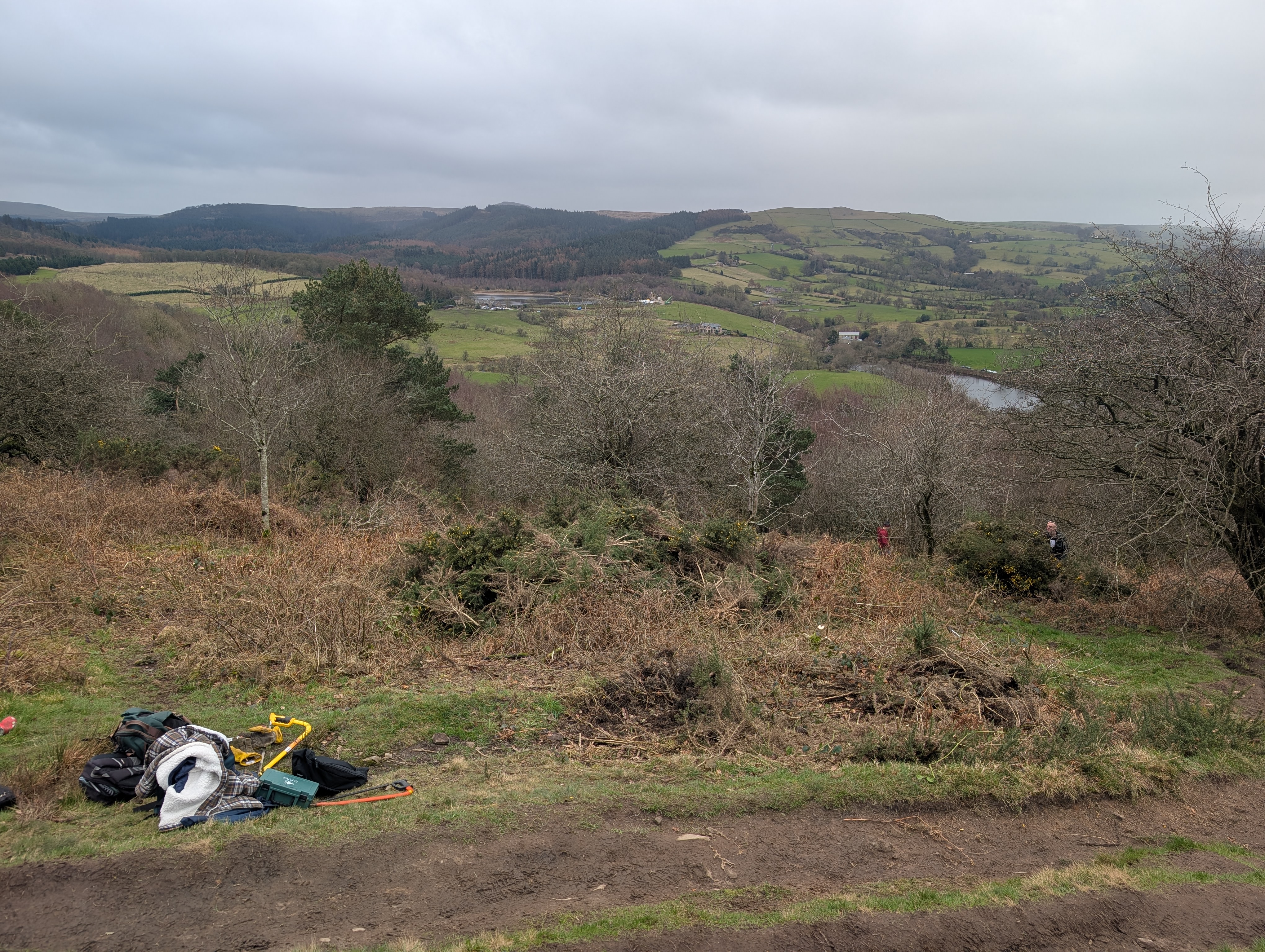
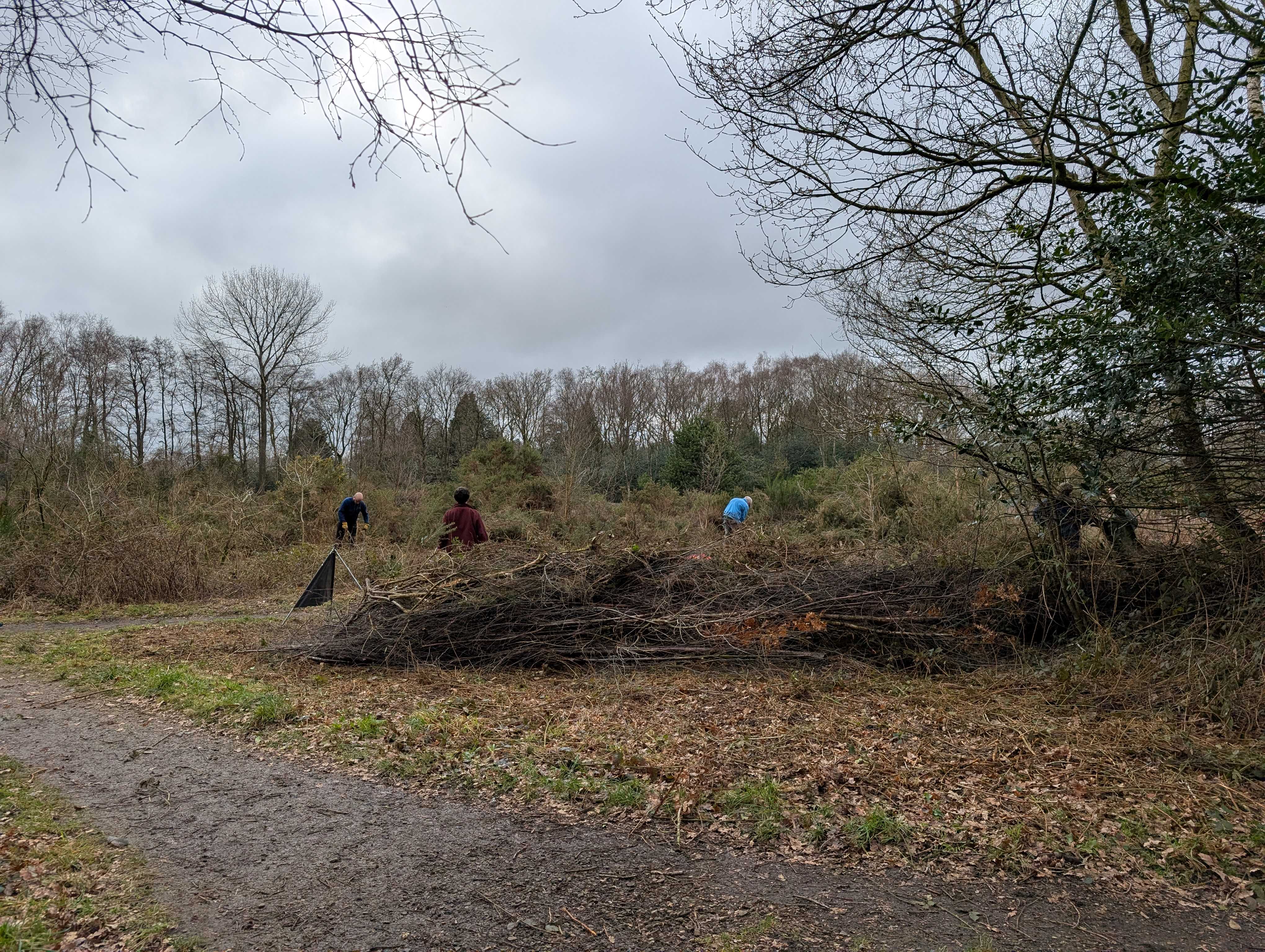
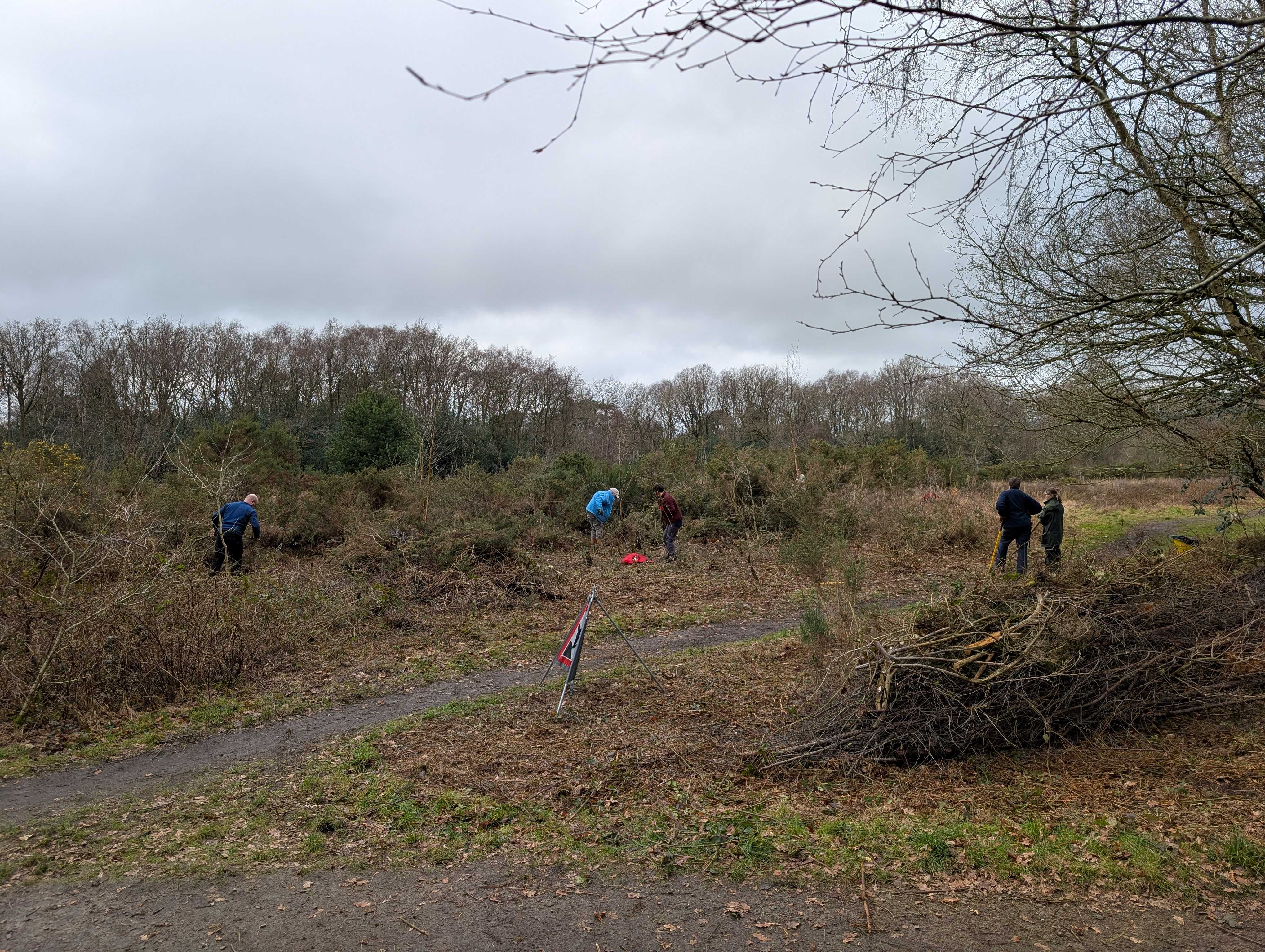
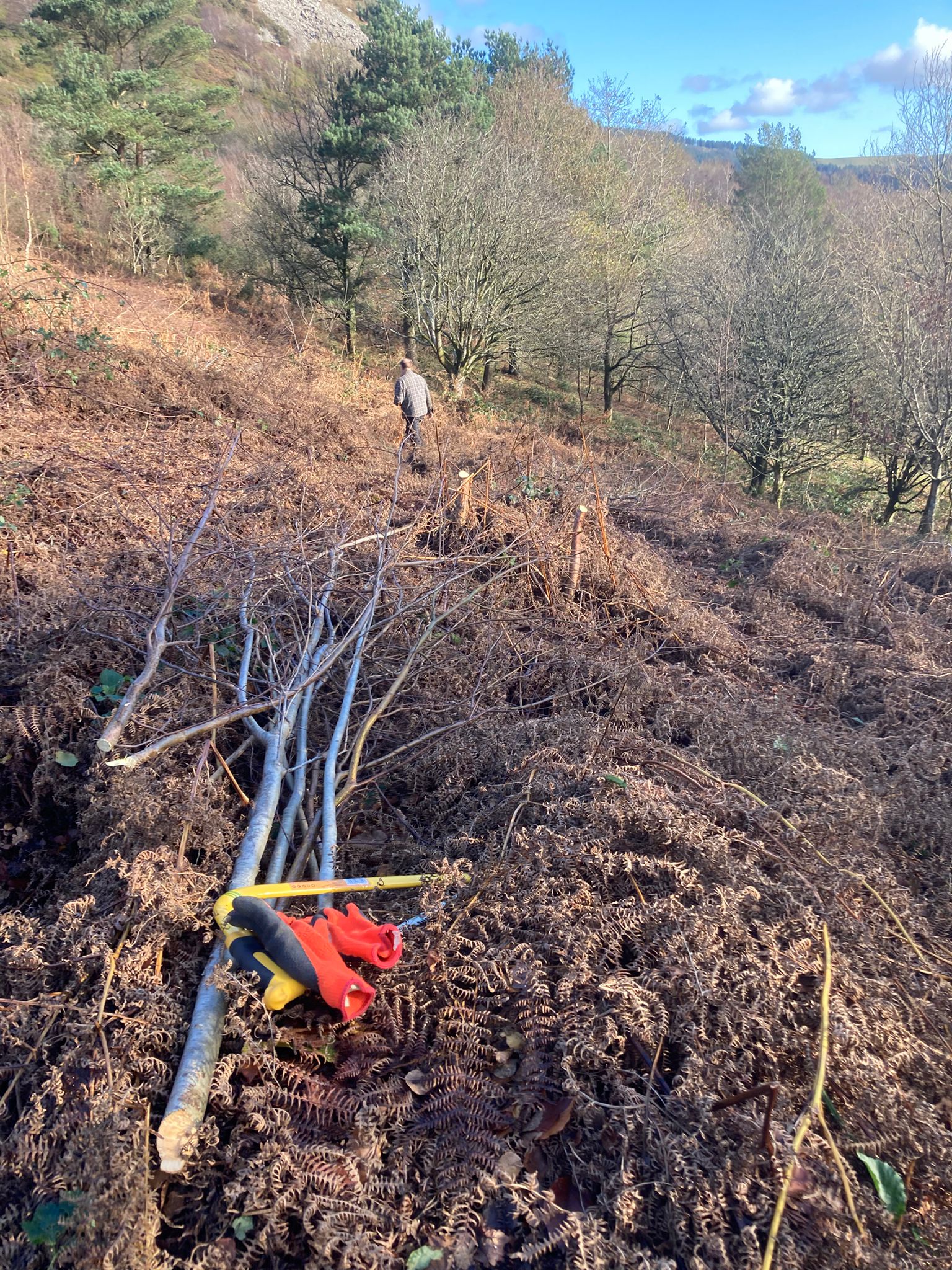
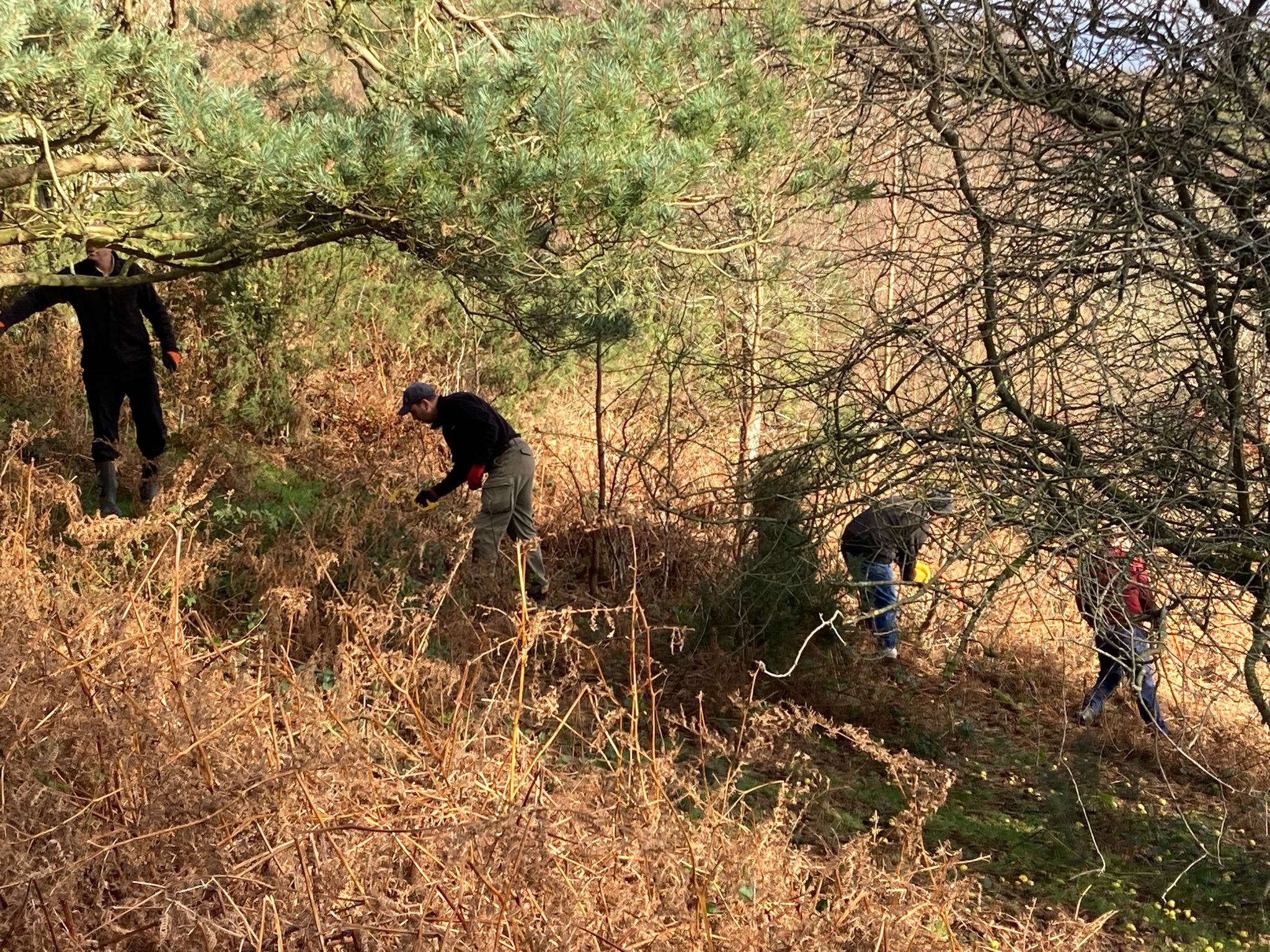
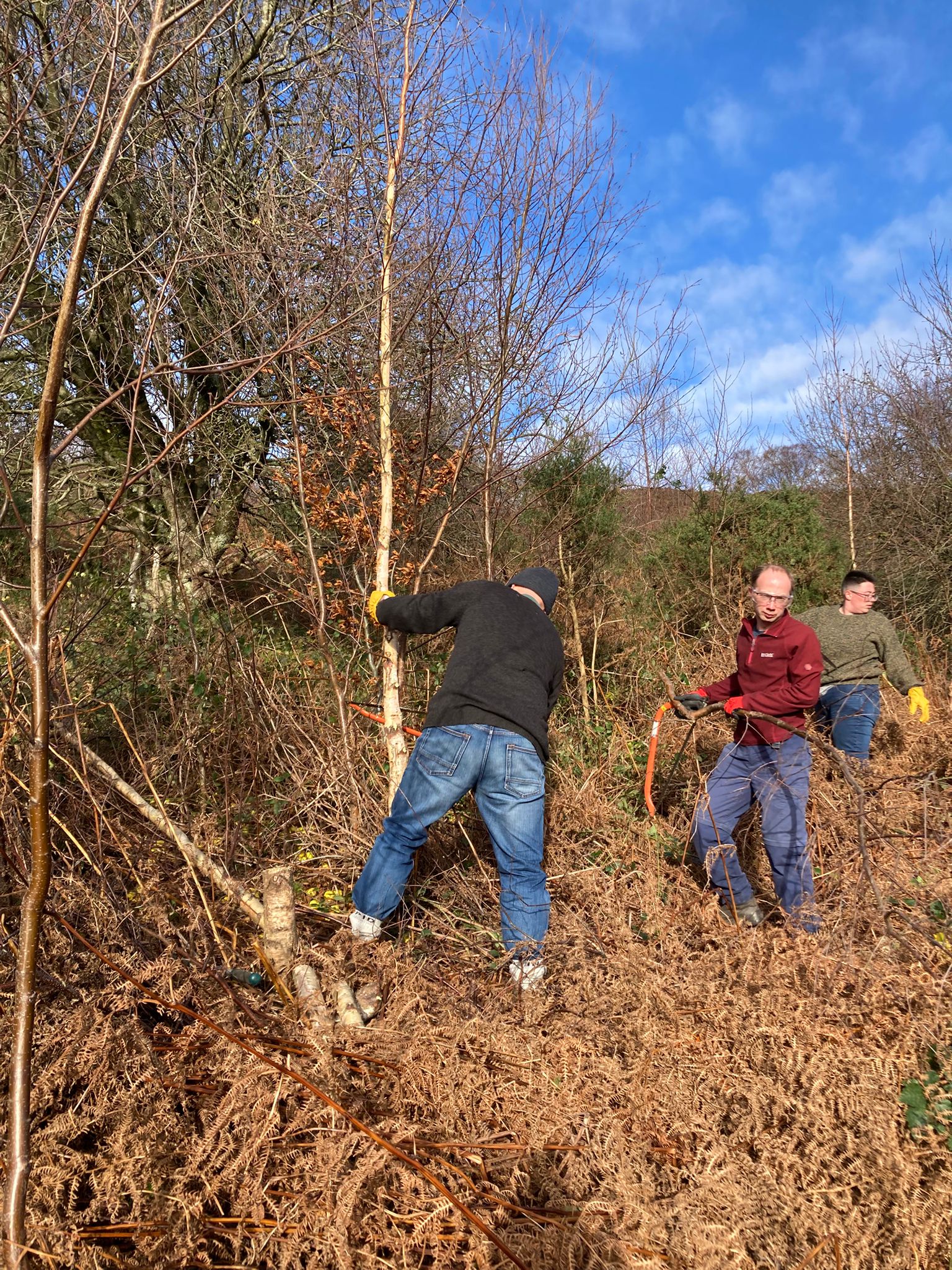
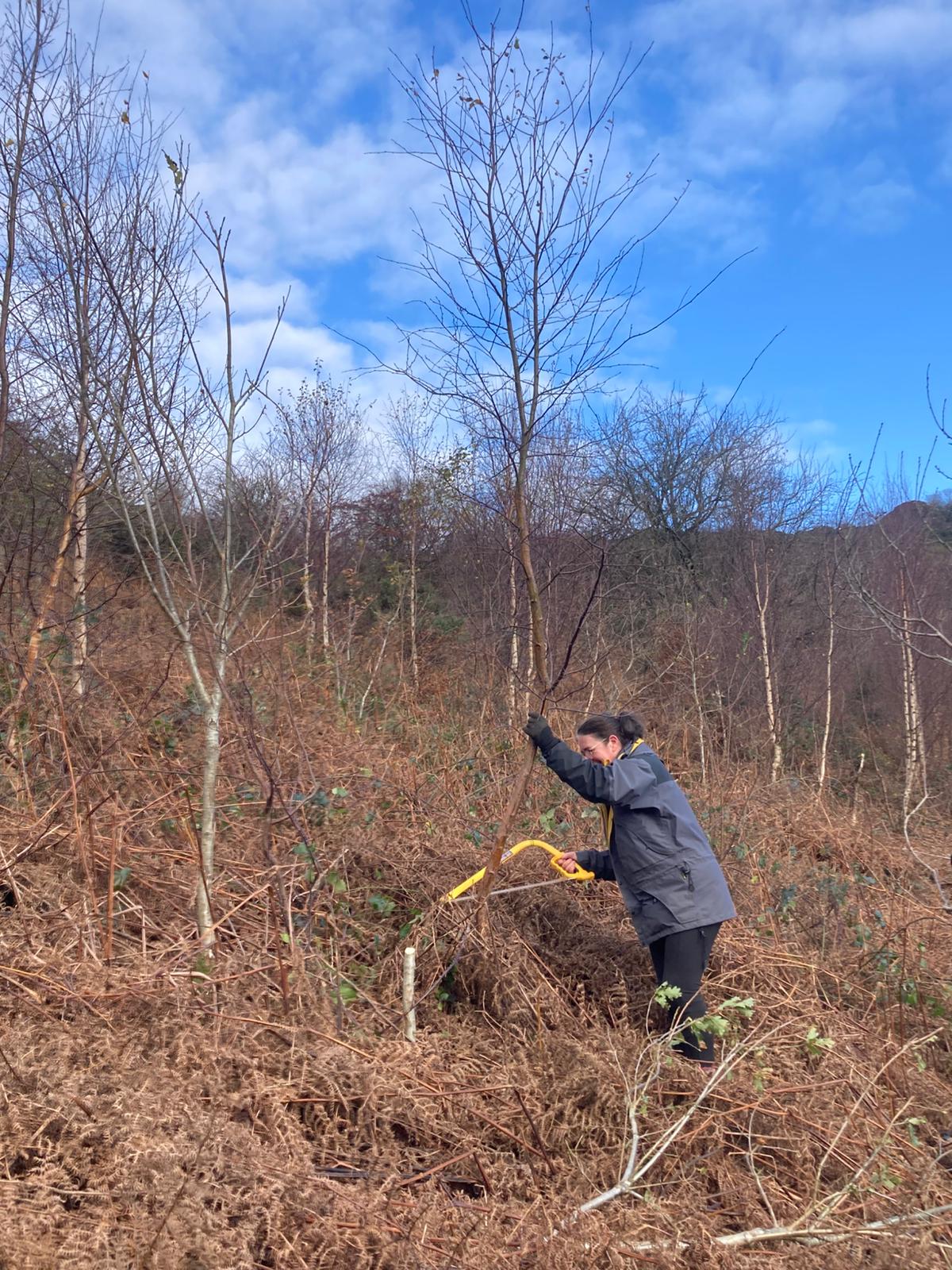
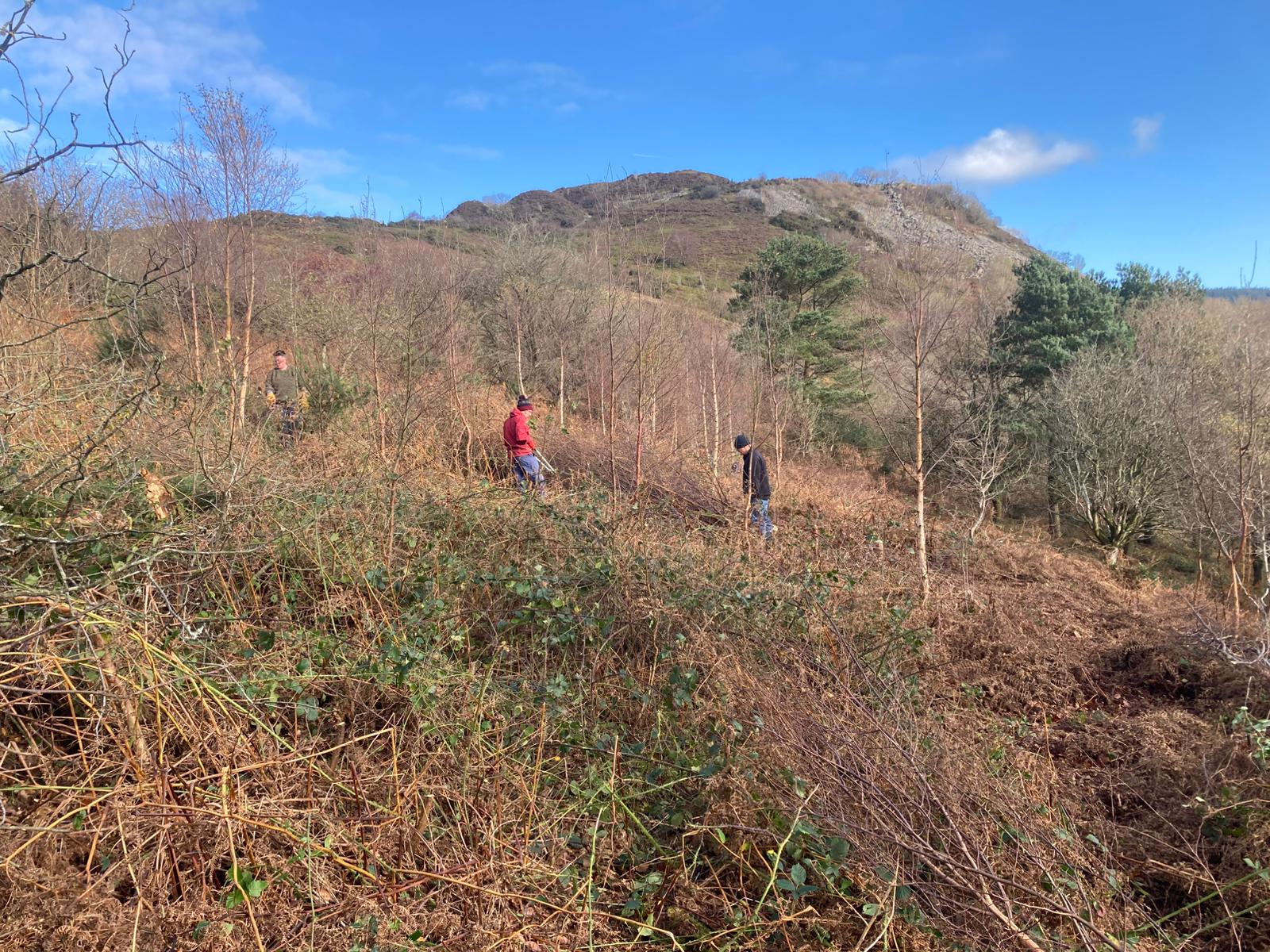
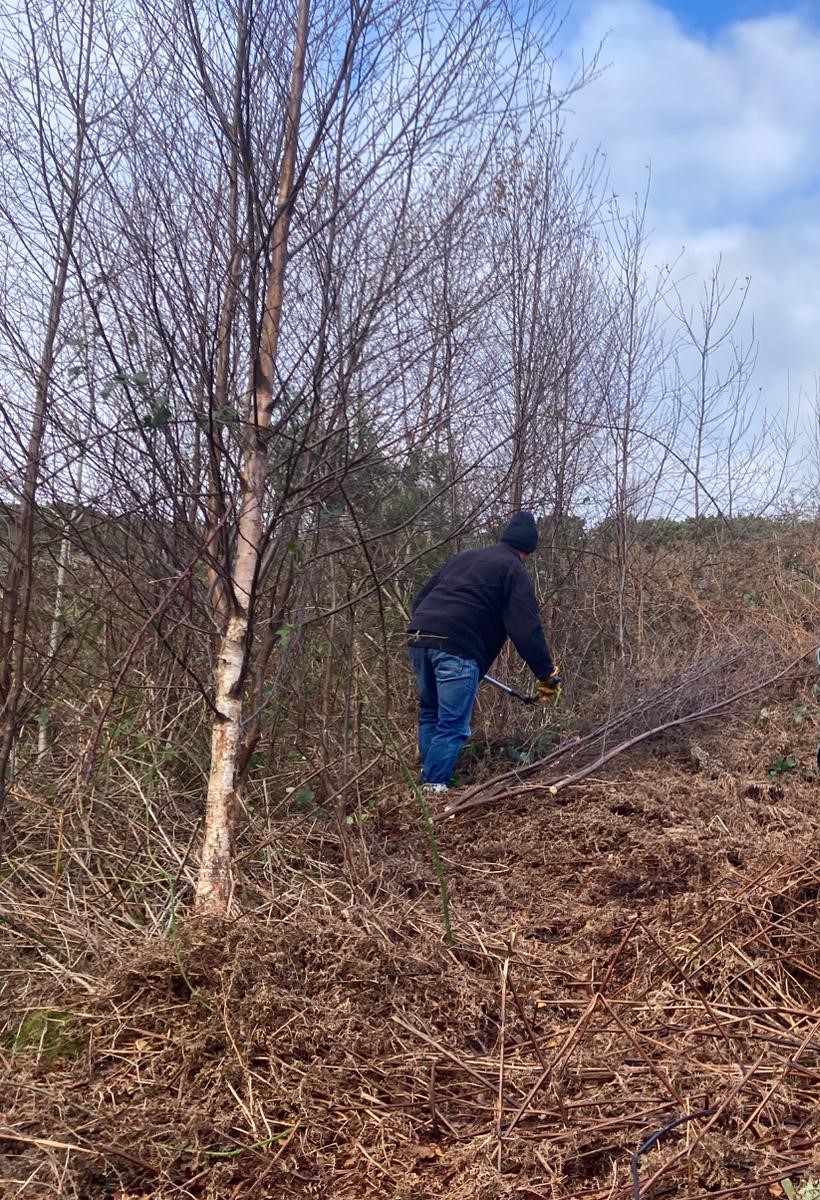
Our task was to remove all the saplings bar very few, some too large for us to remove and others considered worth keeping as individually significant. Equipped with bowsaws, pruning saws and loppers the volunteers spread out across the ground and quickly trimmed down the saplings, creating simple ‘butt-ended’ piles of the arisings. Some of this ended up as small log bundles for those willing to carry them back!
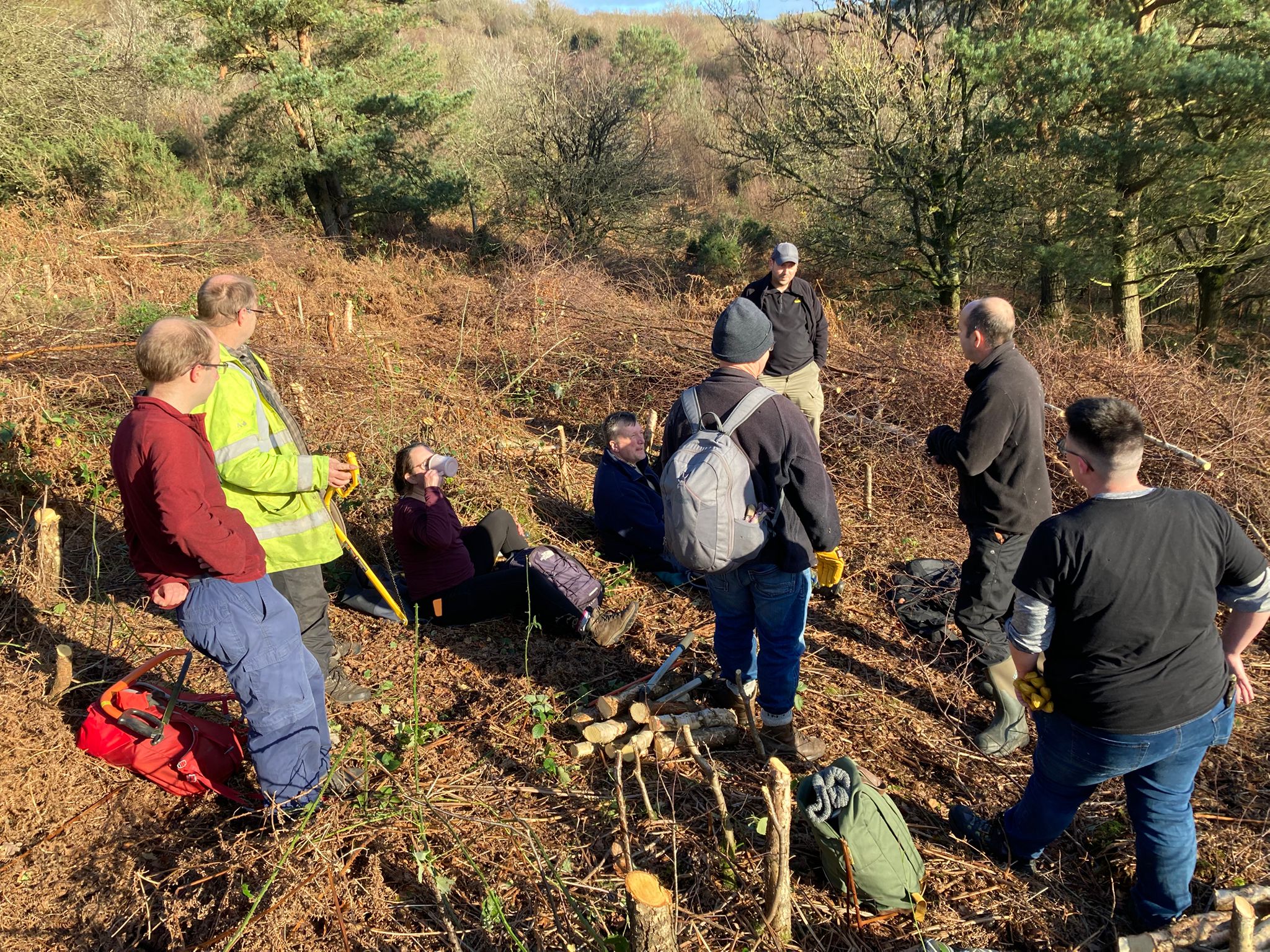
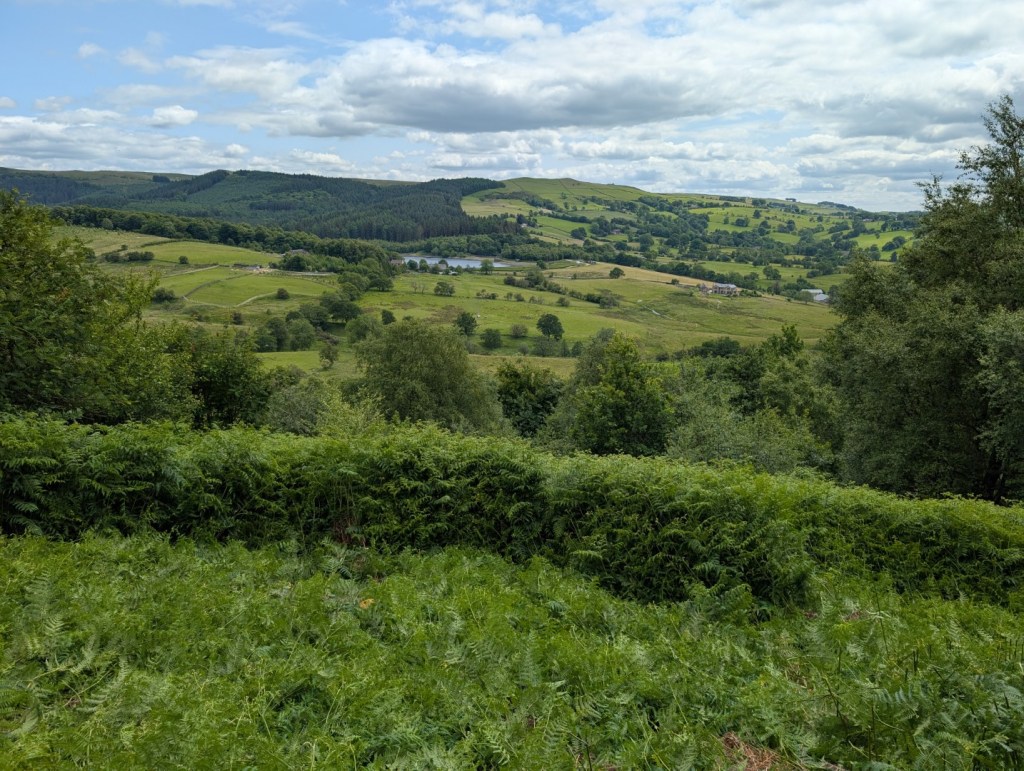
We made great progress and enjoyed a wide blue sky and warming sunlight and a peaceful environment. Some of us were down to shirt sleeves before long. As ever it was a friendly group day-out in the sun, enjoying a comfortable lunch spot on dry vegetation. Chatting and explaining to passers-by about what we do was part of it too. Lots of happy faces. We can’t wait to go back and keep up the good work in this beautiful spot with the long views of trees, water and hills.

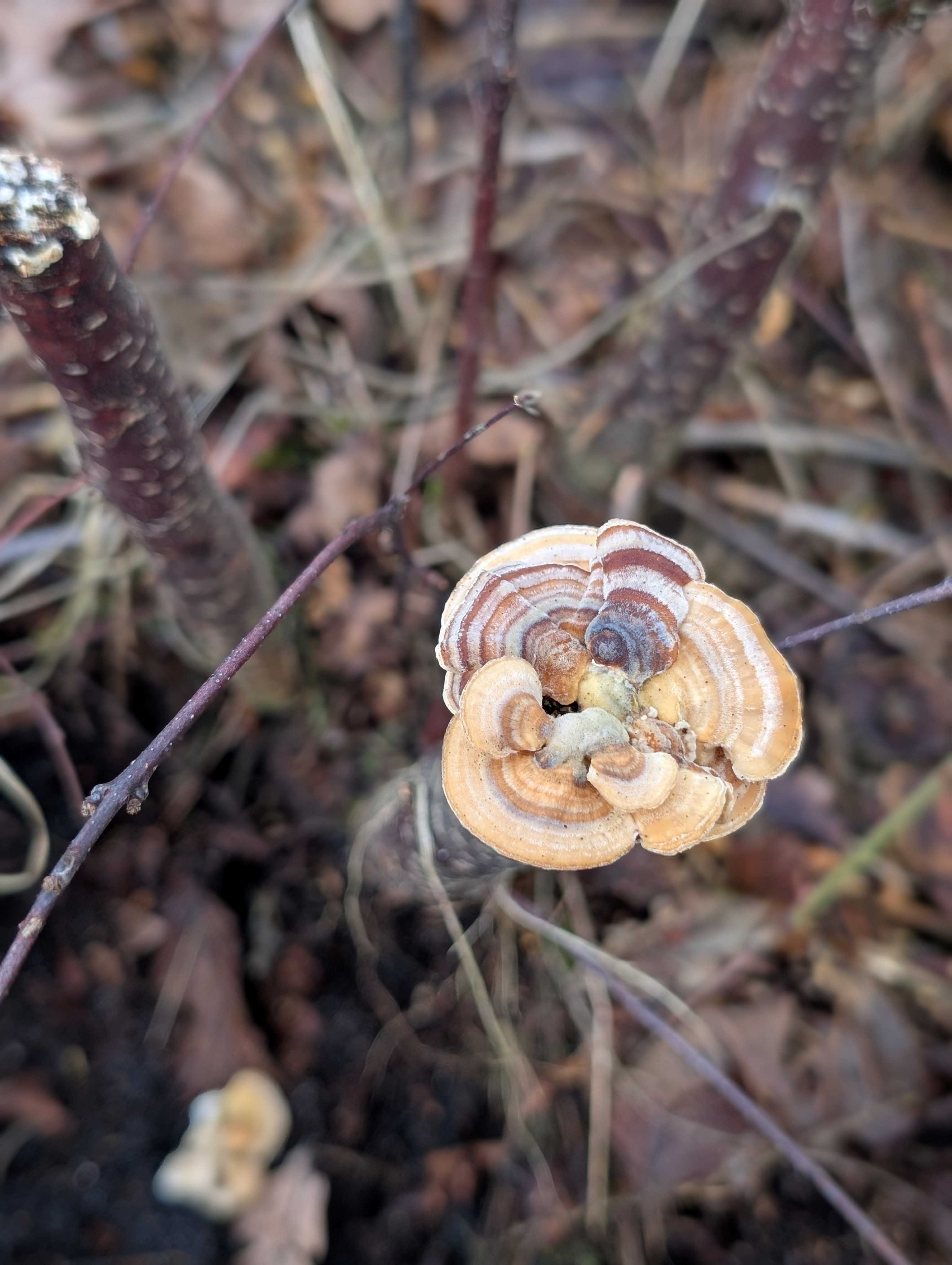
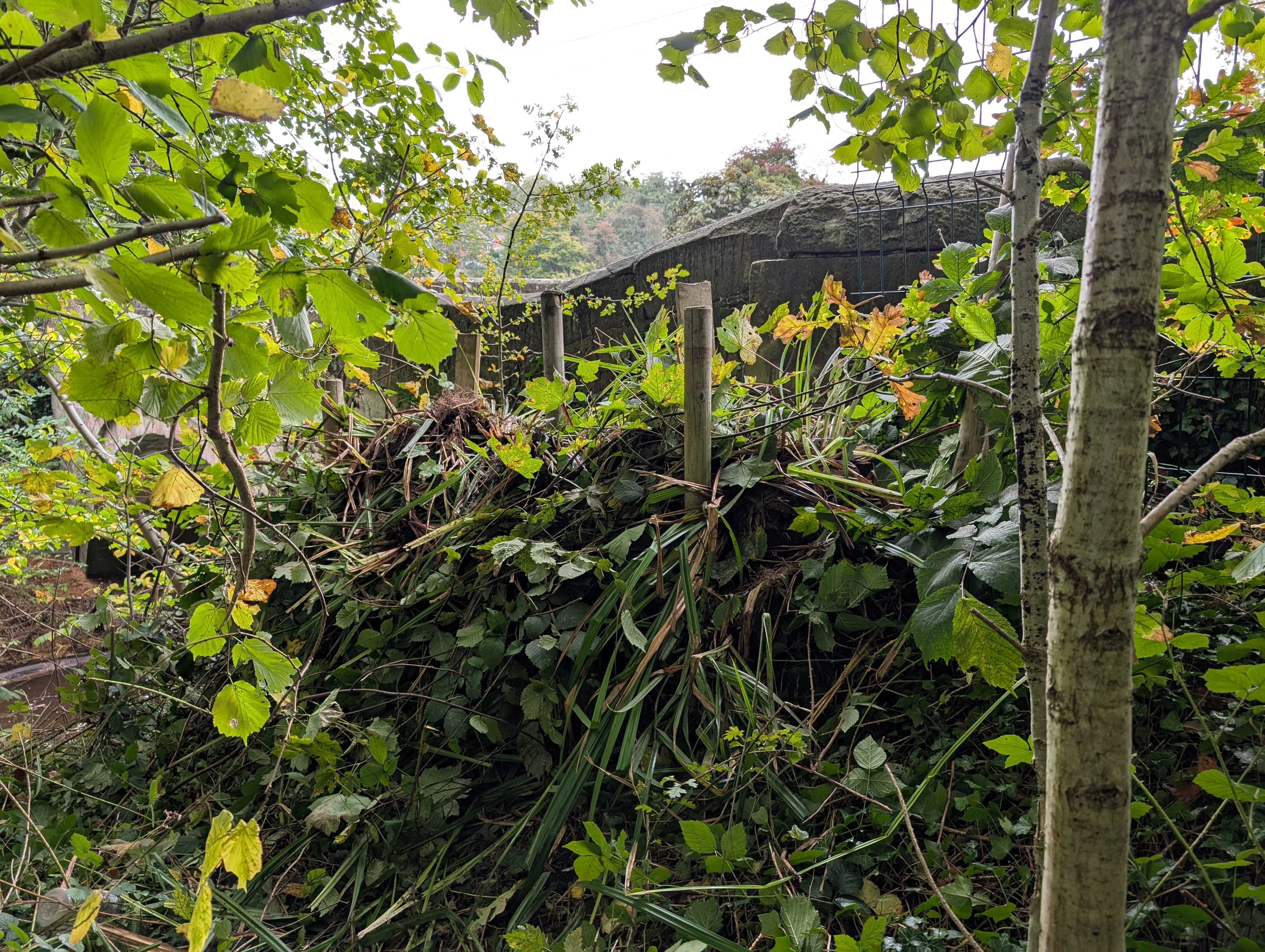
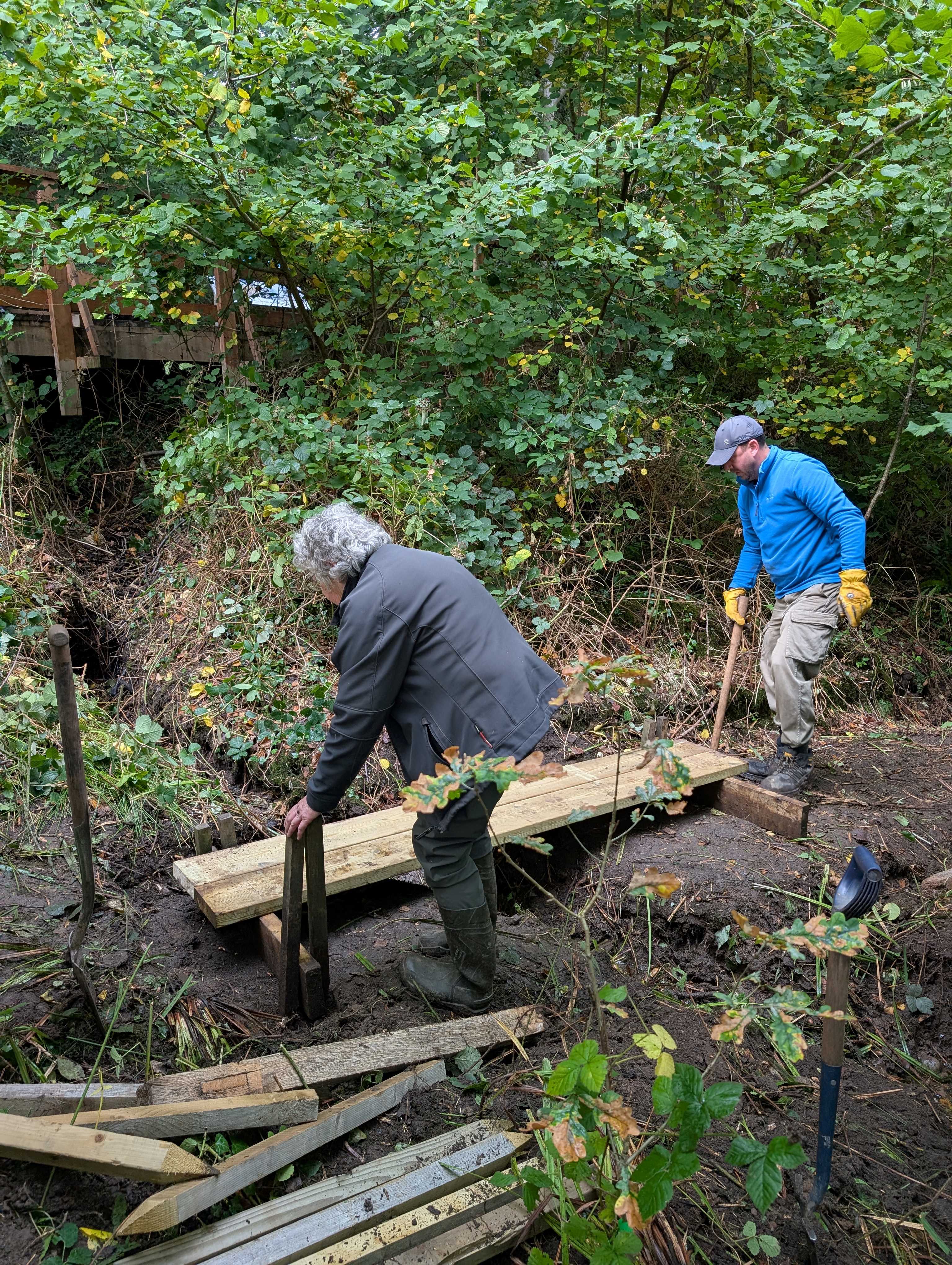
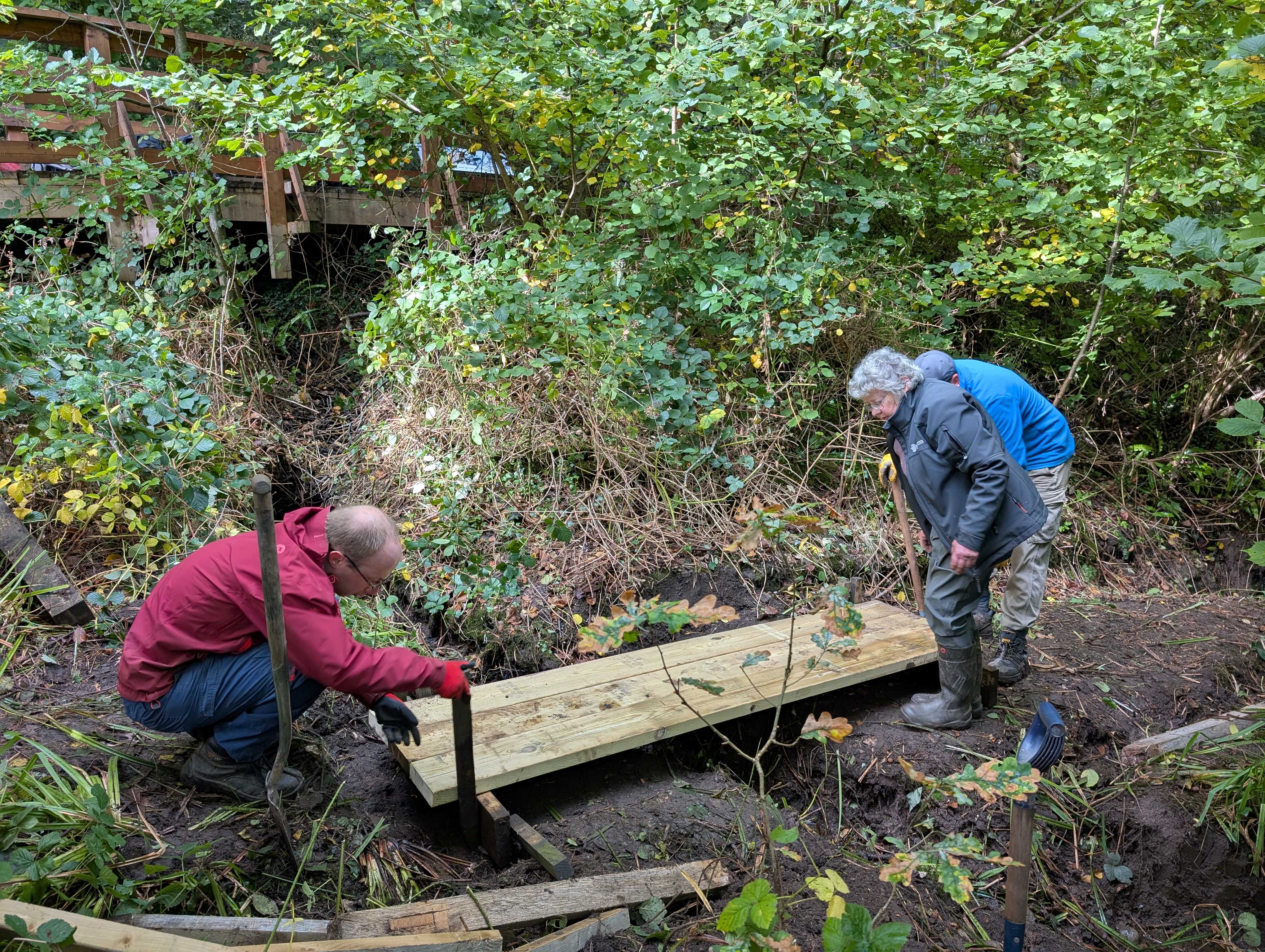
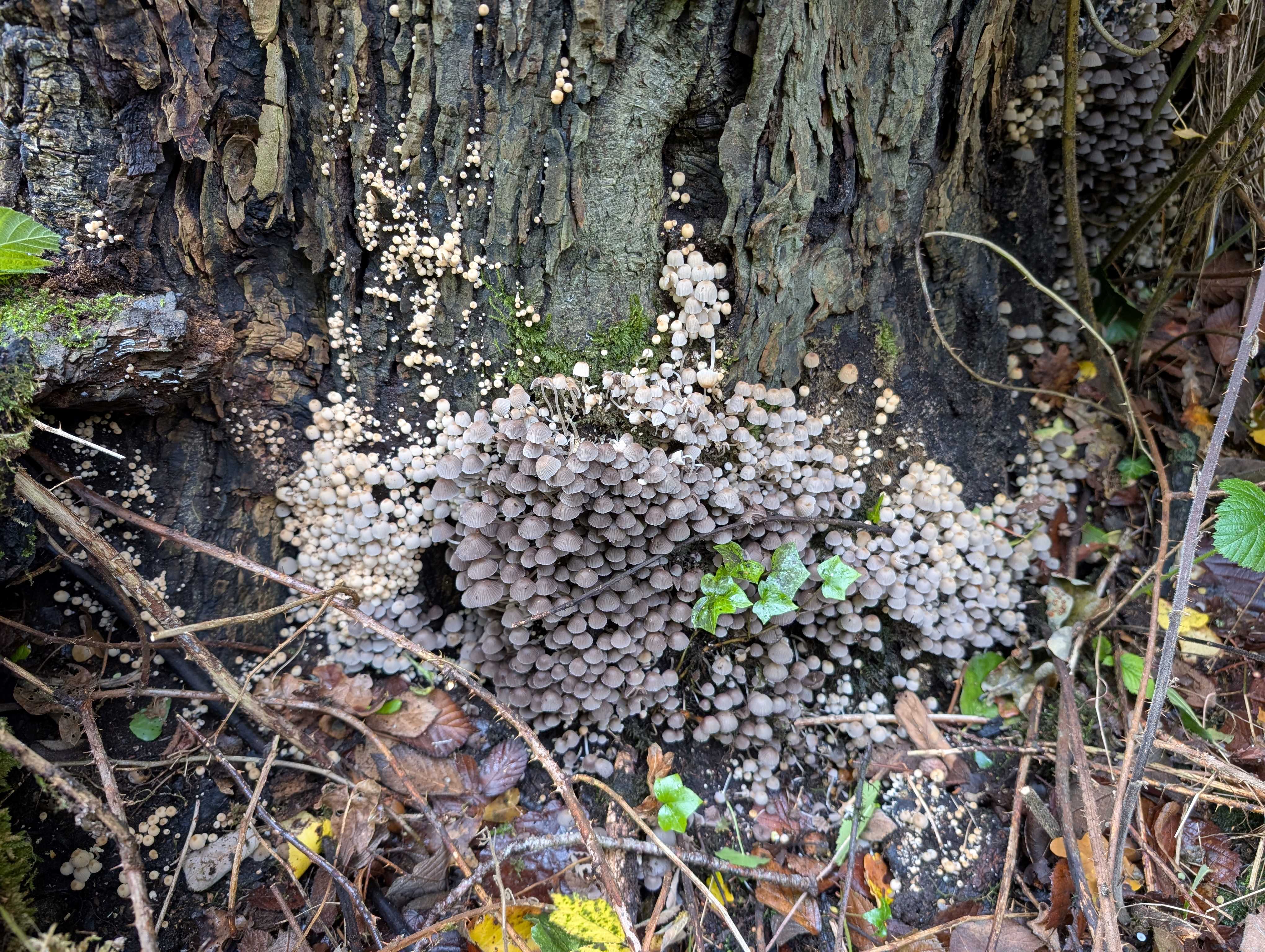
On Sunday 5 October we paid our second visit to Congleton Hydro. Our activities for the day included clearing a path through woodland and constructing a small bridge, building a dead hedge along an edge of the site, dealing with some late Himalayan balsam which hadn’t yet popped its seeds – and admiring some of the woodland fungi.

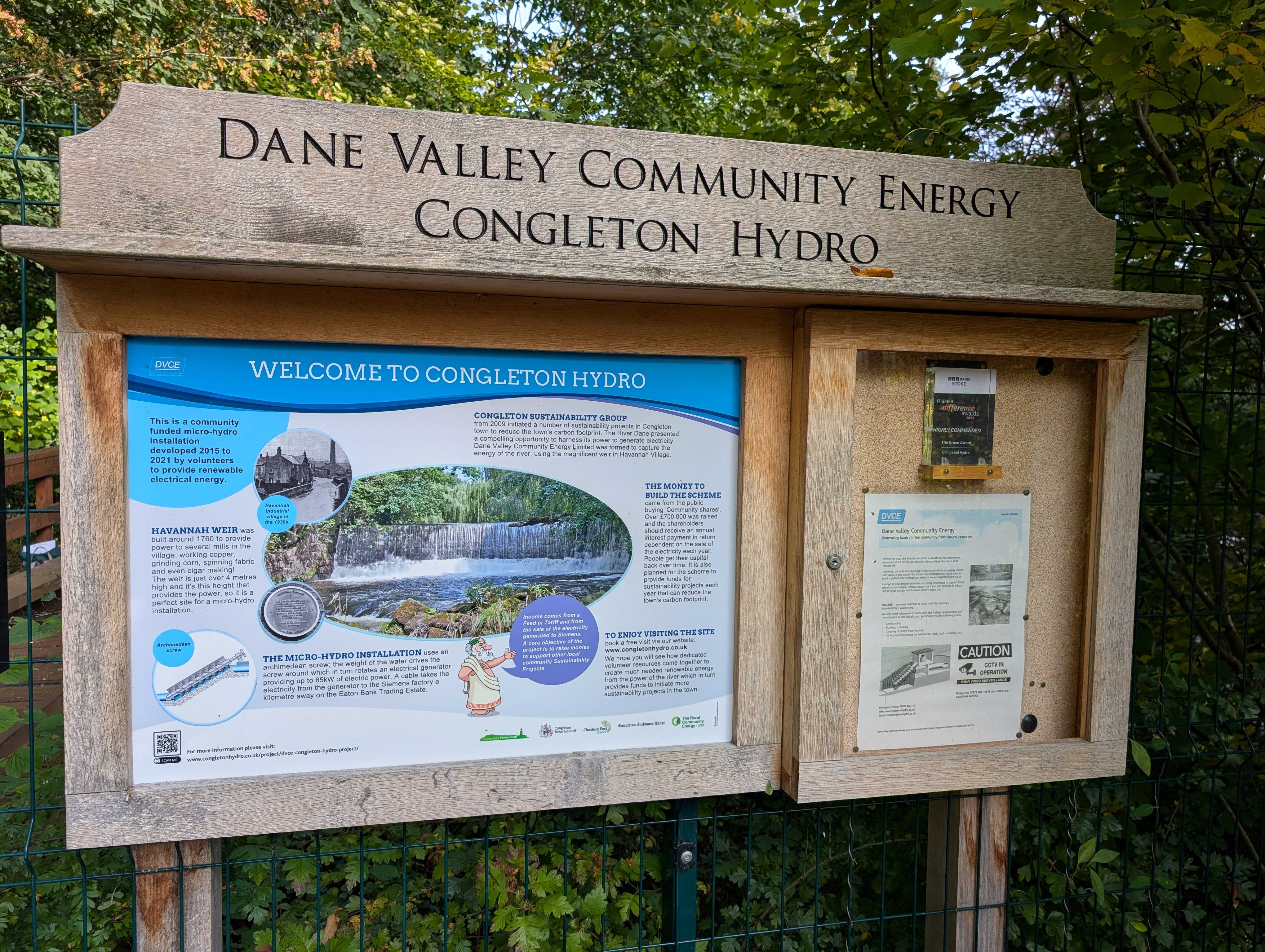
The hydro plant was out of action for some of the day due to a power cut in the local area the day before, but later we were pleased to see it operational again and were lucky too to get an impromptu talk from one of the volunteer engineers on the hydro project’s history over the past decade or so!

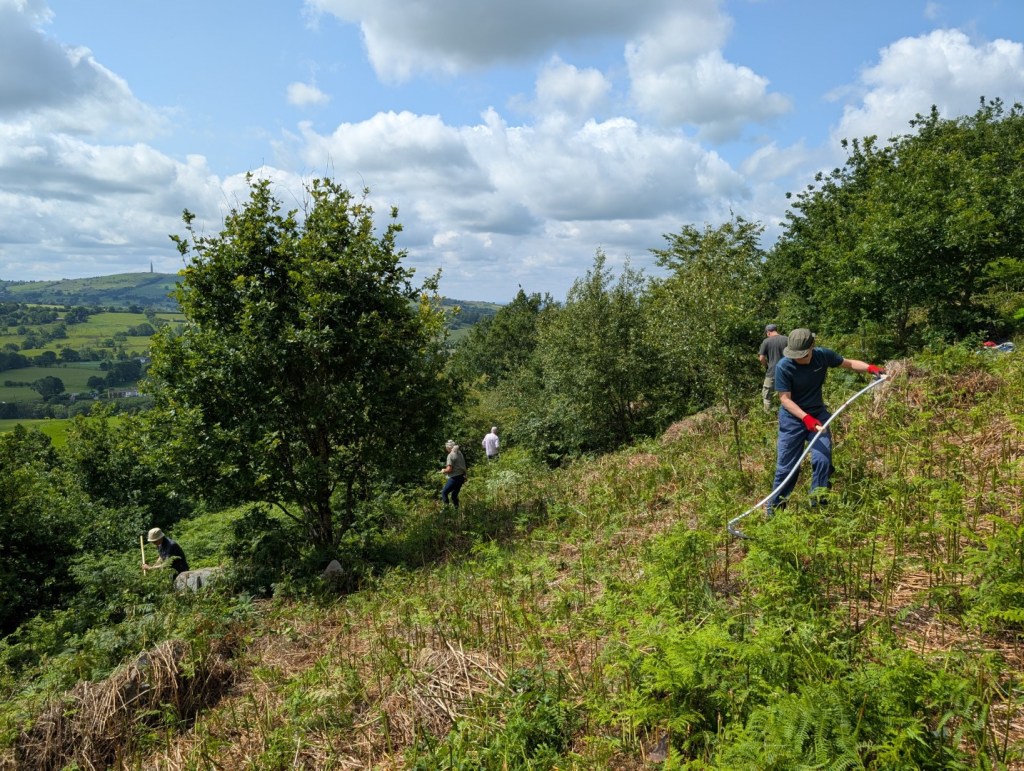
We were back at Tegg’s Nose on 15 June when, as on the more recent of our previous visits, we were helping with the suppression of bracken. Left unchecked, the vigorous bracken limits the diversity and value of the habitat; the control of it by physical means is part of an ongoing experiment to reduce the site’s use of chemicals. As well as bashing the bracken stems with wooden stales, this time we also used scythes. Trampling clumps of bracken underfoot also proved pretty effective! The progress from previous clearing efforts was visible, as bracken growth is slowed in those areas. Big thanks to ranger Martin for his hospitality and another interesting day – we look forward to being back here on 20 July!

It was great to welcome two new volunteers to our task on Sunday 13 April in Happy Valley, Bramhall, where we were working with the Friends of Ladybrook Valley (FoLV) to help them control non-native invasive species in two different areas.

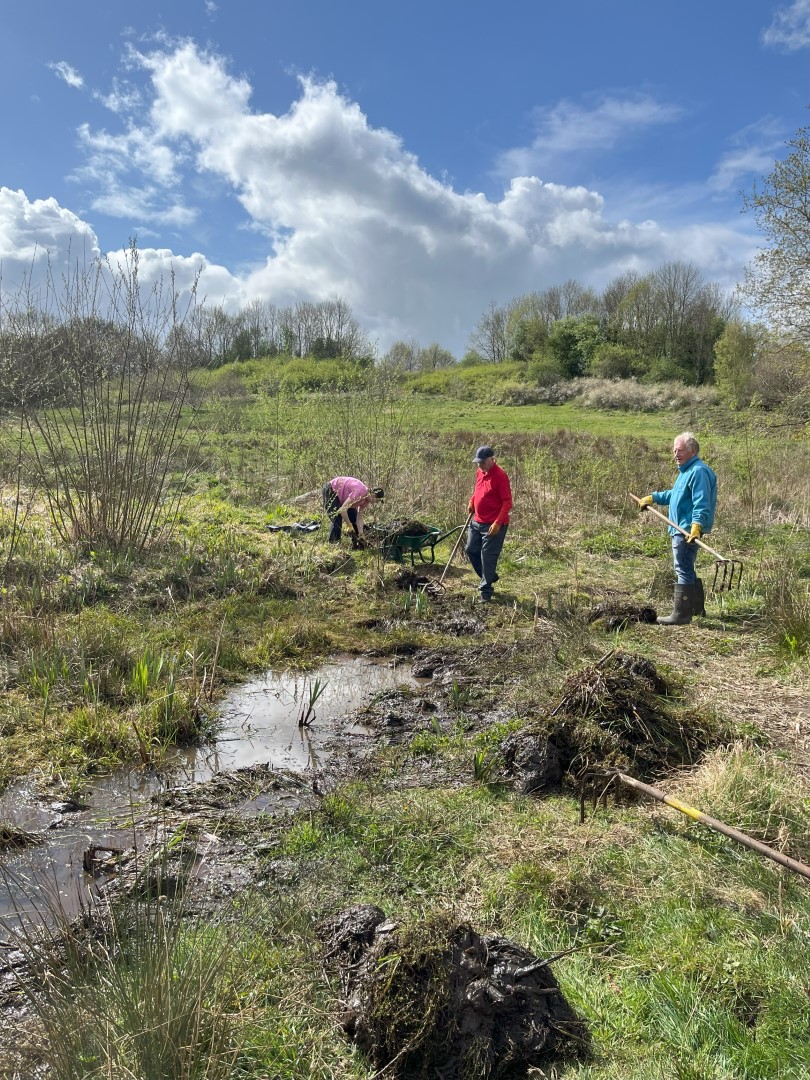
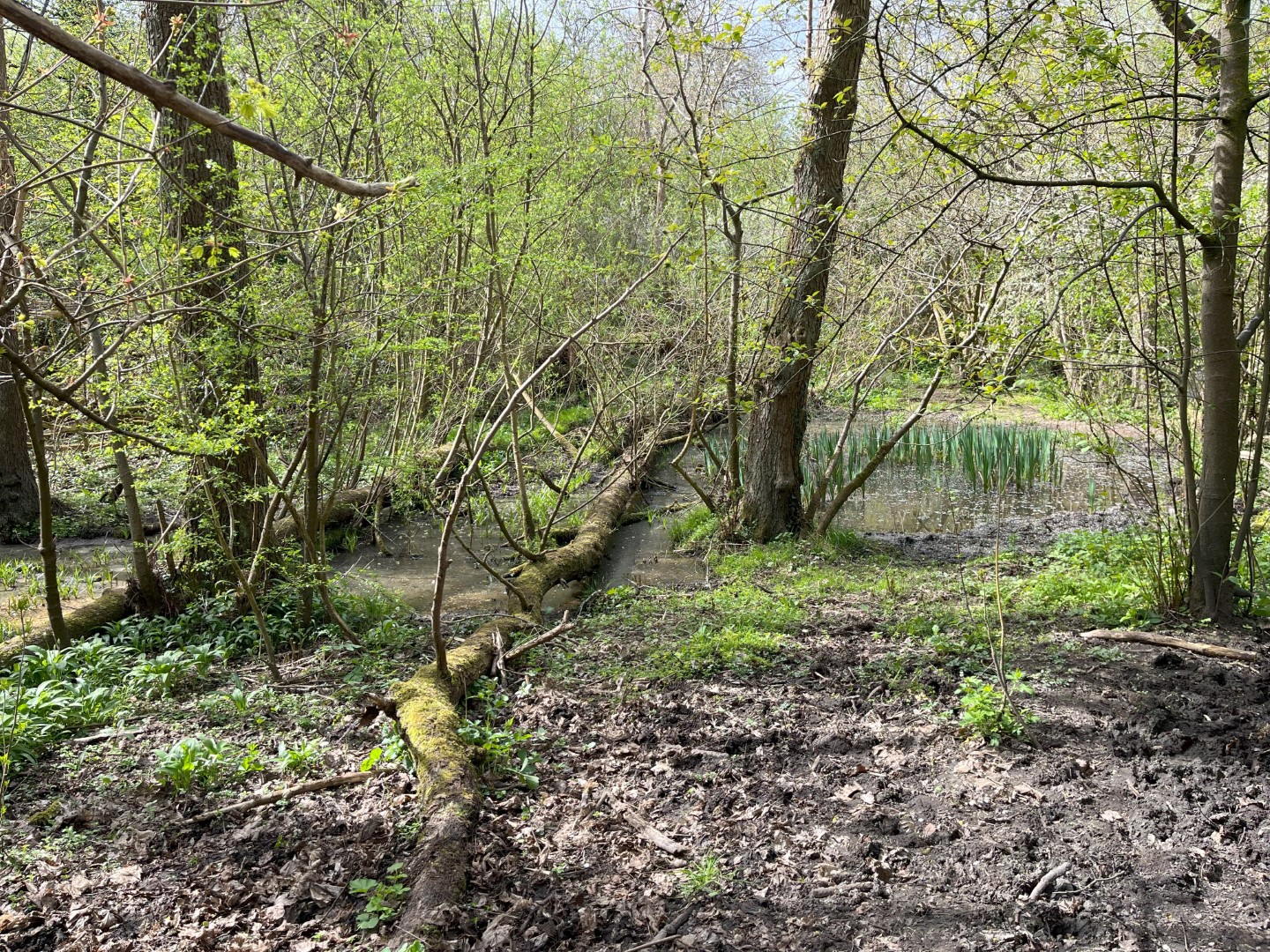
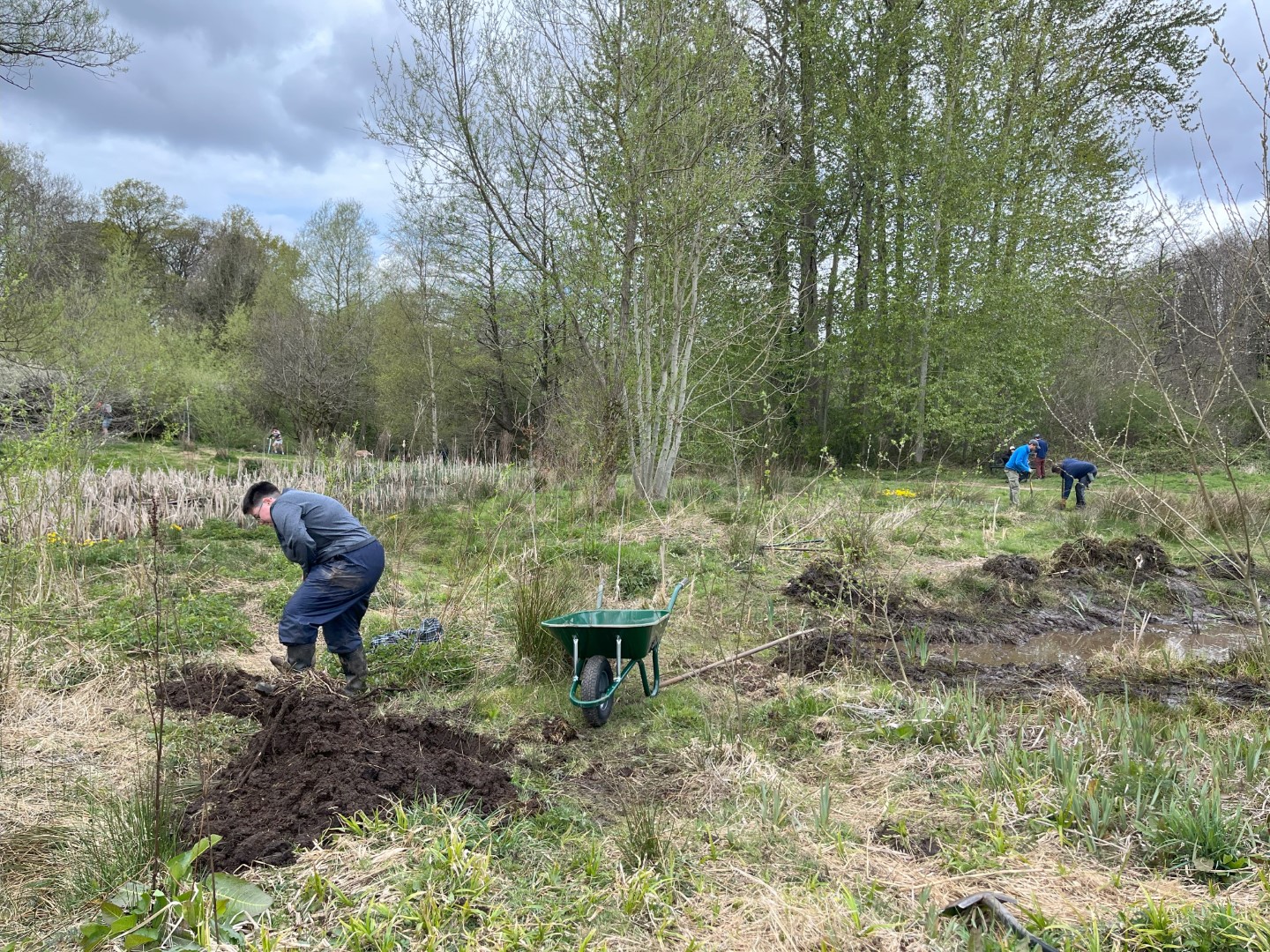
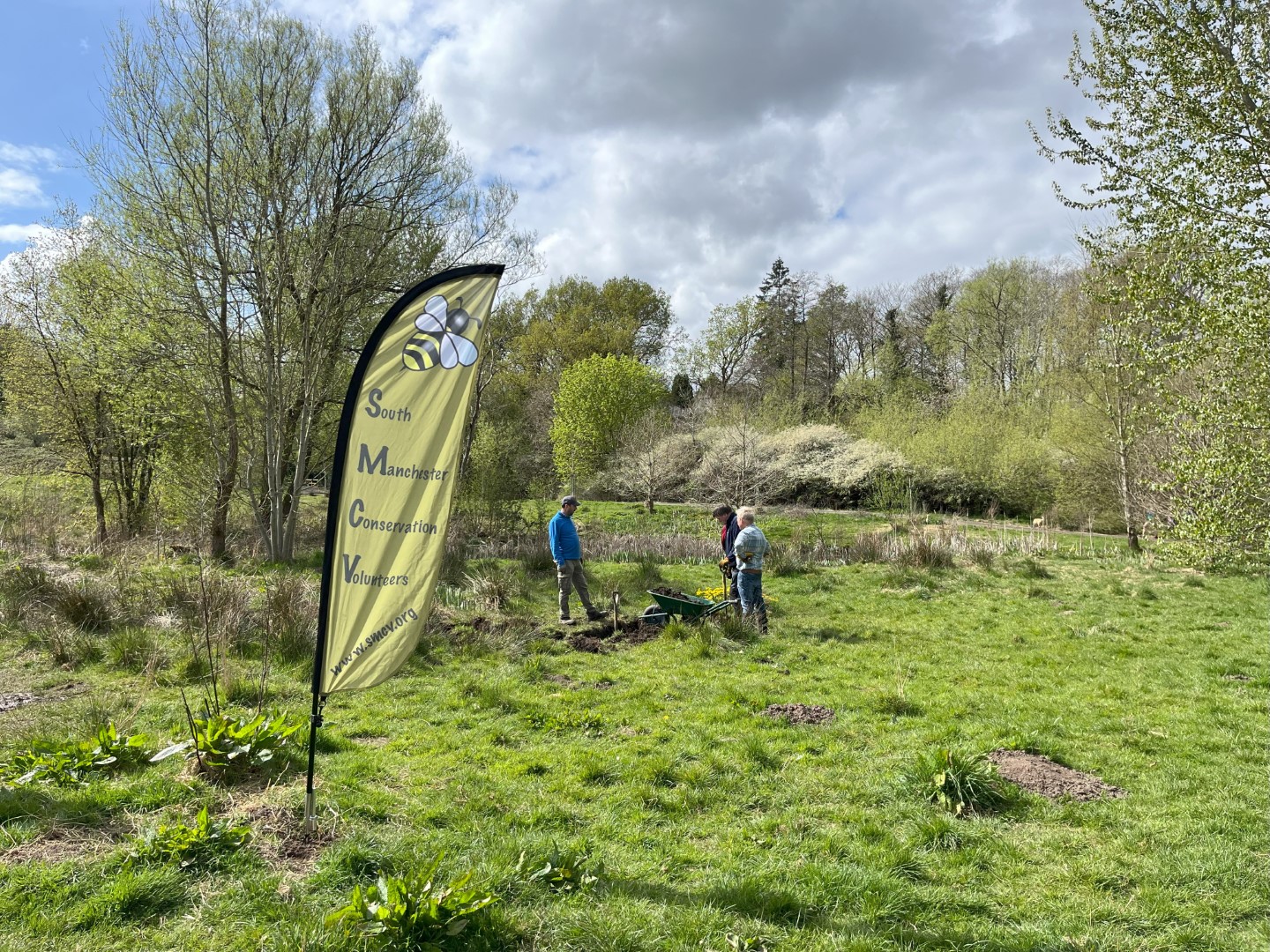
Last year, FoLV removed American skunk cabbage in a flooded wooded area and our first task was to identify and dig out any new growth and to rebury some of last year’s plants that were resprouting. We also removed a large volume of New Zealand pigmyweed from one of the ponds to prevent it choking up, then burying the arisings to prevent regrowth.

We got to hear from FoLV what makes the area special and to learn about invasive species more generally, and it was also nice that so many people walking past showed interest and appreciation in what we were all doing and why.

Lastly, it was satisfying to see that the yellow-rattle seeds that we sowed last autumn are growing, which will help FoLV return the grassland to wildflower meadow!

Our activity on Sunday 2 March was at Lindow Common with the Cheshire East Rangers.

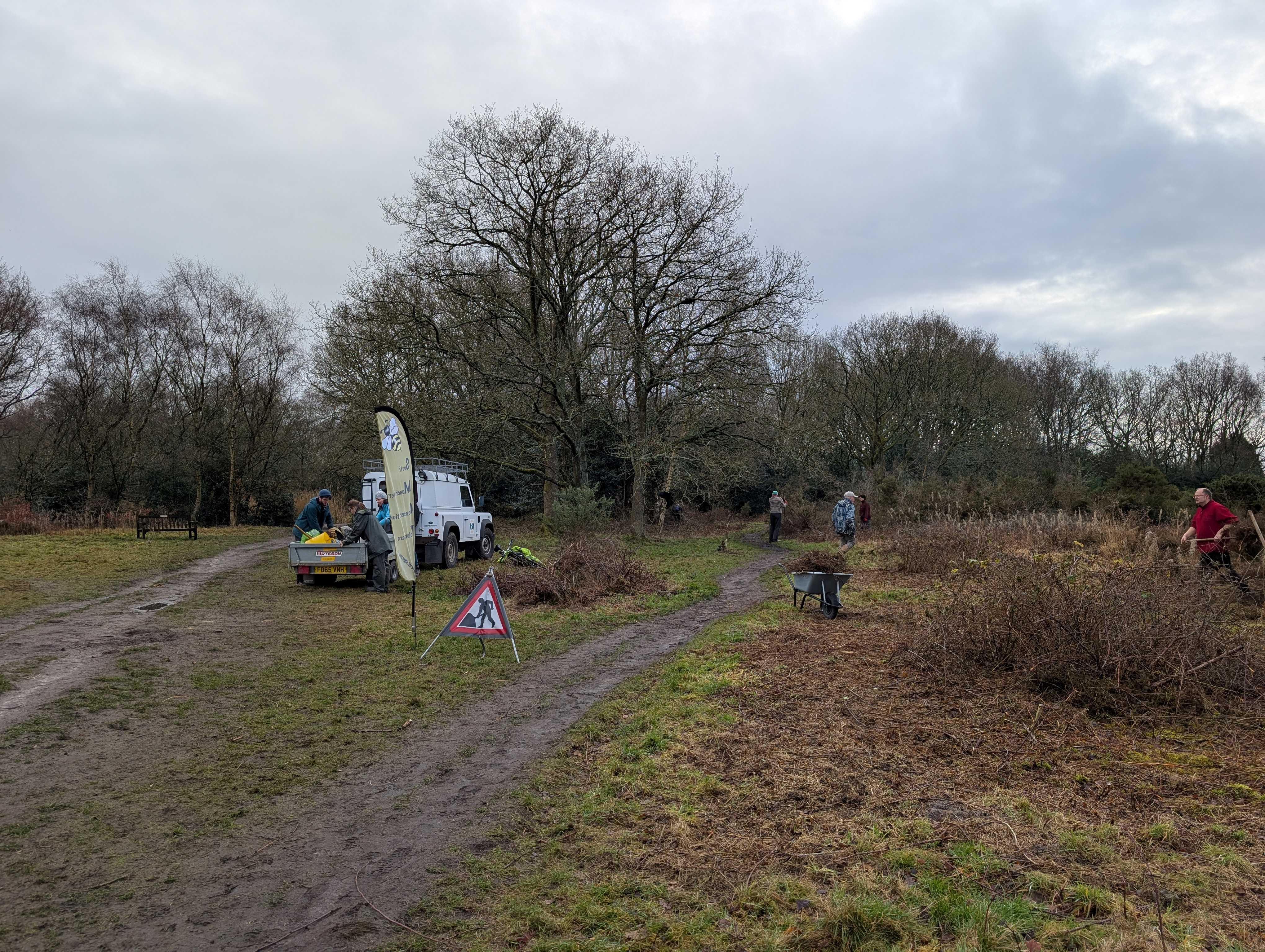
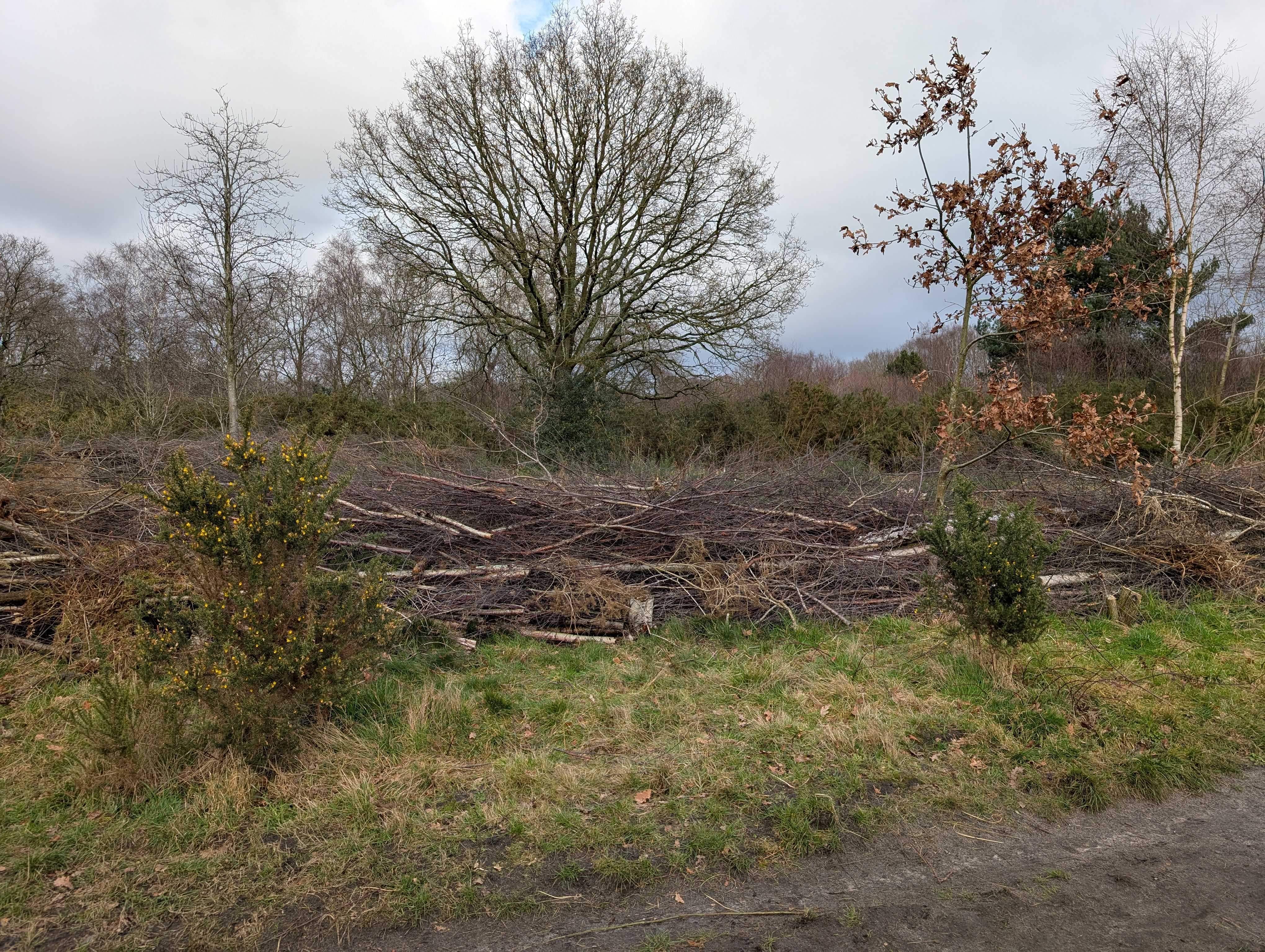
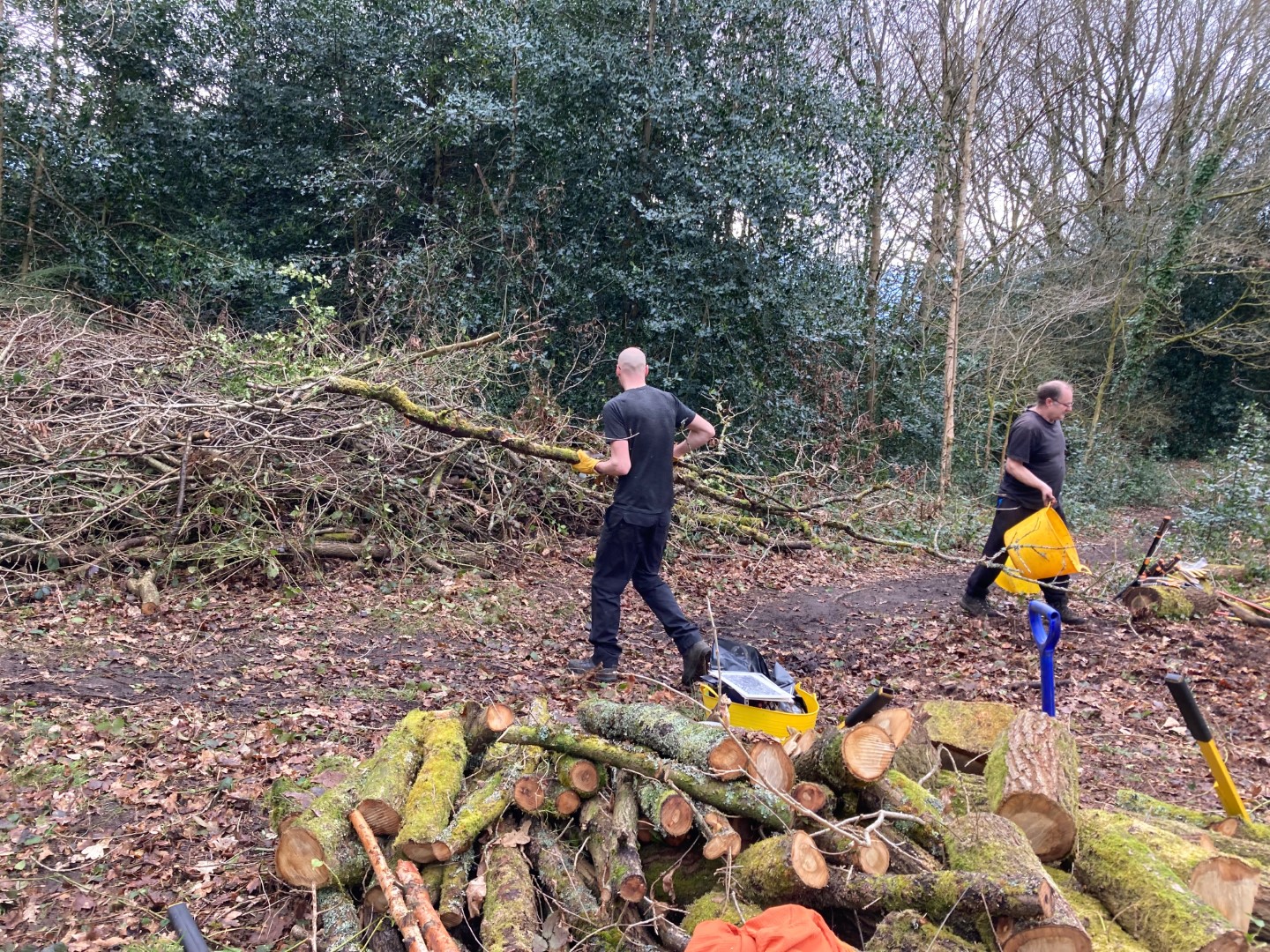
Context – The site was all former heath and we were tackling a quarter acre on the east side of the Common that had become established ‘high forest’ woodland. The opportunity to regenerate this area was due to the falling of a huge oak tree. The space under the canopy was in fact the area we worked on which just shows how broad an oak can grow with its canopy! The tree had been completely cut down and the resultant arisings had to be shifted into an enormous dead hedge (a.k.a. a pile!) at the side of the perimeter woodland along with a pile of heavy cut logs to establish habitat for fauna.

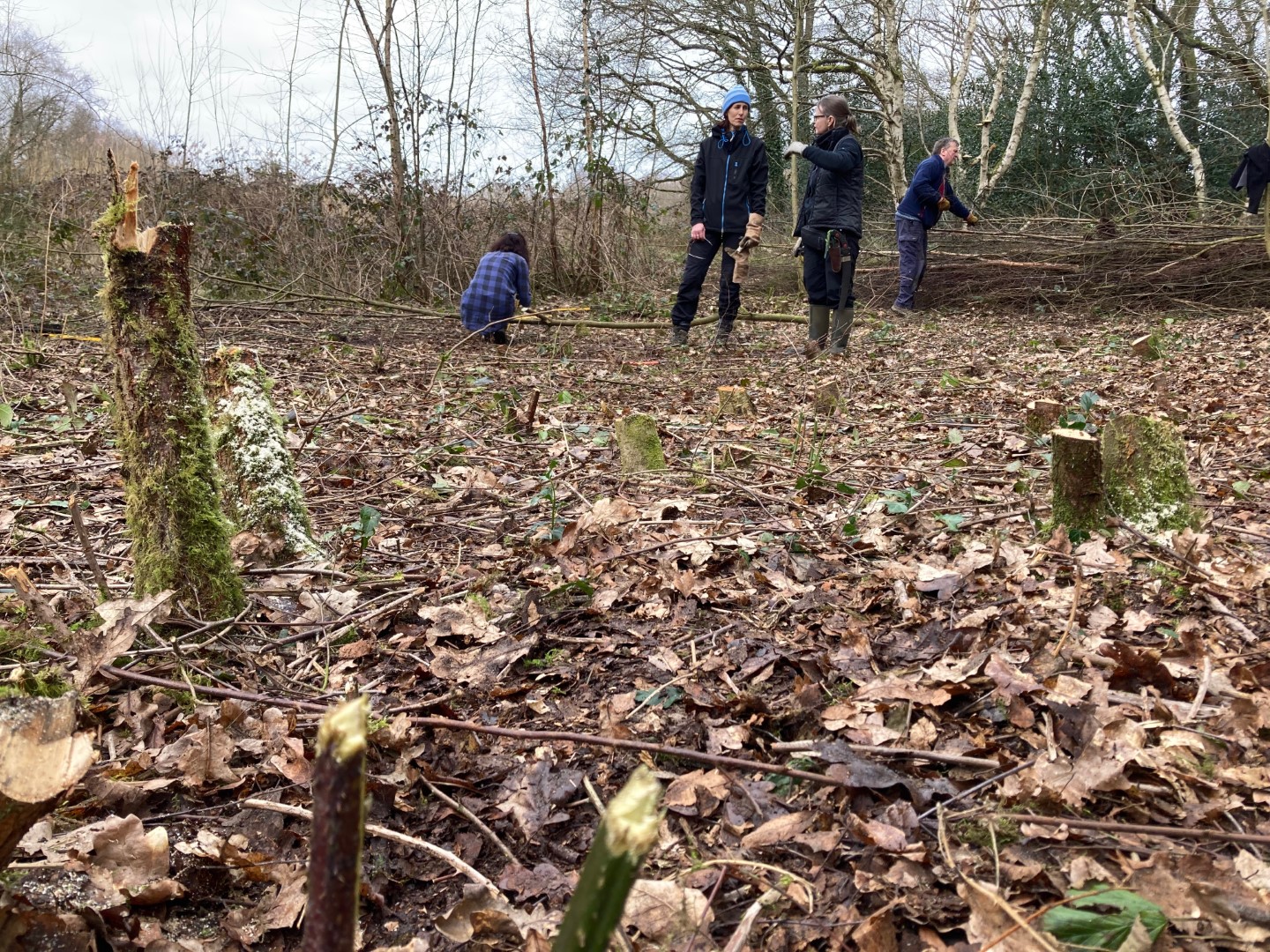
Task – The main task after this considerable clearance was to pull up/cut/uproot the many small native saplings which were developing in the woodland, along with many heavily overgrown brambles which were making a dense thicket above the soil. The more removal the better as this would expose the soil to light and permit the seed bank of the heath to begin to regenerate. Nicola Ginn, our Cheshire East Ranger who is helping Bollin Valley Partnership, oversaw our work and gave us a quick overview of the Common and some of the work being attempted. Some of the birch arisings will be used to create bundles to place on the banks of the large mere to protect them from erosion caused by ducks.
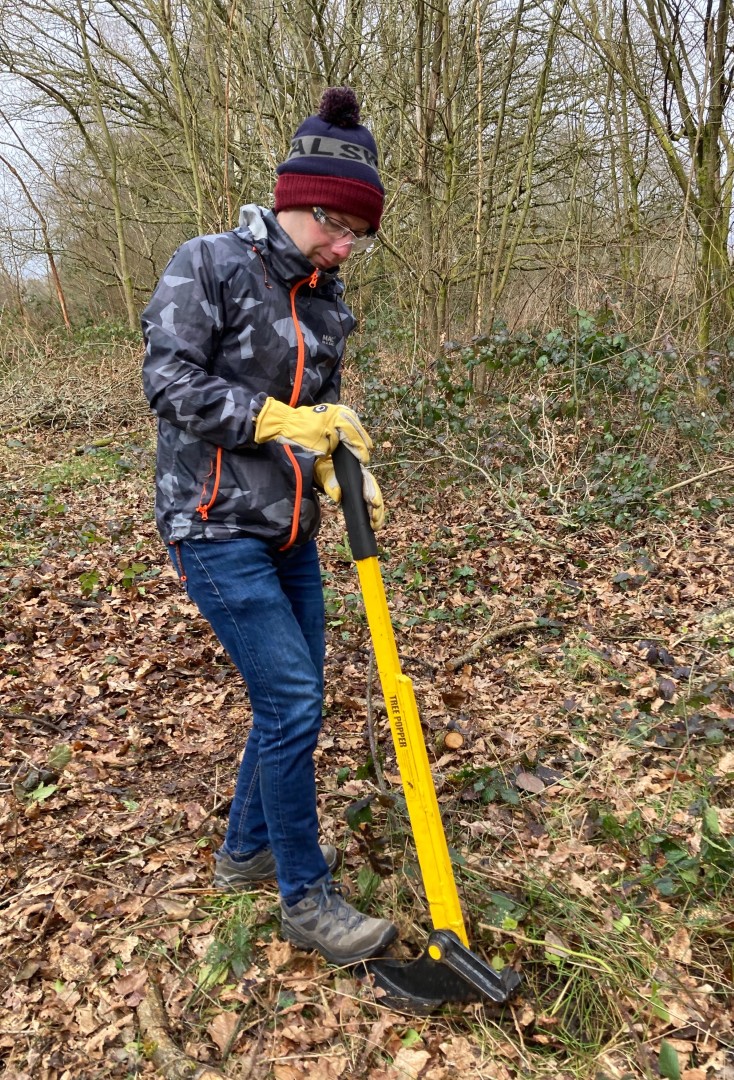
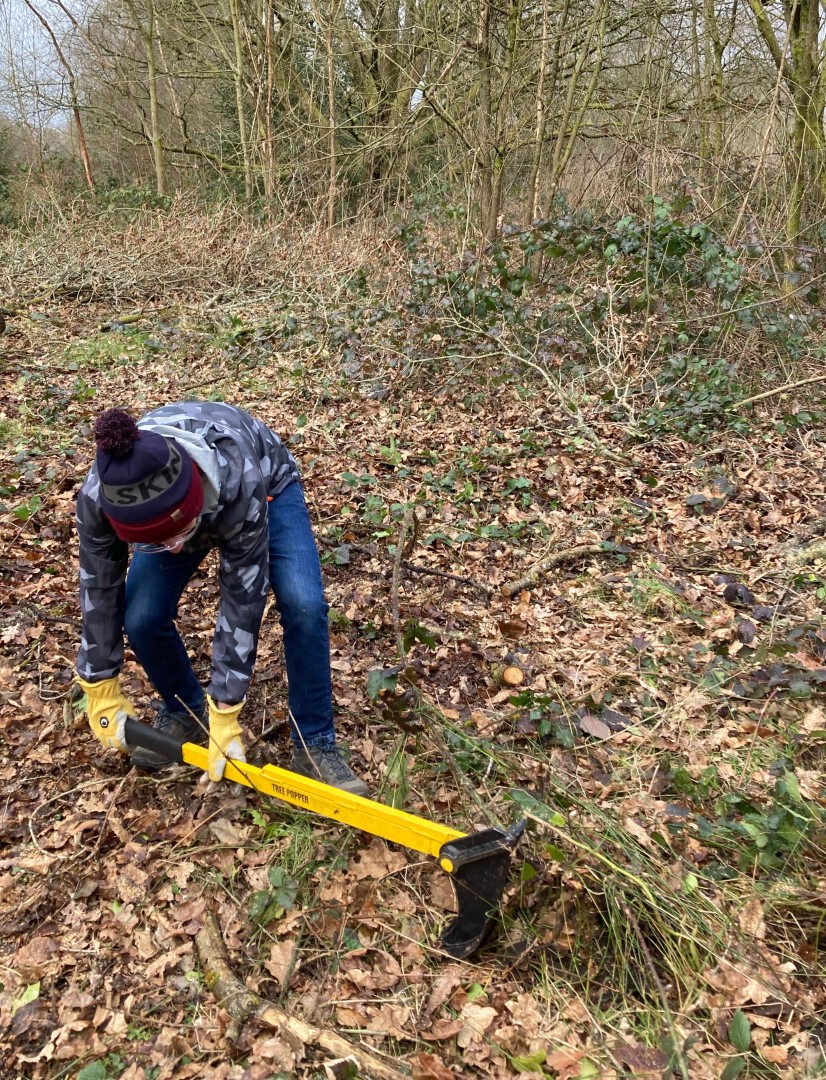
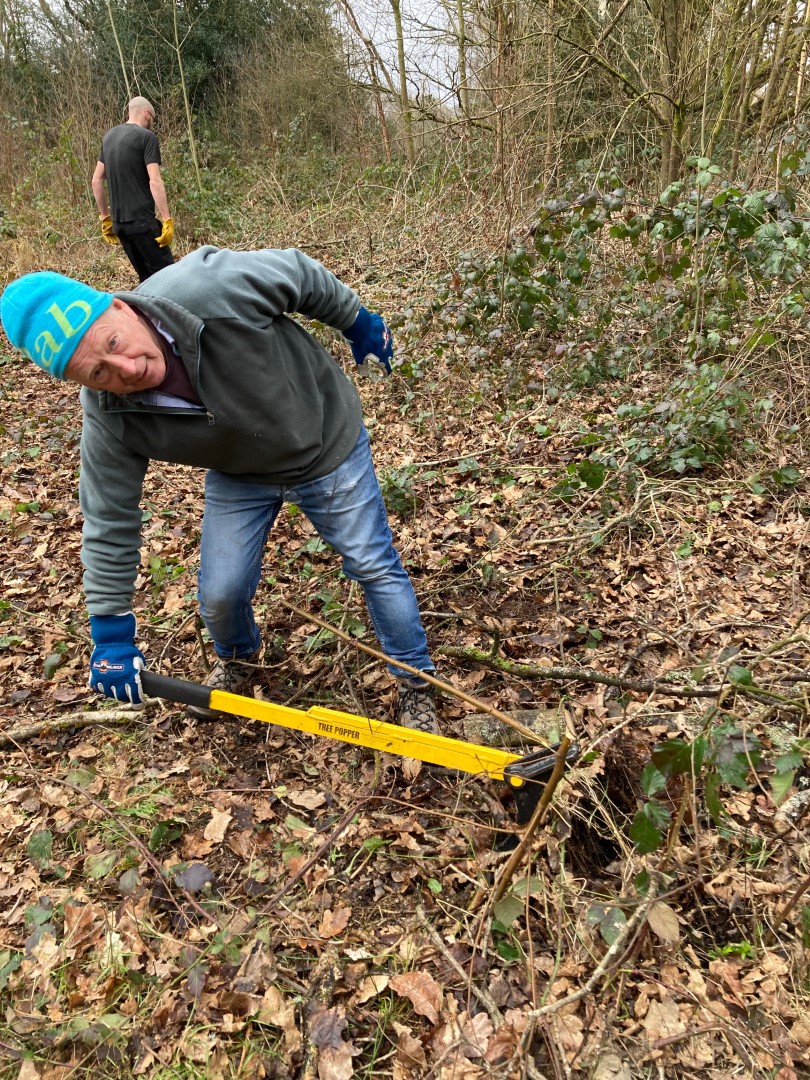
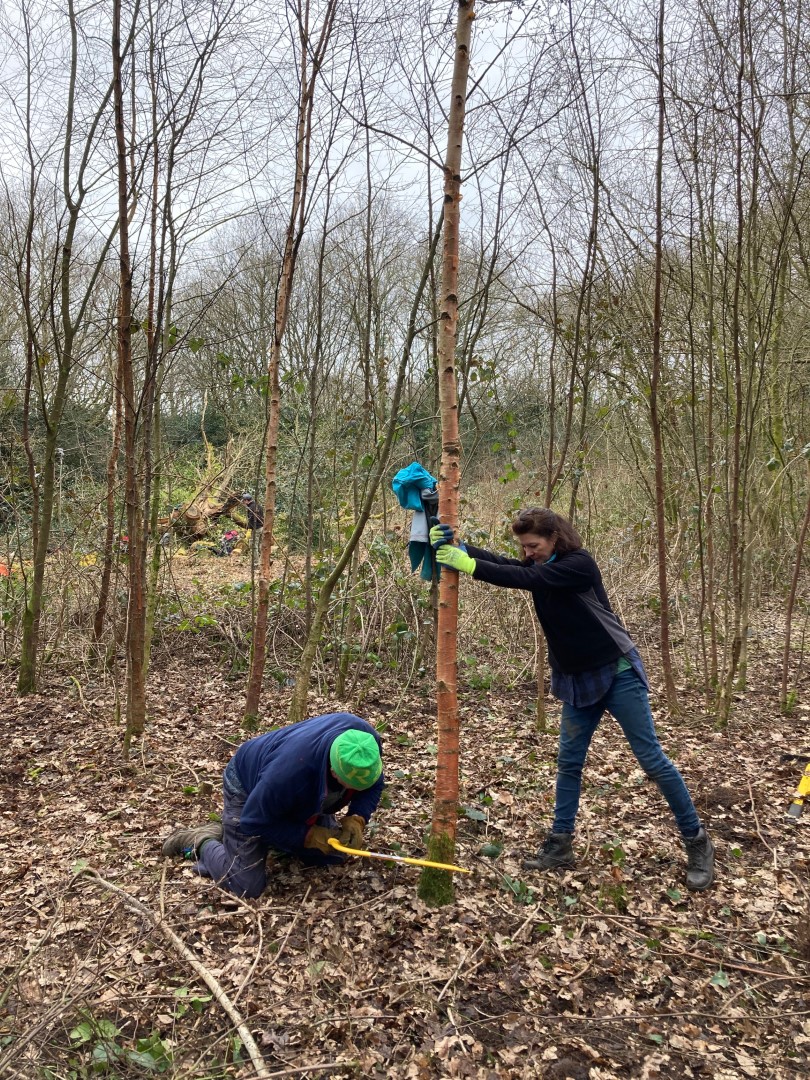
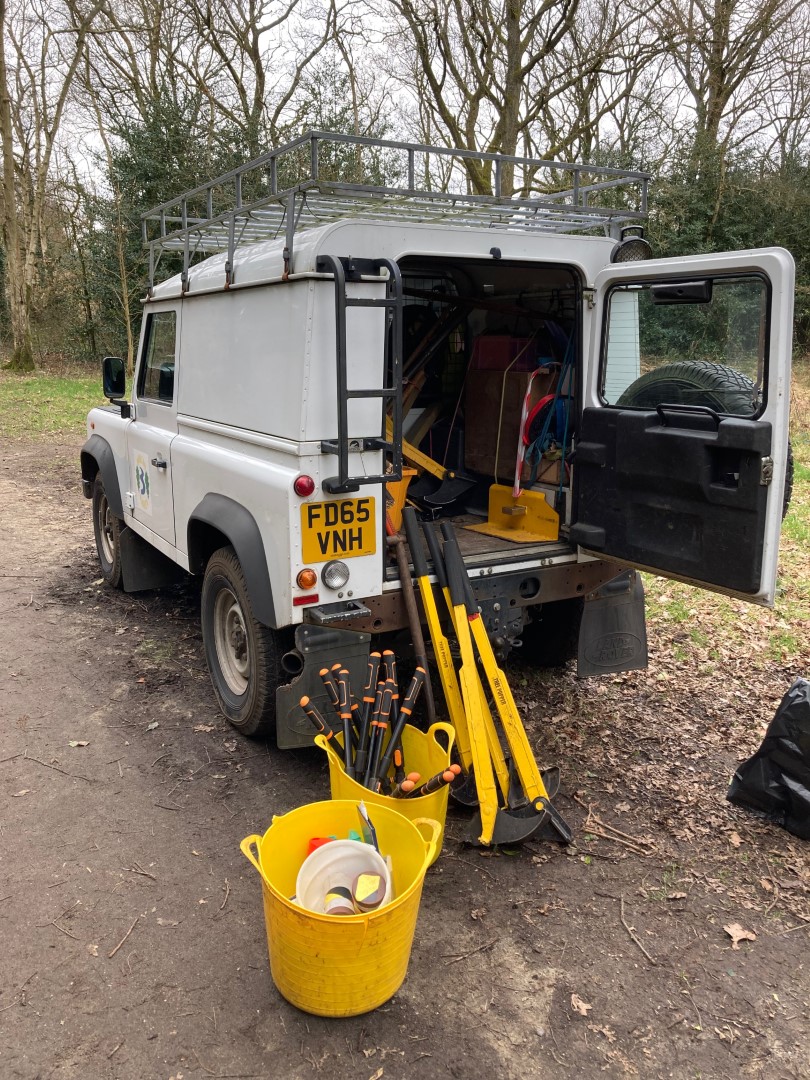
With Nicola, our nine volunteers and one canine associate (Rocky) set about clearing the felled oak, and making an enormous pile followed by extensive raking and pulling of the straggly brambles. Some volunteers tried out the bright yellow tree poppers to help fully remove invasive saplings including oak, holly, birch and alder. Others used spades and others used hand and bow saws to cut the bigger whips; some of which were over 20′ high as they had grown fast and close together. Any larger stumps were brushed with a Roundup mix to prevent regrowth from the rootstocks that were not removed. Lots of very co-operative working brought these slim but still weighty trees down safely. They were then cut up and much of this new debris laid into a brand-new dead hedge alongside the path towards the mere. Thicker offcuts ended up as logs for volunteers to take home for their stoves.
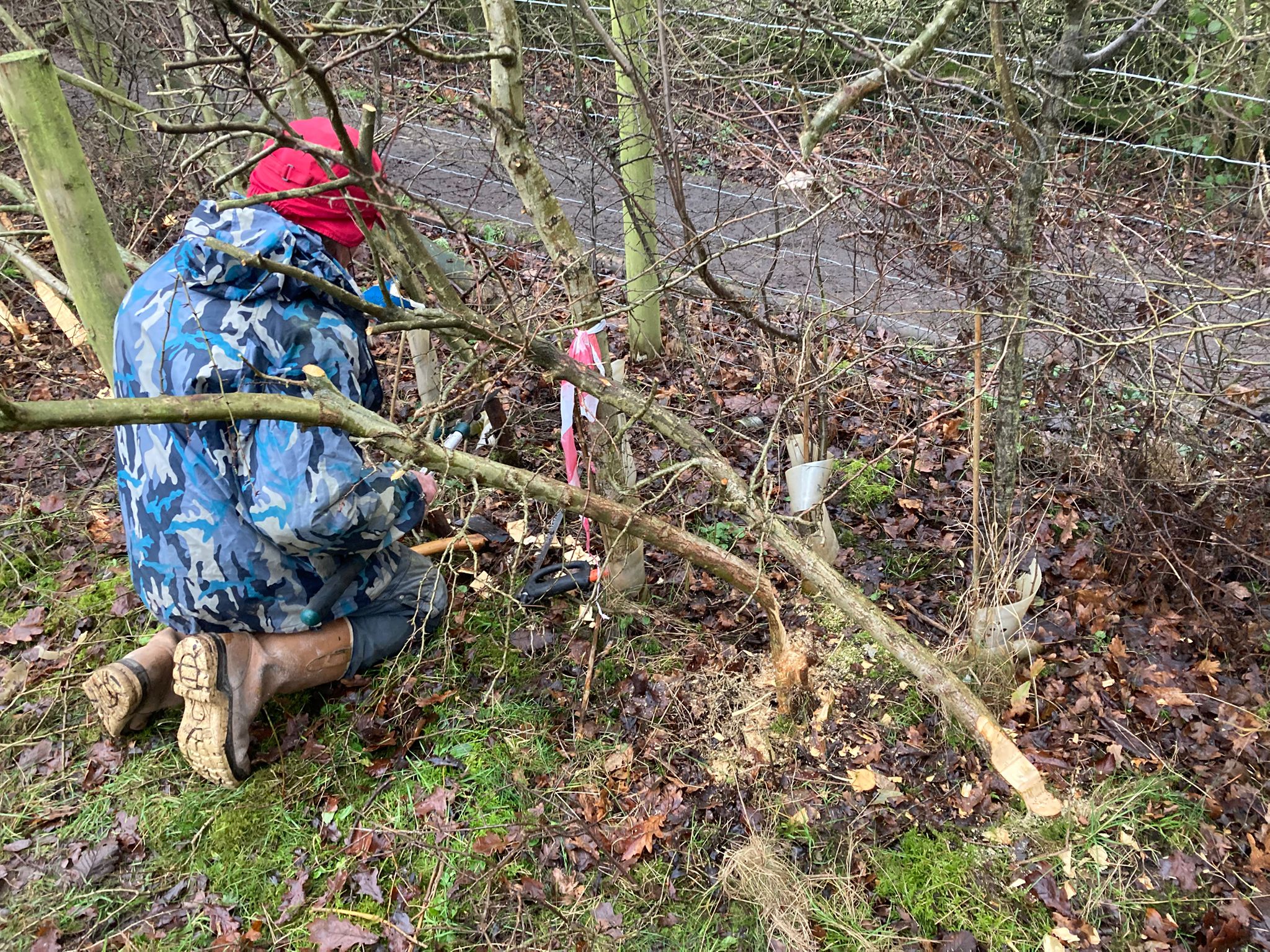
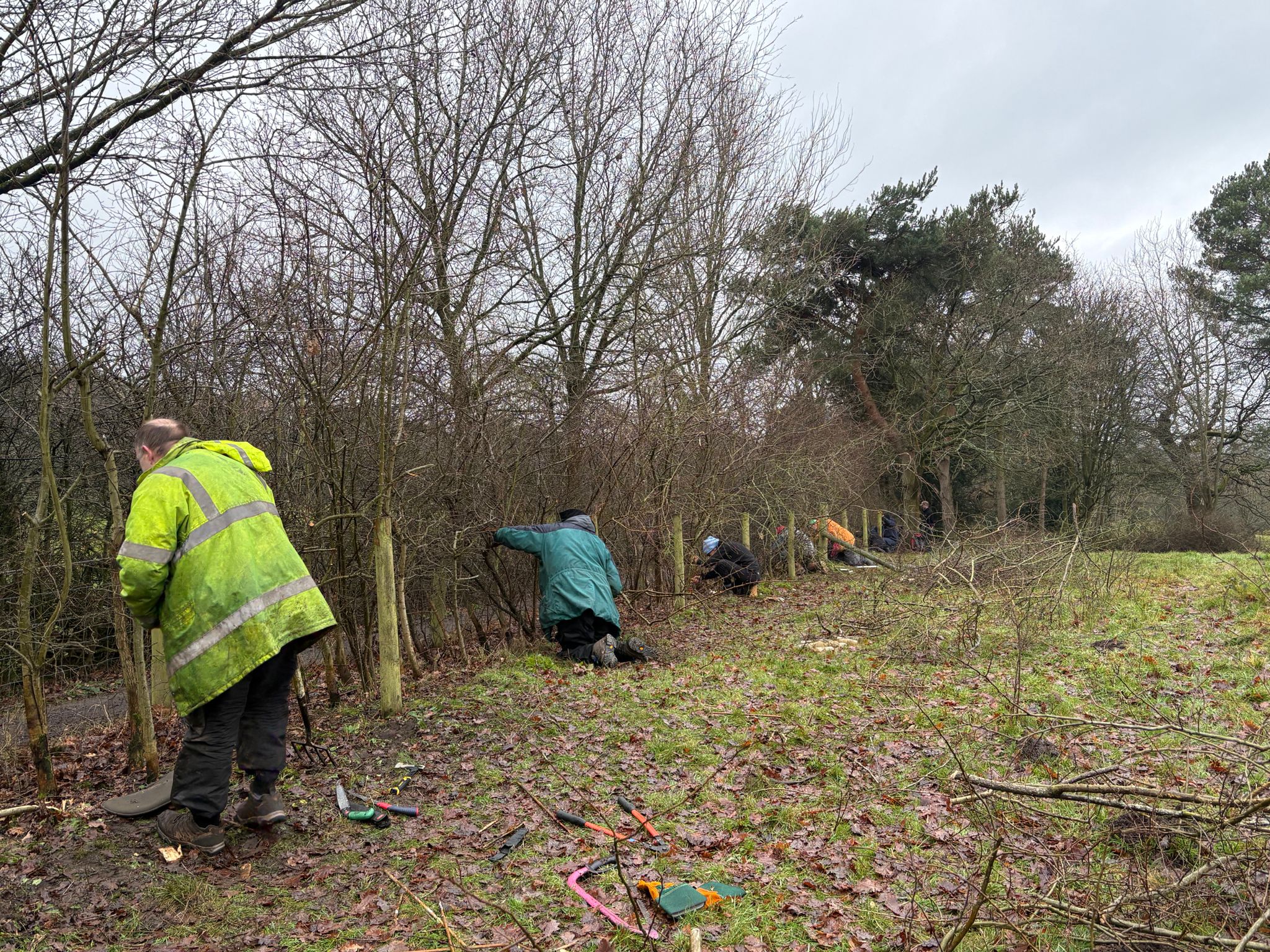
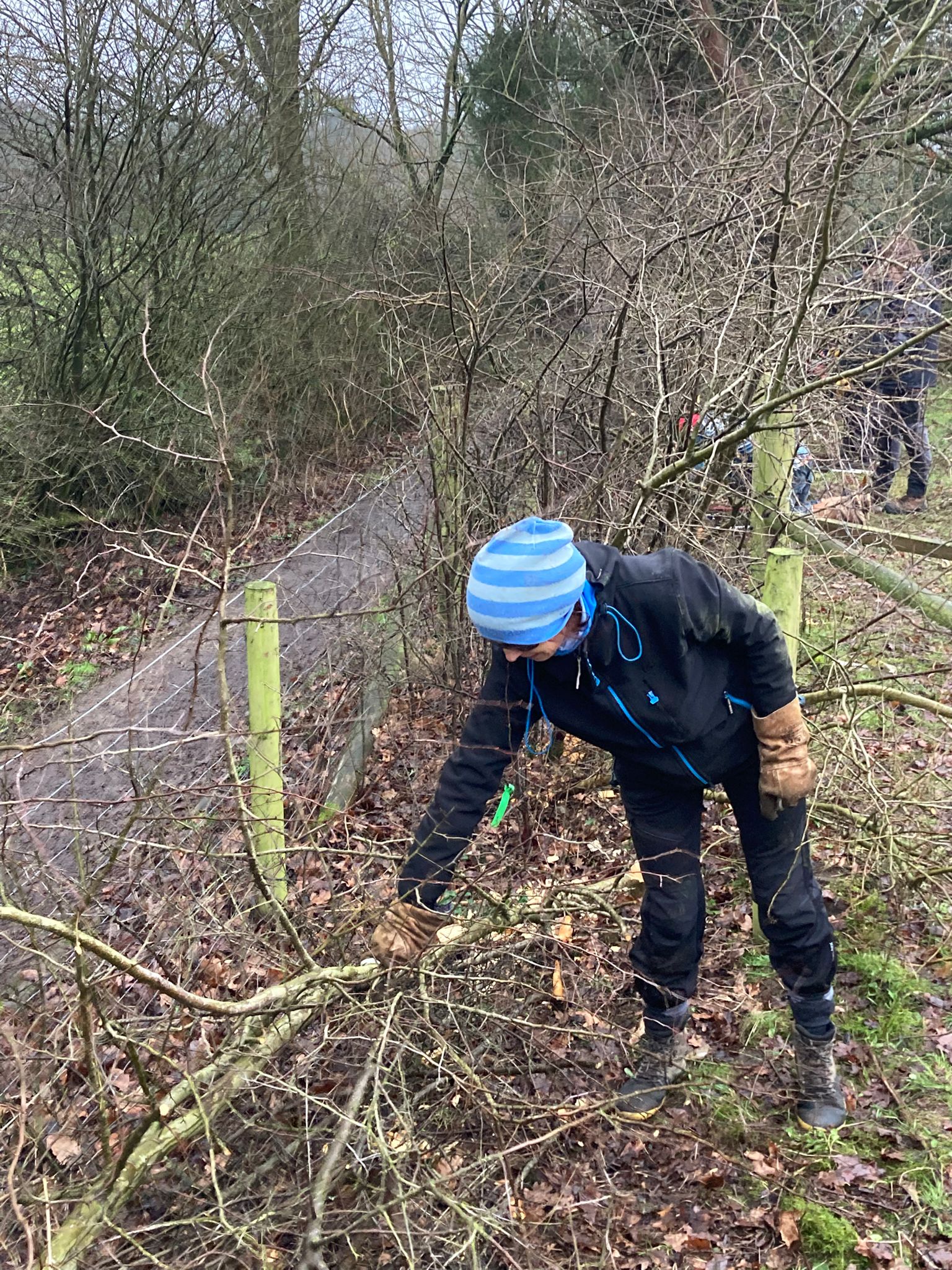
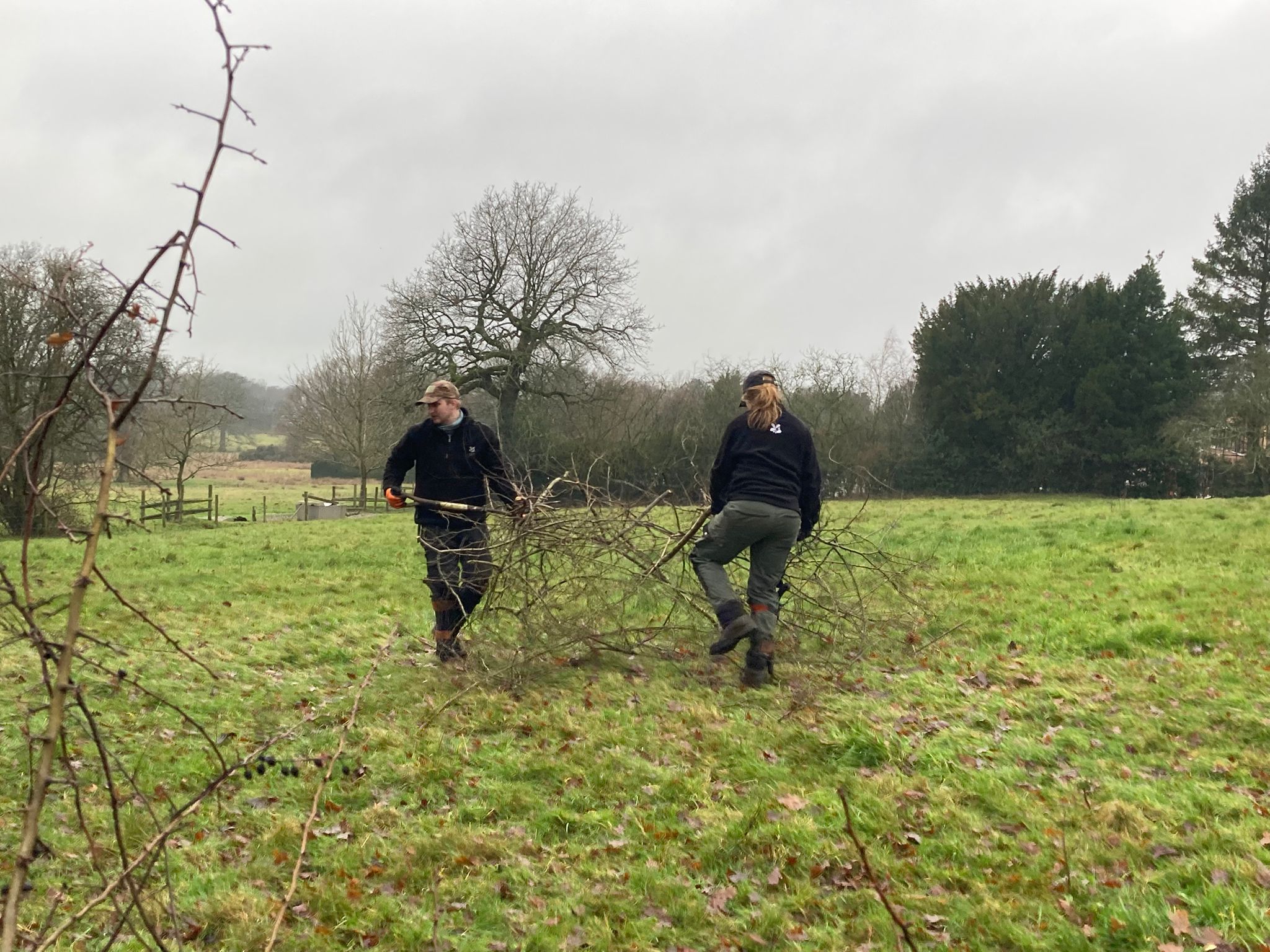
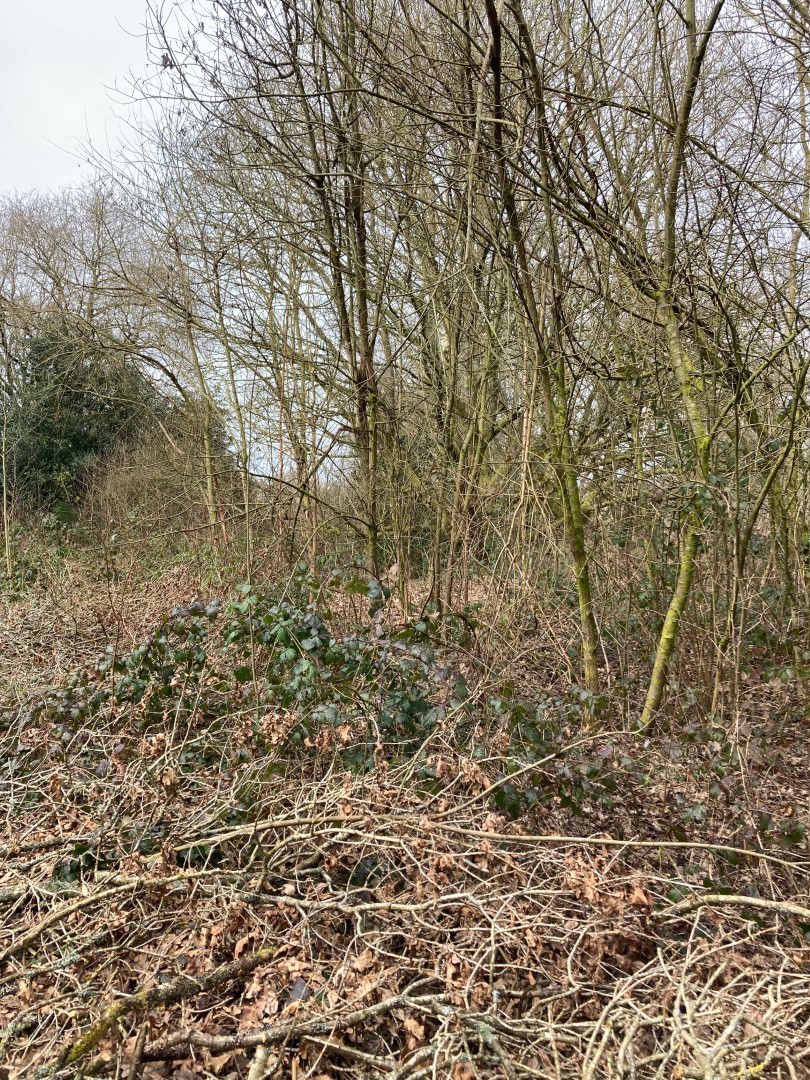
Pictures show the changing site as the group worked and shots of the ‘poppers’ show one technique.

Result – Site cleared nearly completely and left very trim for the heather reinstatement. Nicola was delighted with our efforts and keen to invite us along again to help progress this important project on what is one of Cheshire’s largest heathland areas, c. 70 acres. The group were tired but satisfied with a good-humoured day with happy chat and great weather and job well done!

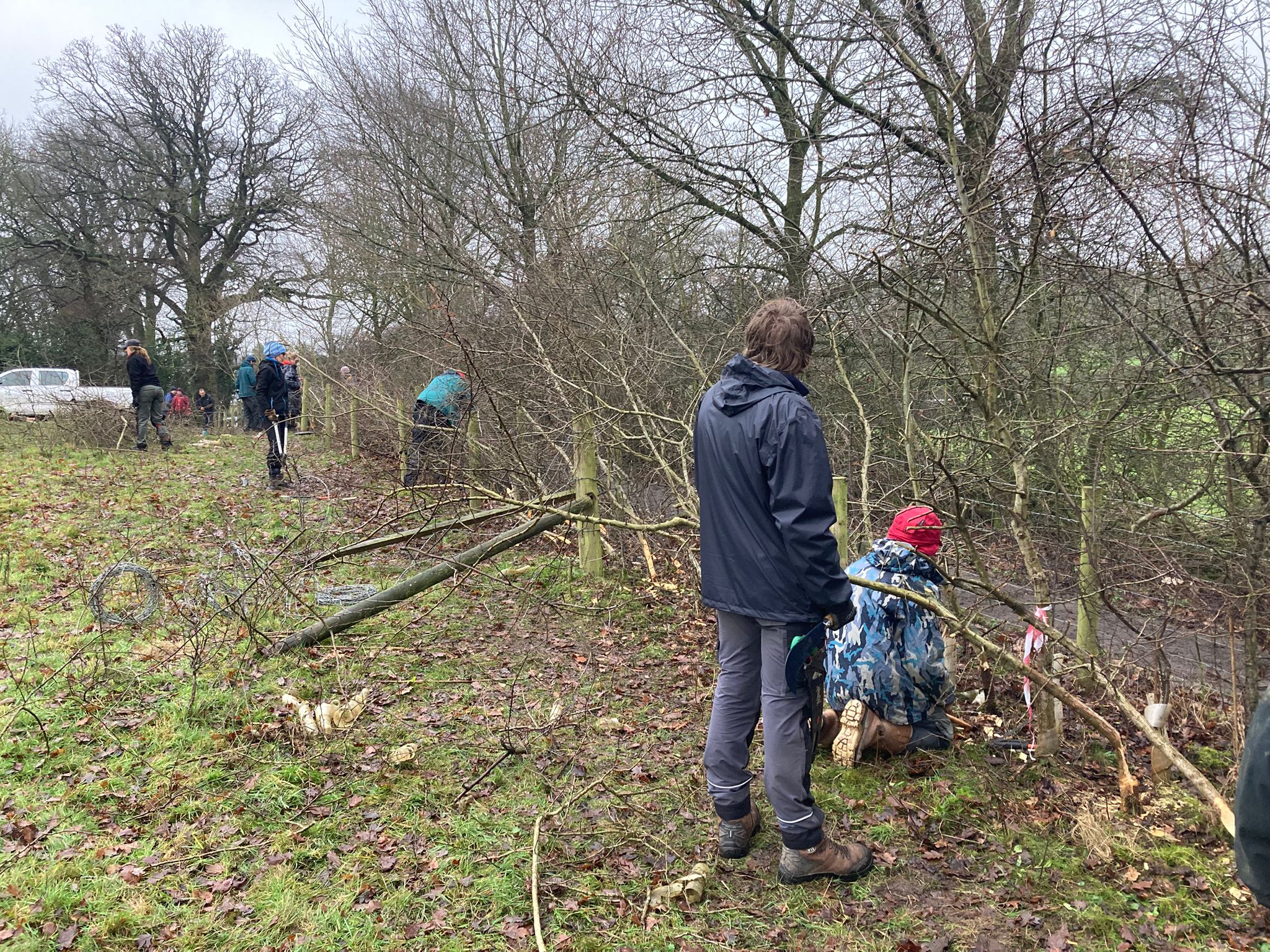
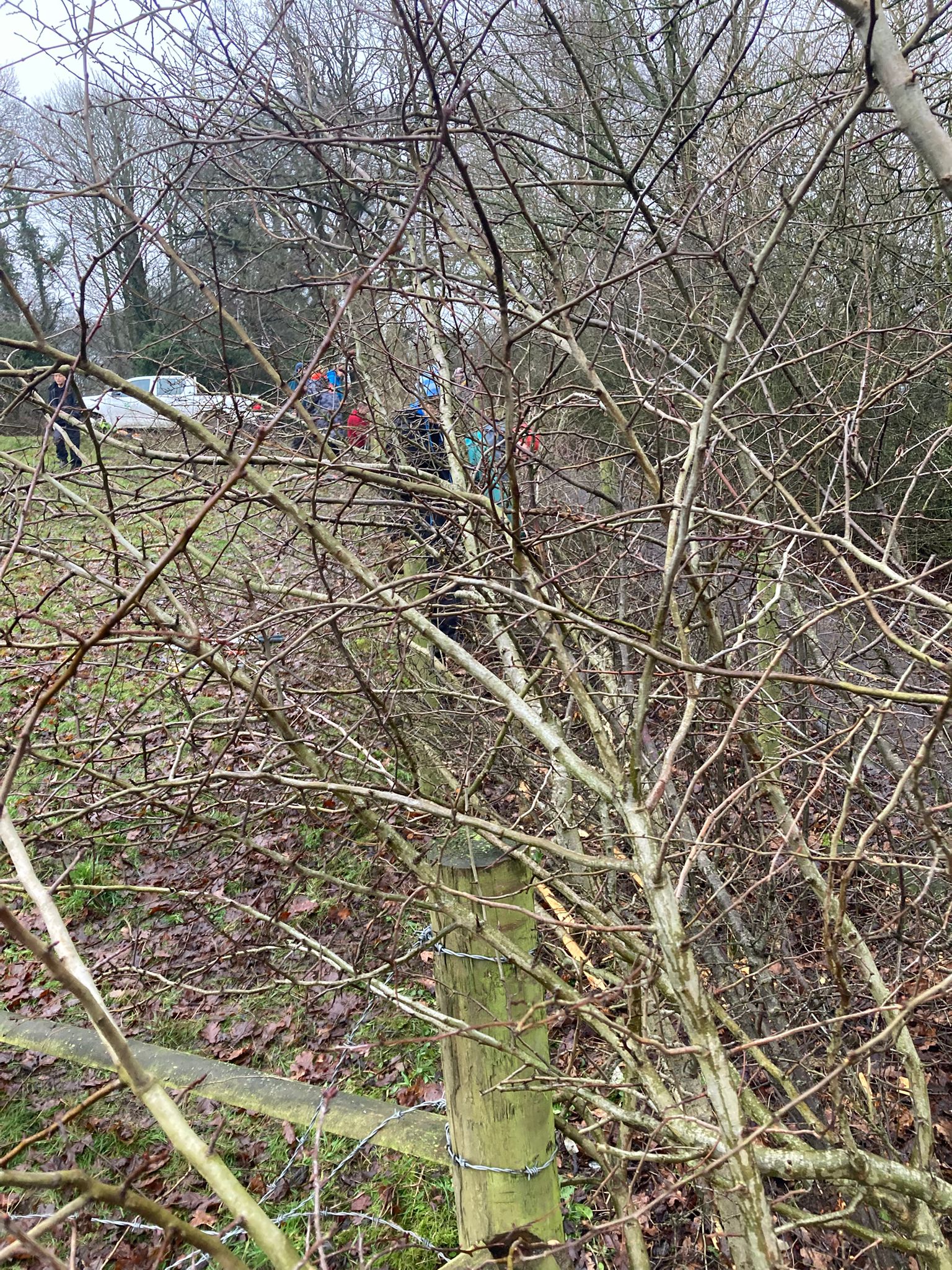
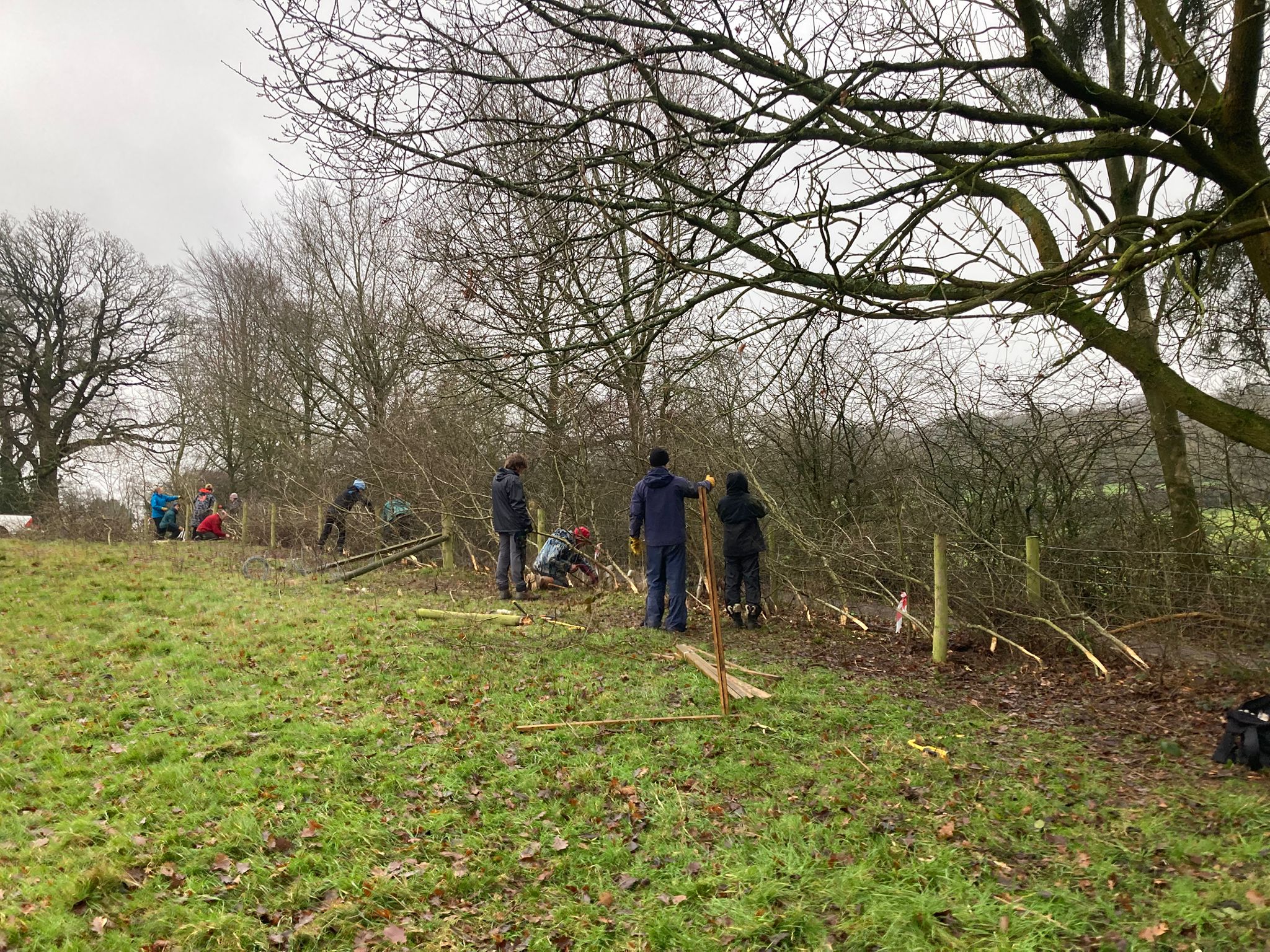
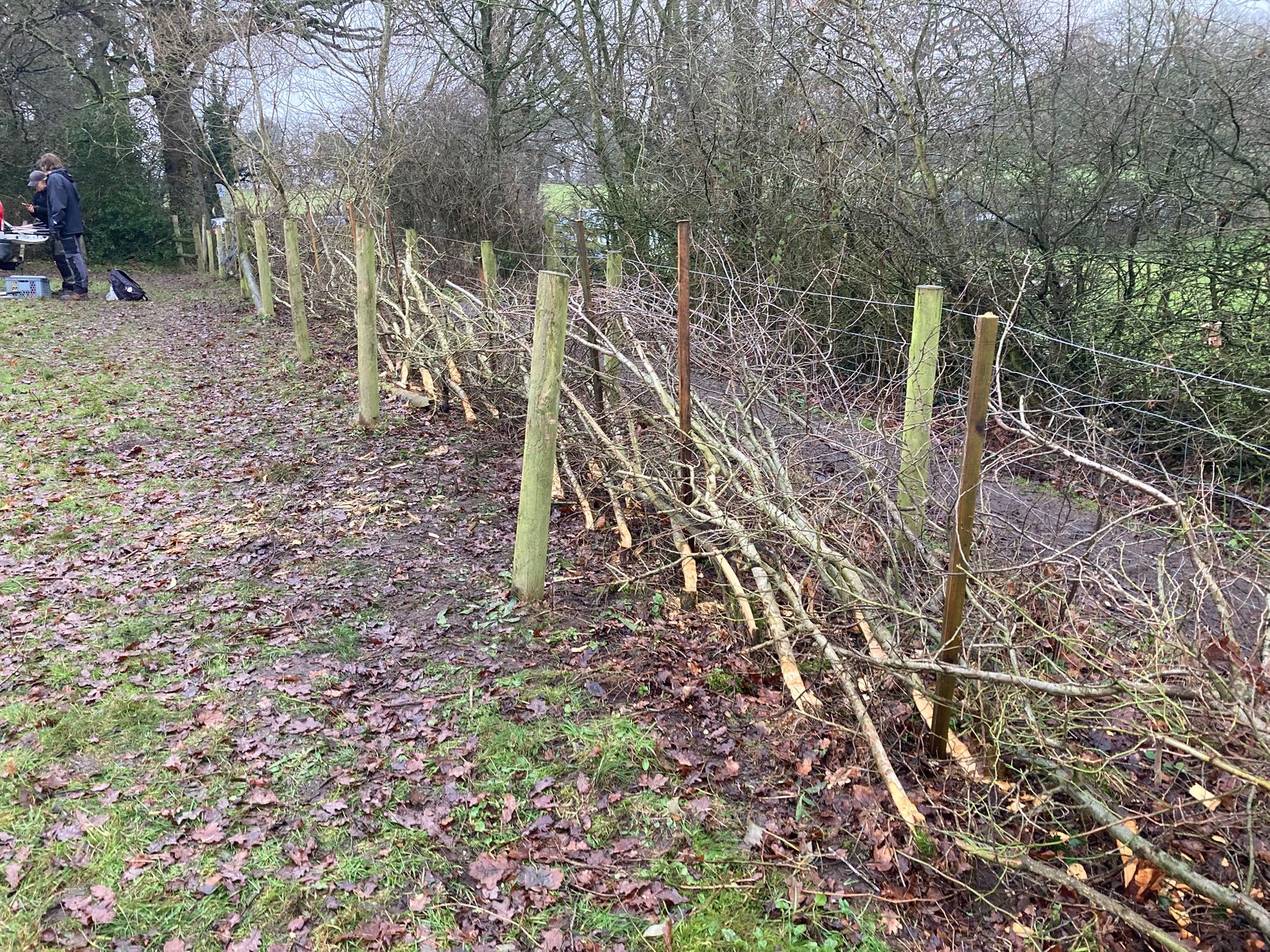
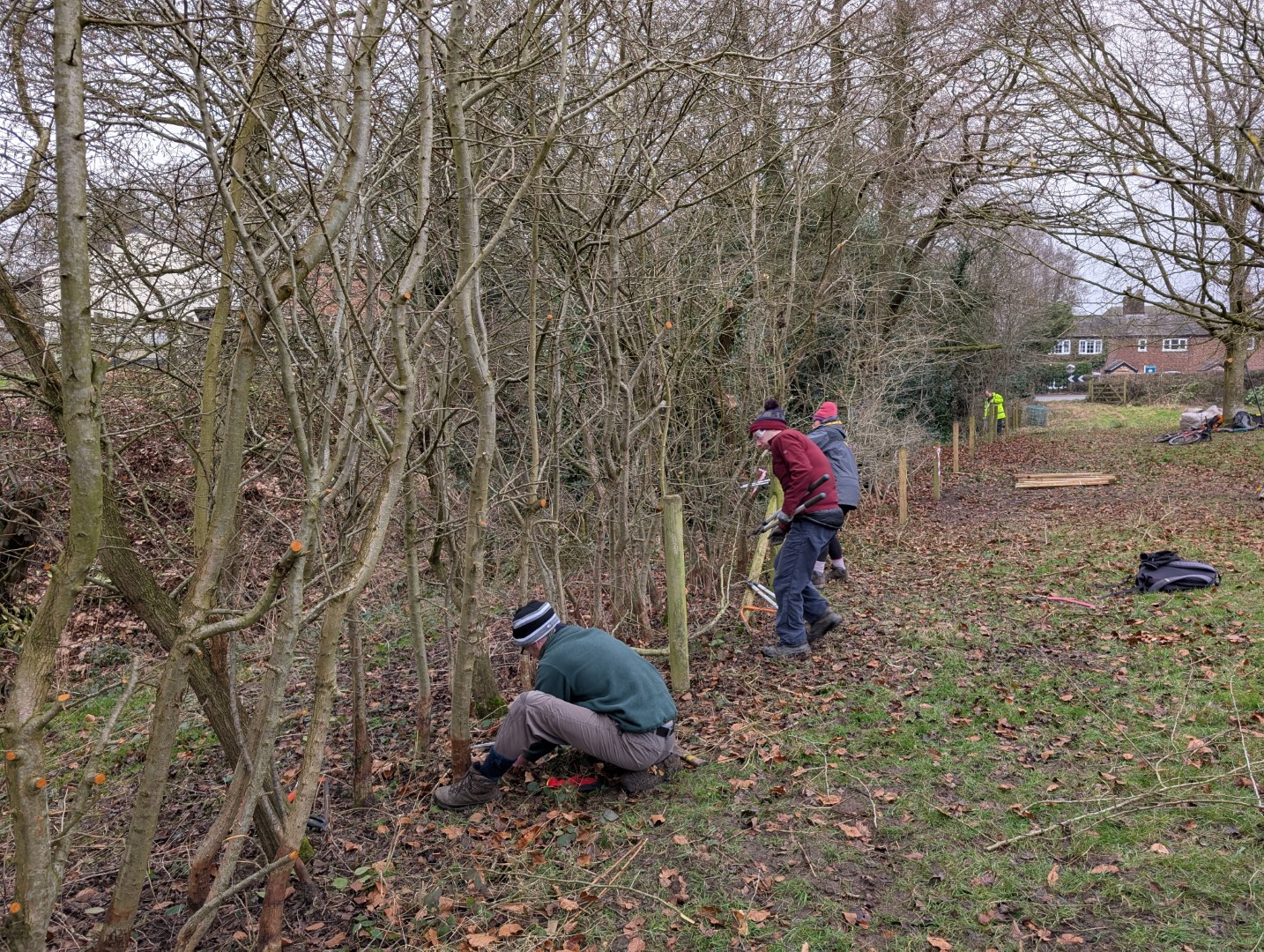
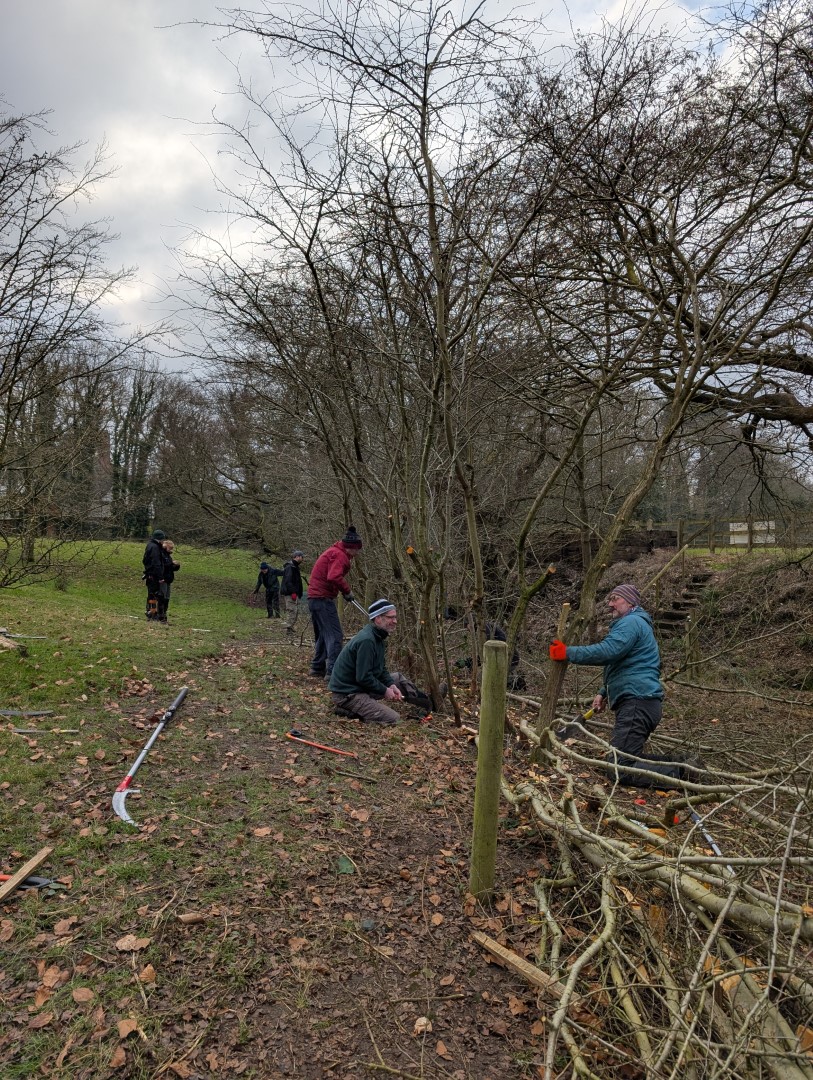
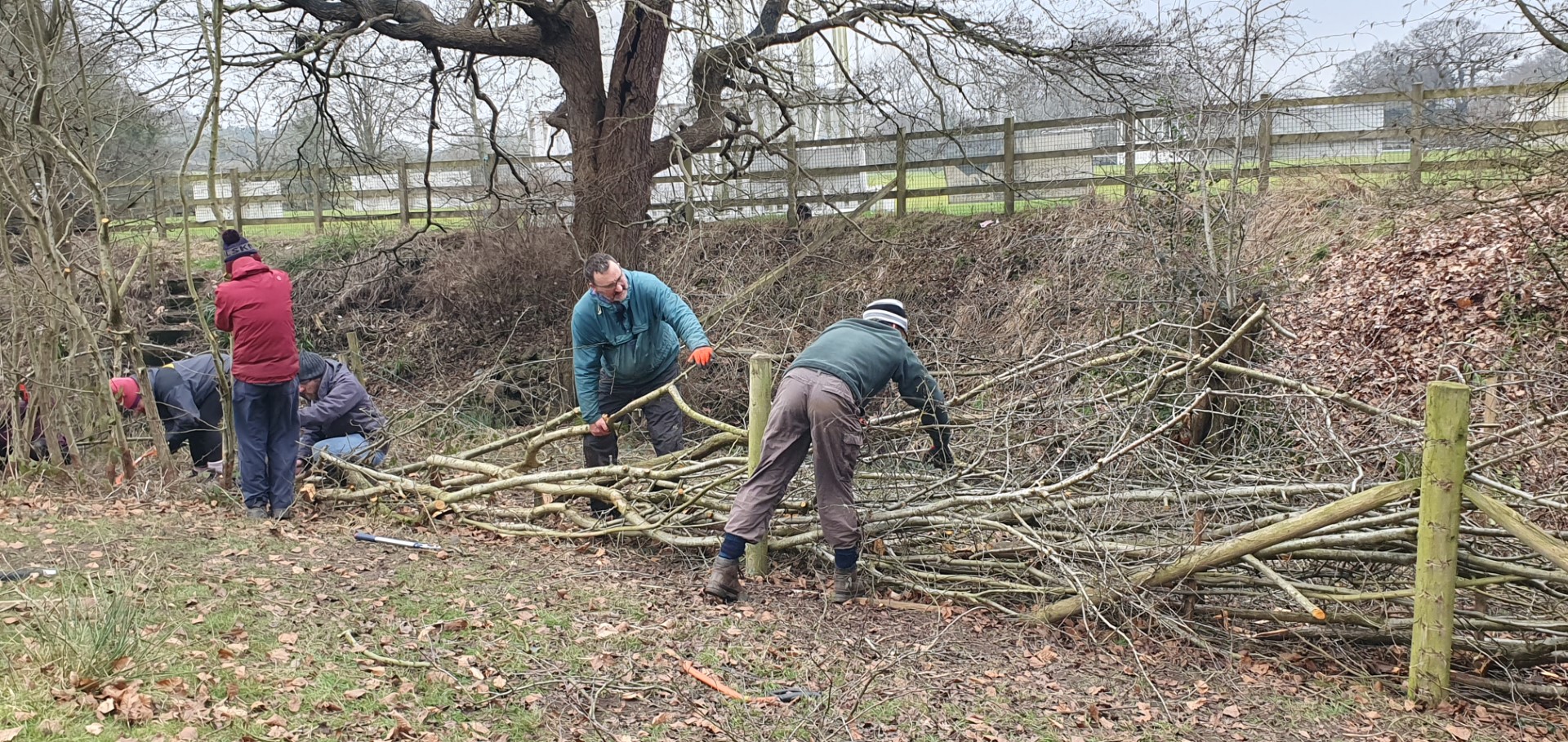
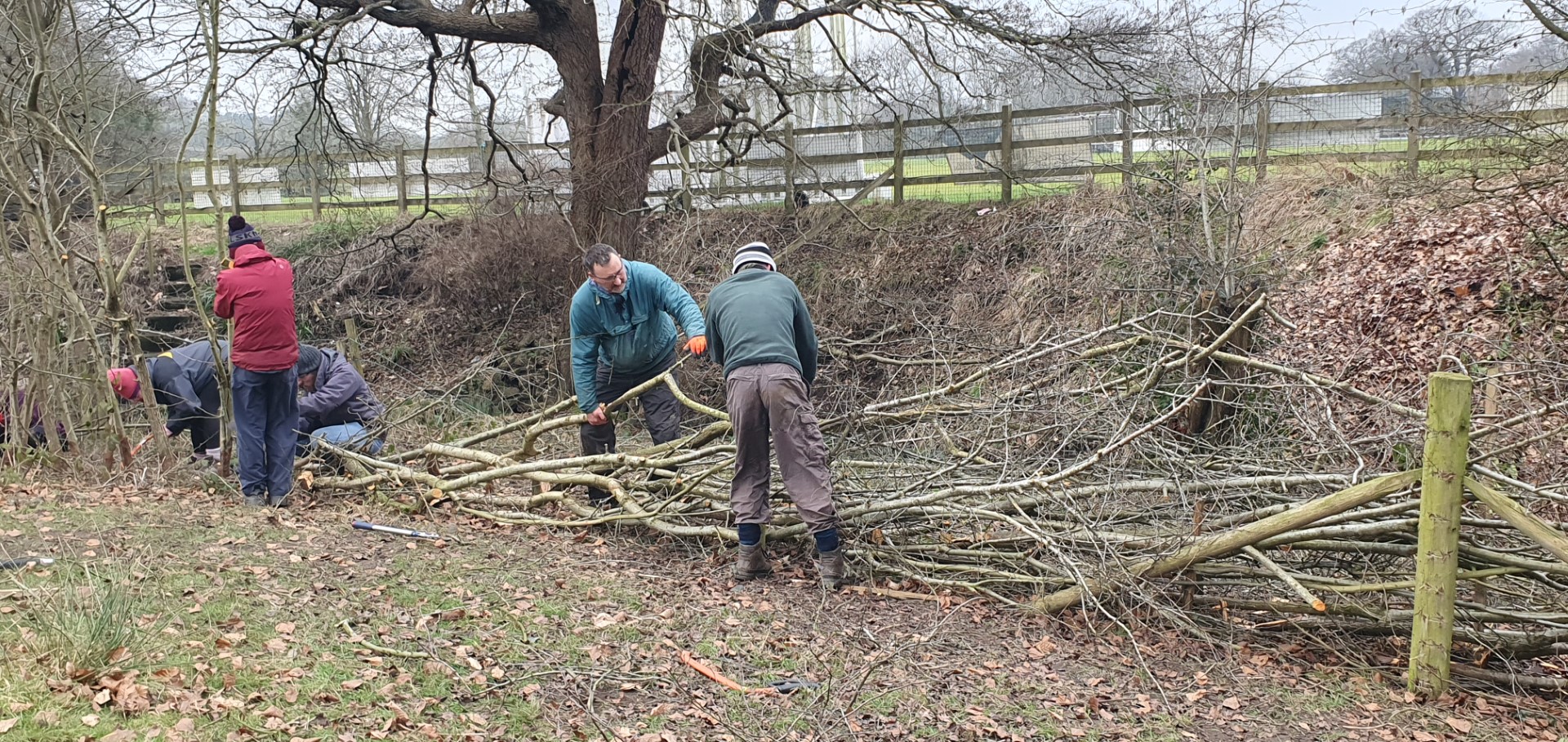
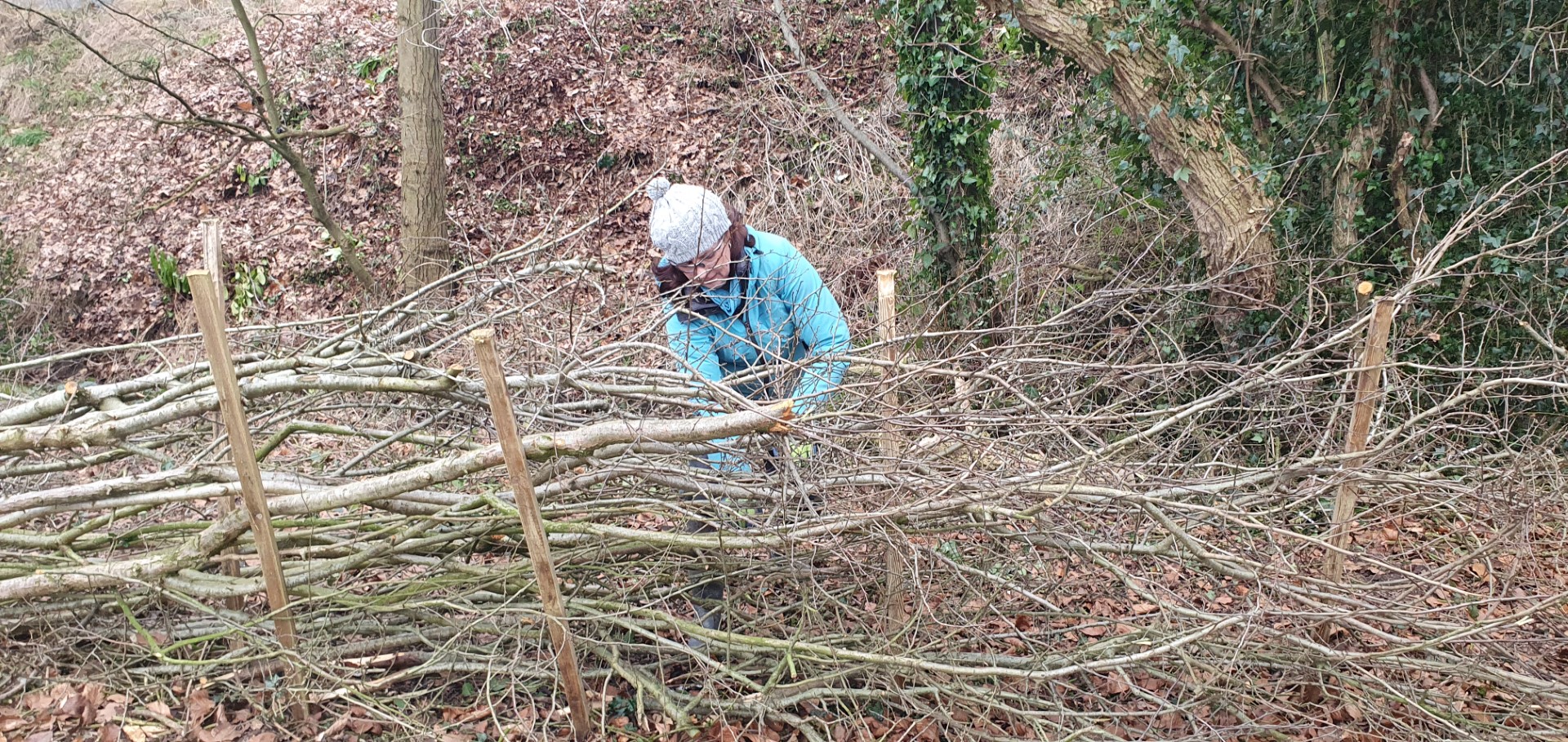
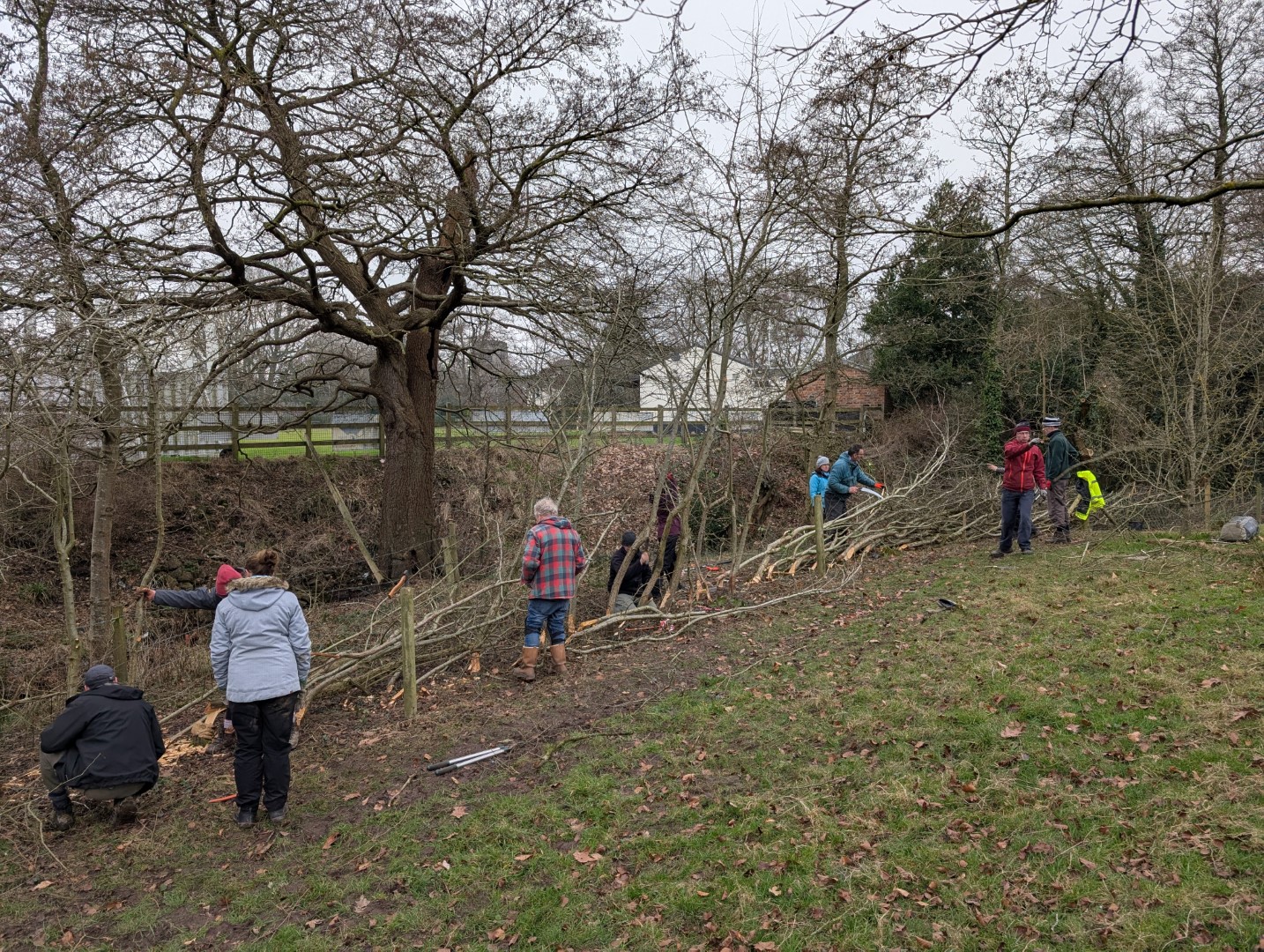
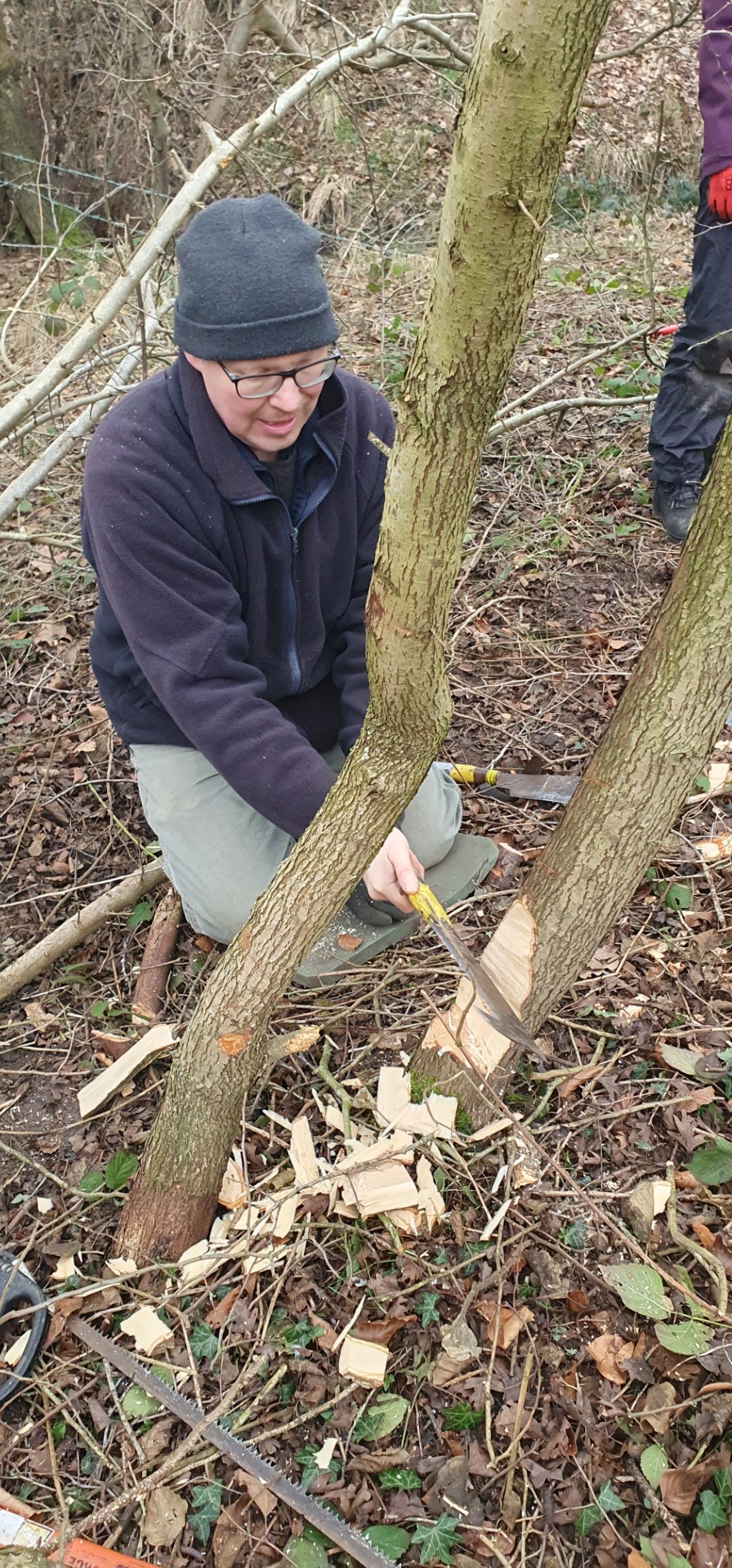
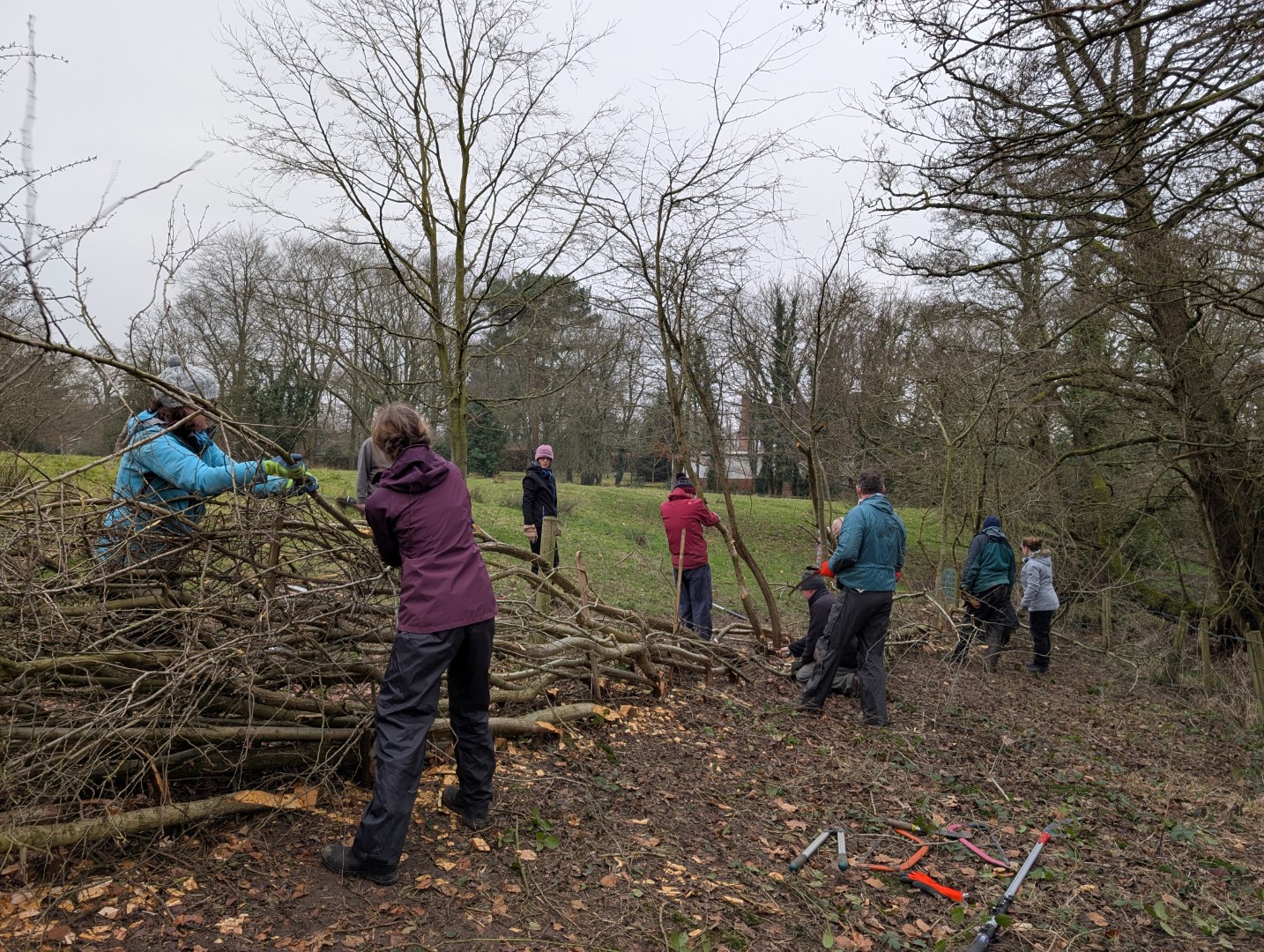
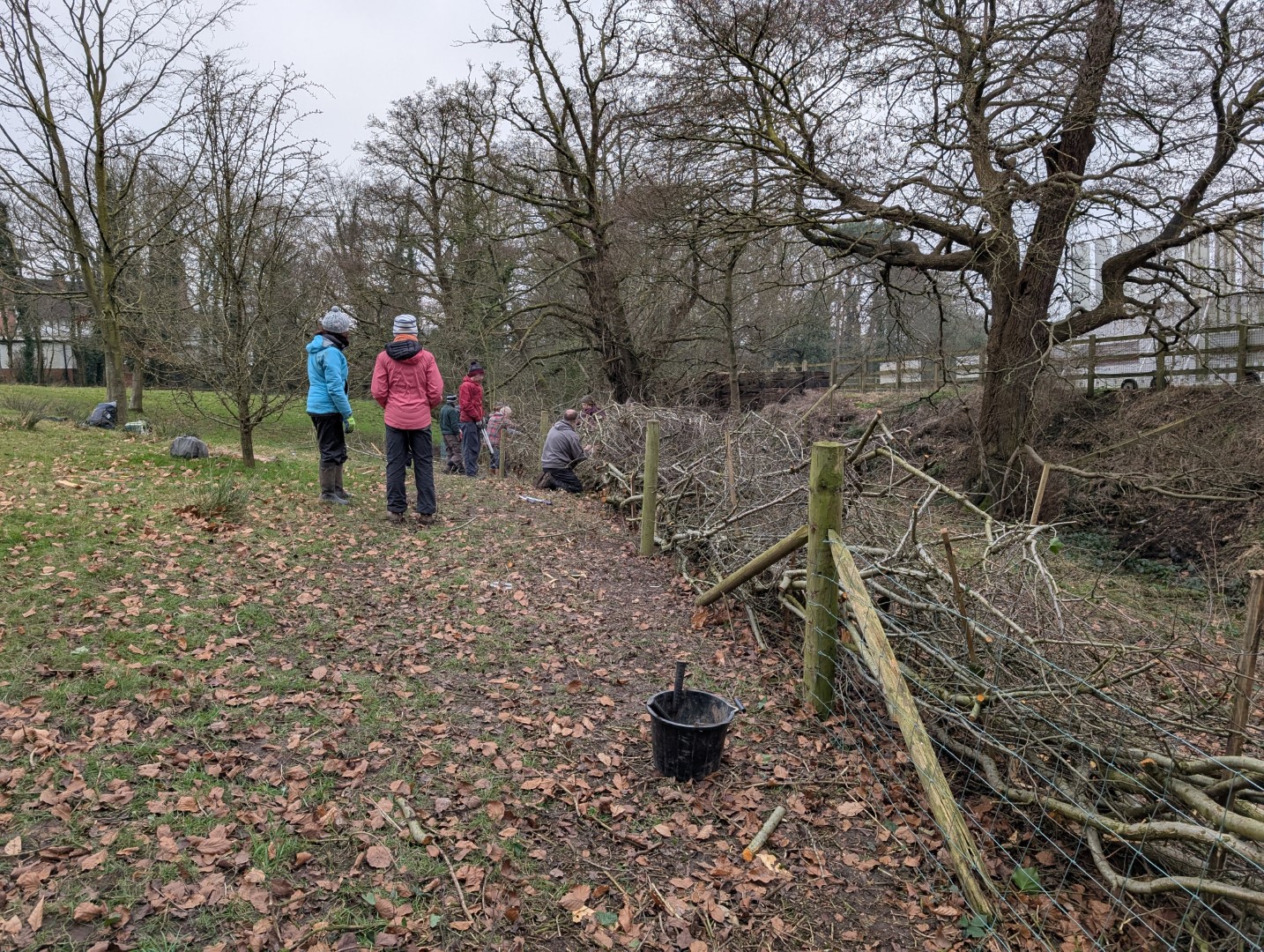
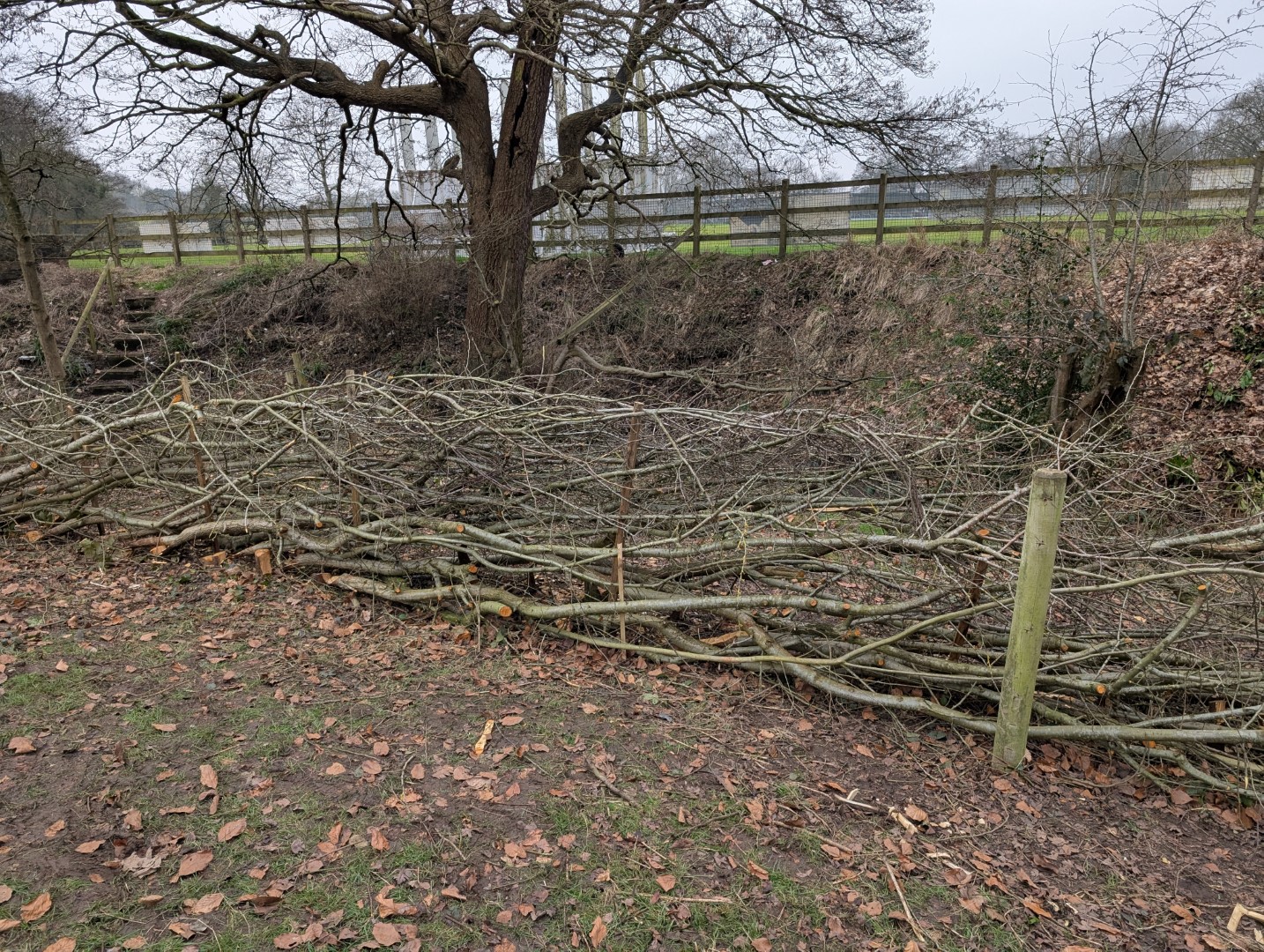
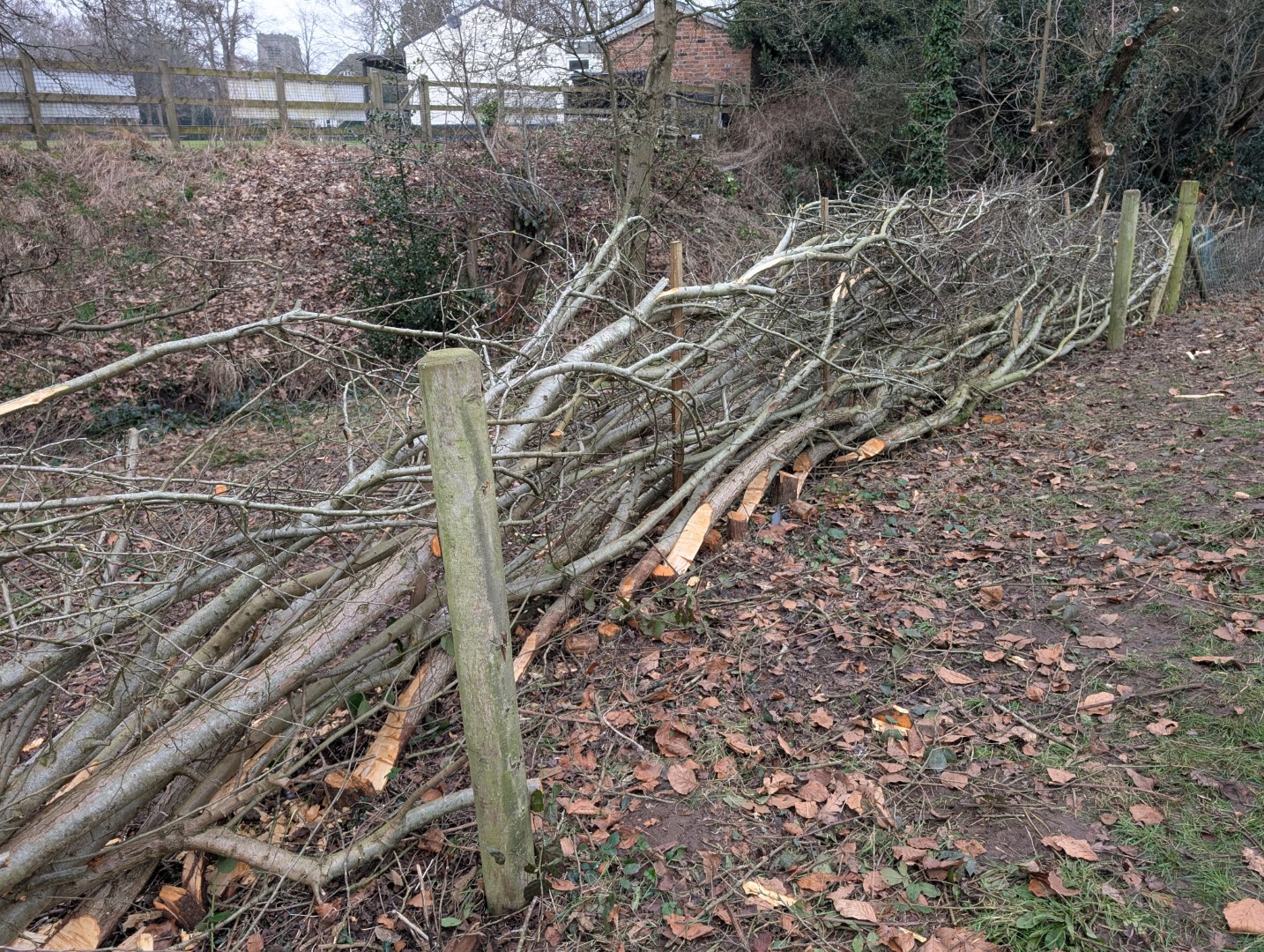
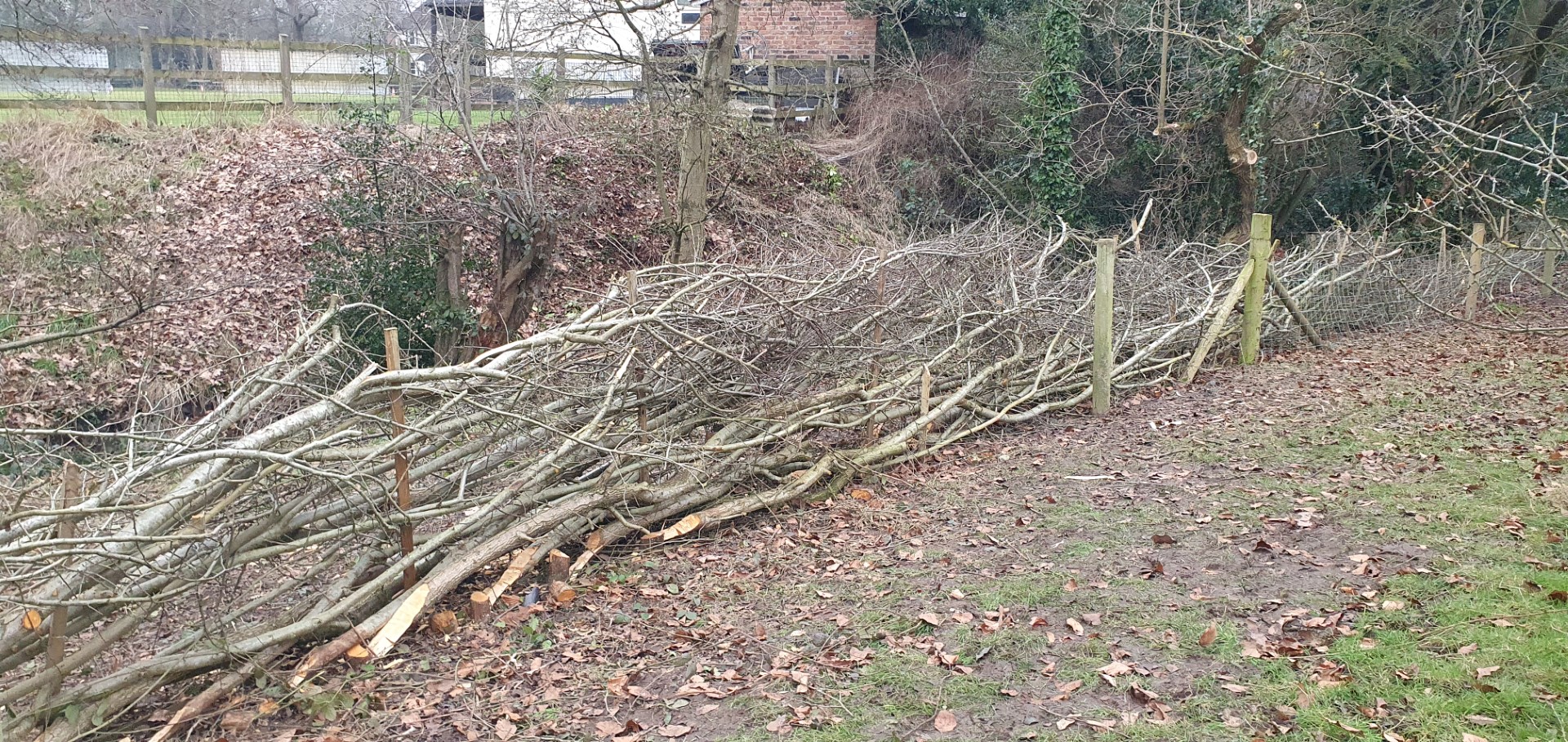
Our activity for February (on Sunday 9th) was to tackle some hedgelaying with the National Trust at Mobberley Fields, a new site for us.

The hawthorn hedge marks the edge of the farmer’s field and the ancient craft of hedgelaying was used to create a barrier to prevent cows from the field from falling into the brook and gully behind. Of course a laid hedge also has biodiversity benefits – as well as looking great! By the end of the day, the whole hedge was completed by 16 strong volunteers. A fantastic SMCV team effort!

To conclude 2024, we joined the Friends of Longford Park on Sunday 8 December. We helped with some winter maintenance of the park’s wildlife garden and adjacent areas – such as coppicing, removing excess shrub spread, and other general management. Many thanks to the Friends for the warm welcome (and for arranging a dry day: the rain arrived just as we finished!)!

As it was our final activity of the year we gathered a little later in the day for a seasonal and end-of-year get-together – mince pies and mulled wine aplenty. Cheers!

Woodland work at Hollinwood

On Sunday 17th November we very much enjoyed volunteering at Hollinwood Scout Camp, near Worsley, Salford.

The camp on this site was founded in 2017, so is relatively new and is still being developed. It had had to move from the site where RHS Bridgewater is now, where it had previously been located for many decades.

Hollinwood truly has the potential to be an amazing asset not just for the local Salford community but for the whole of Greater Manchester and the North West. Hollinwood has 30 beautiful acres of woodland and meadows where young people are able to run around and be outdoors.

The task was helping to develop an open-air holistic area in a glade within the trees, for the Scouts to relax and reflect in. The task included trimming the bottom of a large conifer and also removing an unwieldy tree! The branches were then dragged (getting the steps in!) to the far side of the beautiful woodland, to create a natural fence line.

We all had a picnic sheltered from the rain under the trimmed conifer tree….a perfect spot!

Rhododendron at Spud Wood

On Sunday 13 October we were again removing rhododendron from this Woodland Trust site, on behalf of the Friends group. This seemed to be the last main area of rhododendron in this particular patch, so a satisfying section to clear. The woodland floor can begin to recover from the effect of long coverage by rhododendron, although this will take some time – but in due course, all being well, the wood’s biodiversity will greatly improve!

On Sunday 8 September we visited a new site for us: Happy Valley in Bramhall, part of Ladybrook Valley. We joined the Friends of Ladybrook Valley in their ongoing work to improve and restore a meadow. Our main activity was to rake off the grass, which had been cut a week or two previously; this will help to reduce nutrient levels in the ground, providing a better habitat for a range of wildflowers. In some areas we cleared patches of ground and sowed yellow-rattle seed. As a semi-parasite on grasses, yellow-rattle allows gives other traditional meadow species a chance to establish themselves.

Despite a poor weather forecast, the day remained dry for us. Thanks to the Friends for a warm welcome (and biscuits!).

Update, June 2025: The FoLV have confirmed that there is now yellow-rattle in the meadow!