Feeds:
Posts
Comments

Our activity on Sunday 2 March was at Lindow Common with the Cheshire East Rangers.

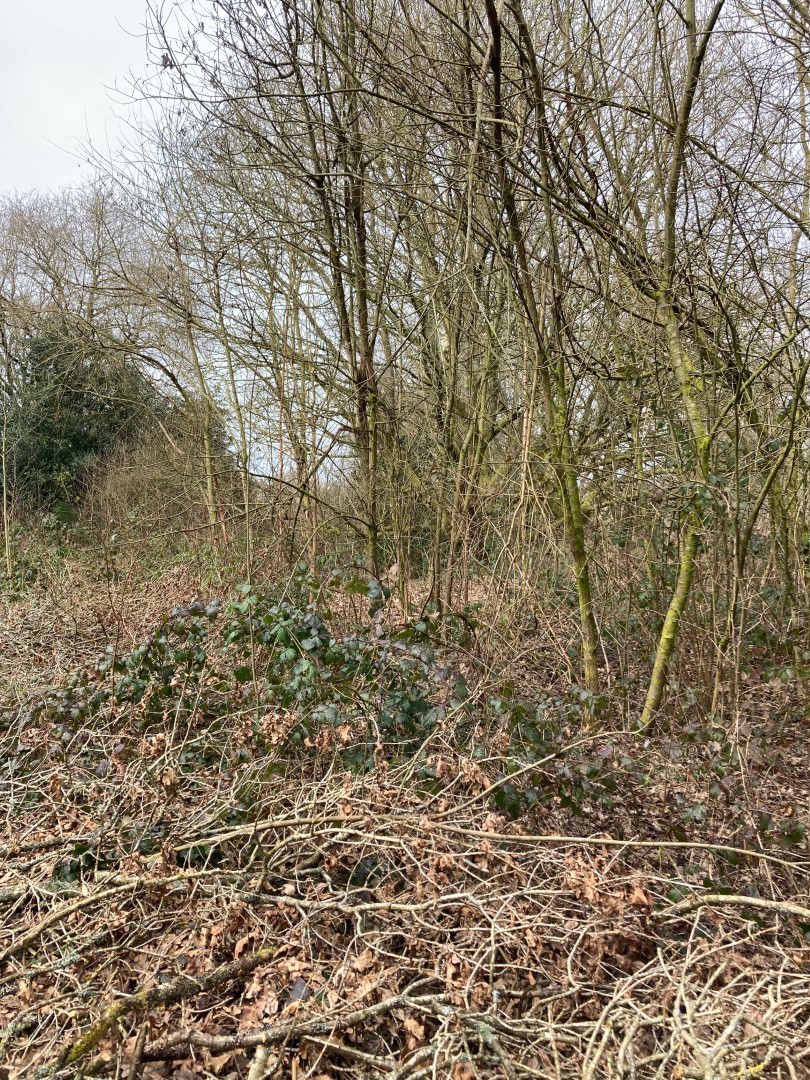
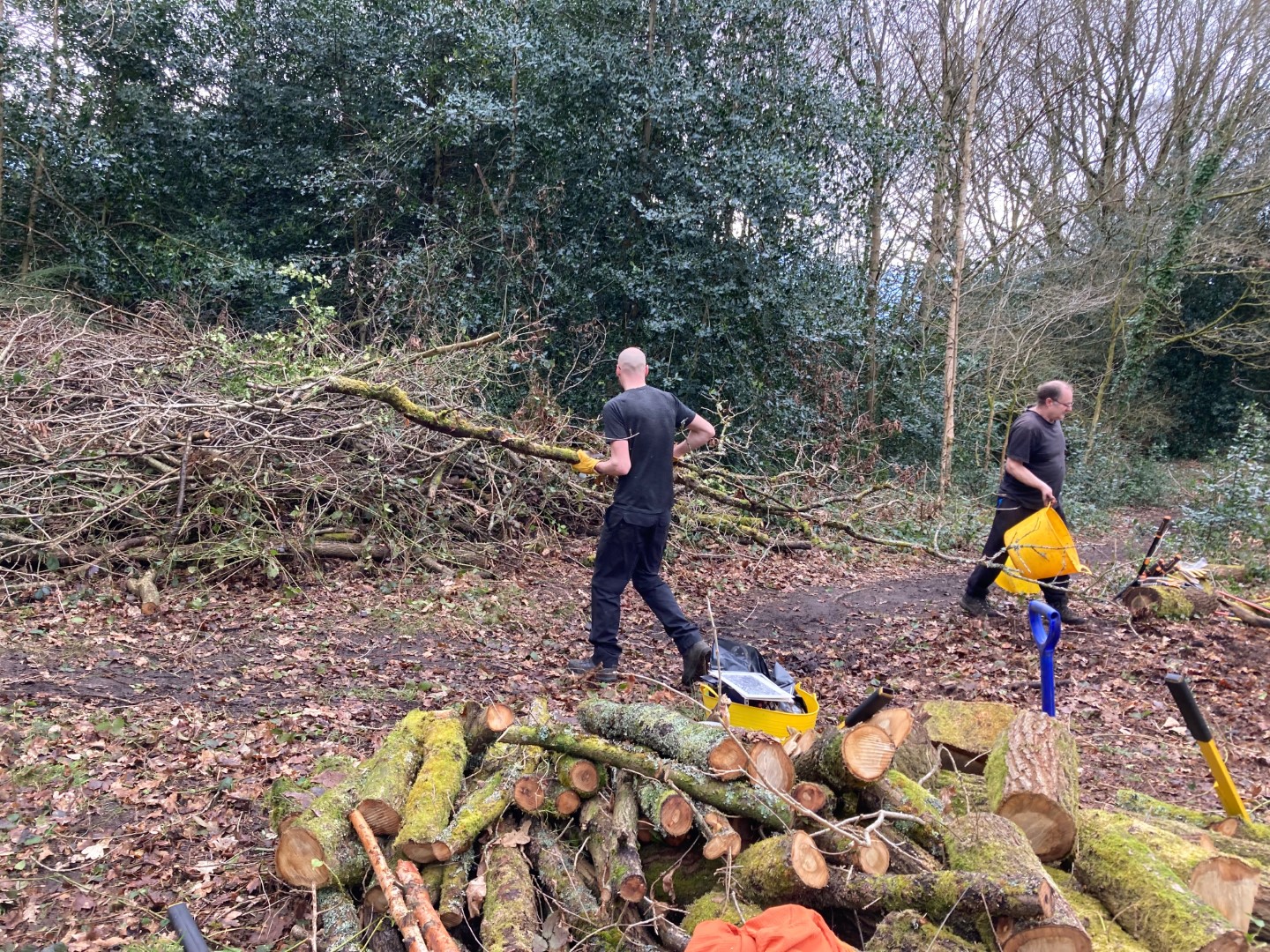
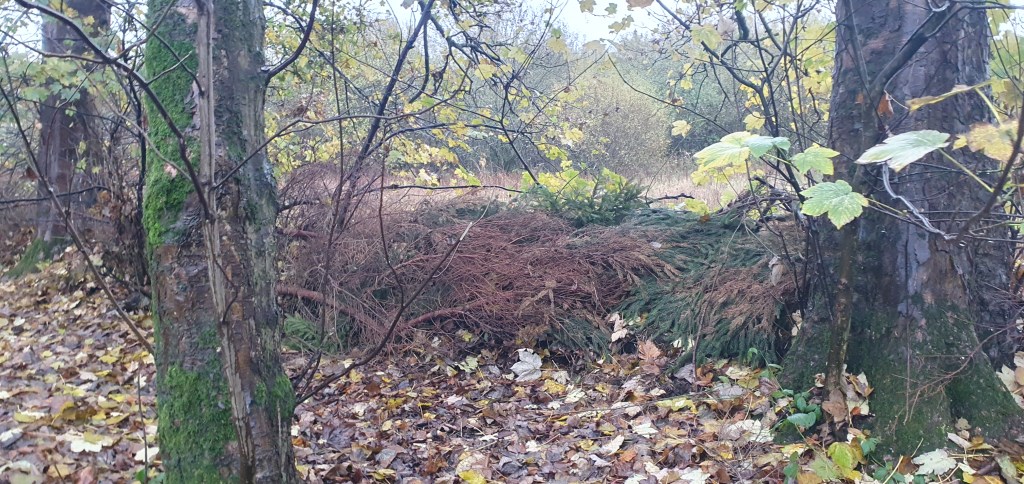
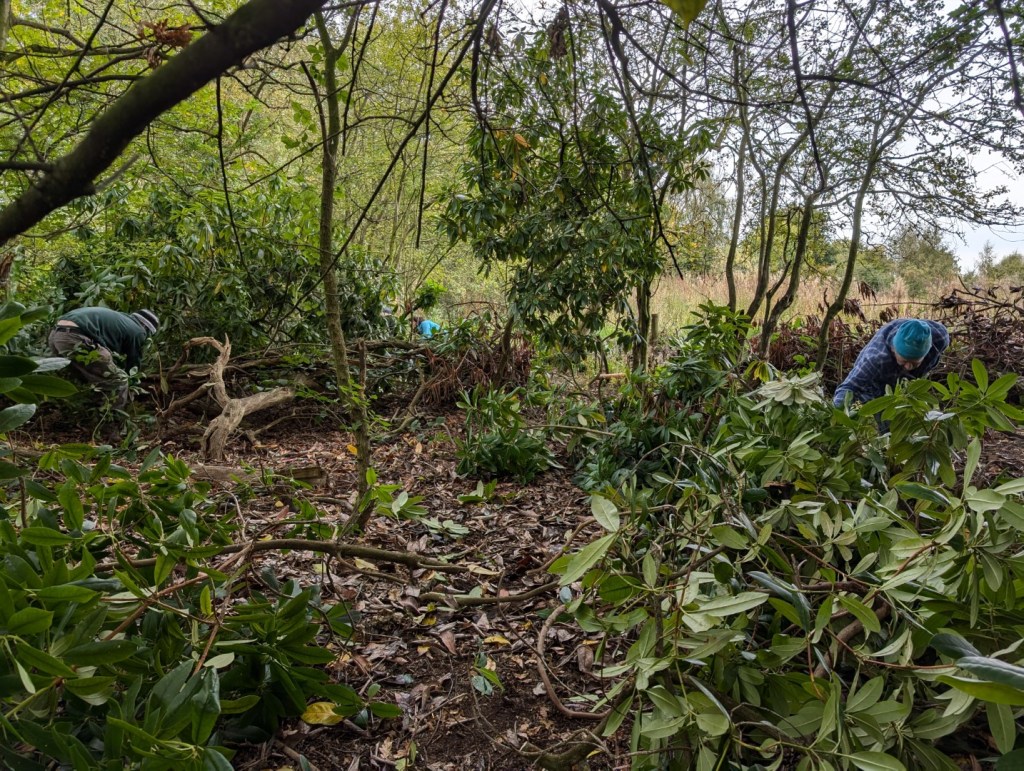
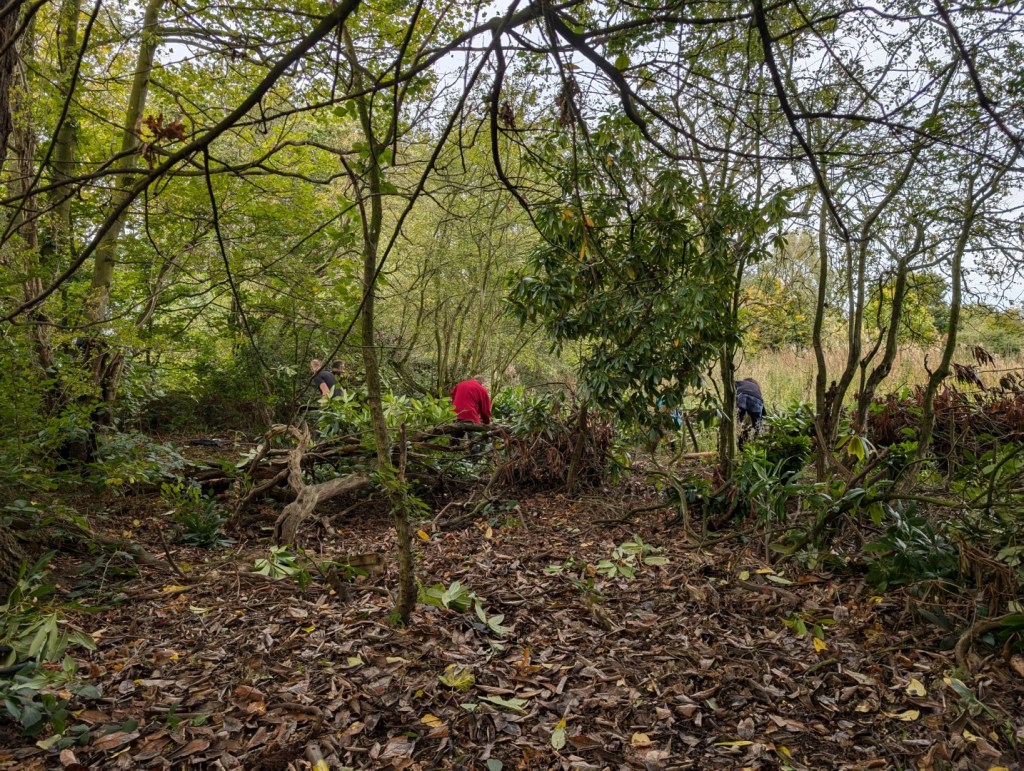
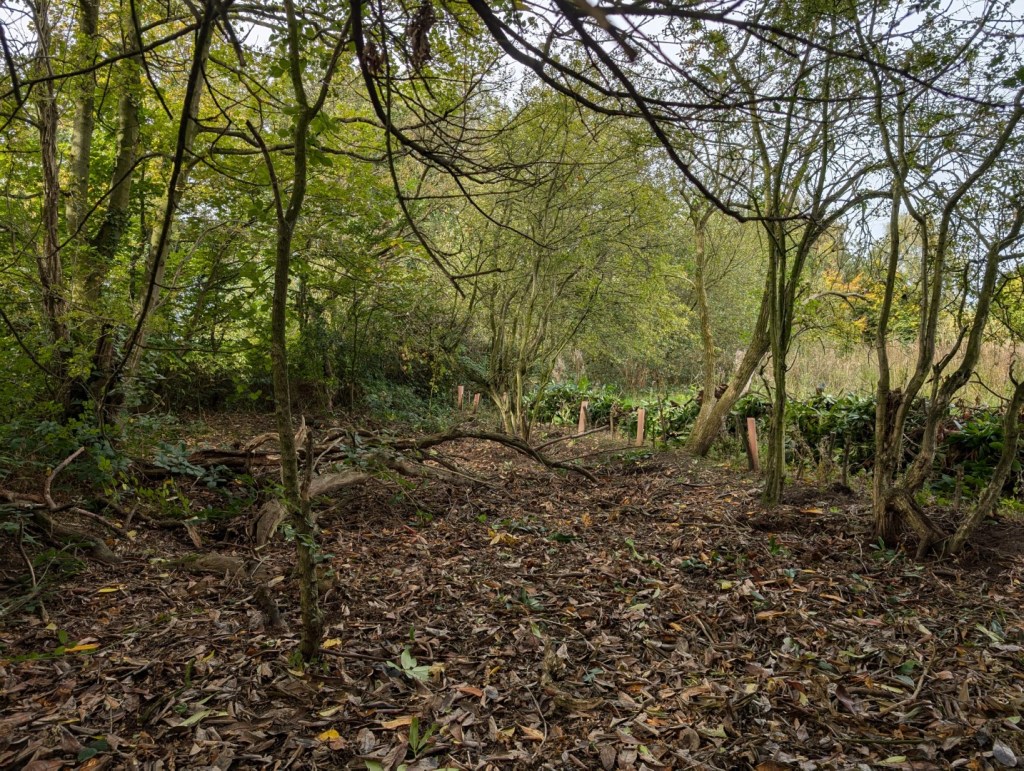
Context – The site was all former heath and we were tackling a quarter acre on the east side of the Common that had become established ‘high forest’ woodland. The opportunity to regenerate this area was due to the falling of a huge oak tree. The space under the canopy was in fact the area we worked on which just shows how broad an oak can grow with its canopy! The tree had been completely cut down and the resultant arisings had to be shifted into an enormous dead hedge (a.k.a. a pile!) at the side of the perimeter woodland along with a pile of heavy cut logs to establish habitat for fauna.

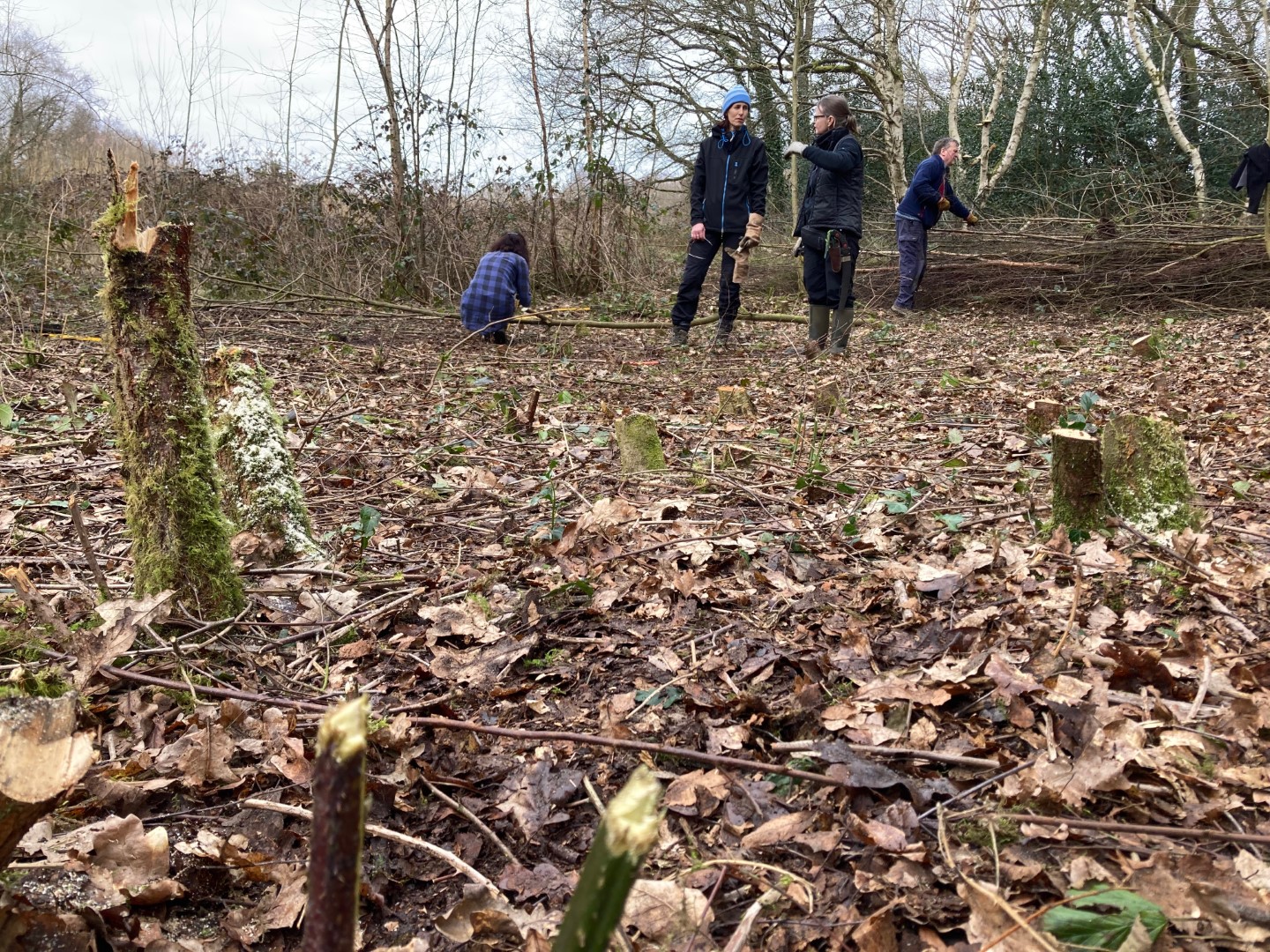
Task – The main task after this considerable clearance was to pull up/cut/uproot the many small native saplings which were developing in the woodland, along with many heavily overgrown brambles which were making a dense thicket above the soil. The more removal the better as this would expose the soil to light and permit the seed bank of the heath to begin to regenerate. Nicola Ginn, our Cheshire East Ranger who is helping Bollin Valley Partnership, oversaw our work and gave us a quick overview of the Common and some of the work being attempted. Some of the birch arisings will be used to create bundles to place on the banks of the large mere to protect them from erosion caused by ducks.
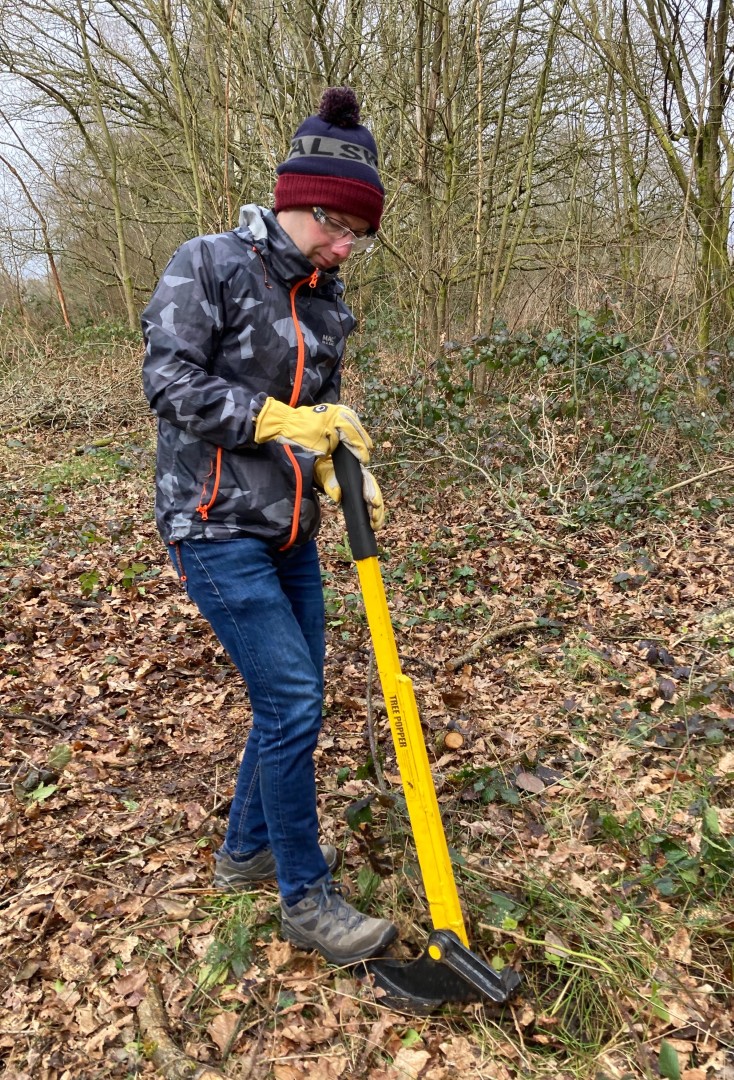
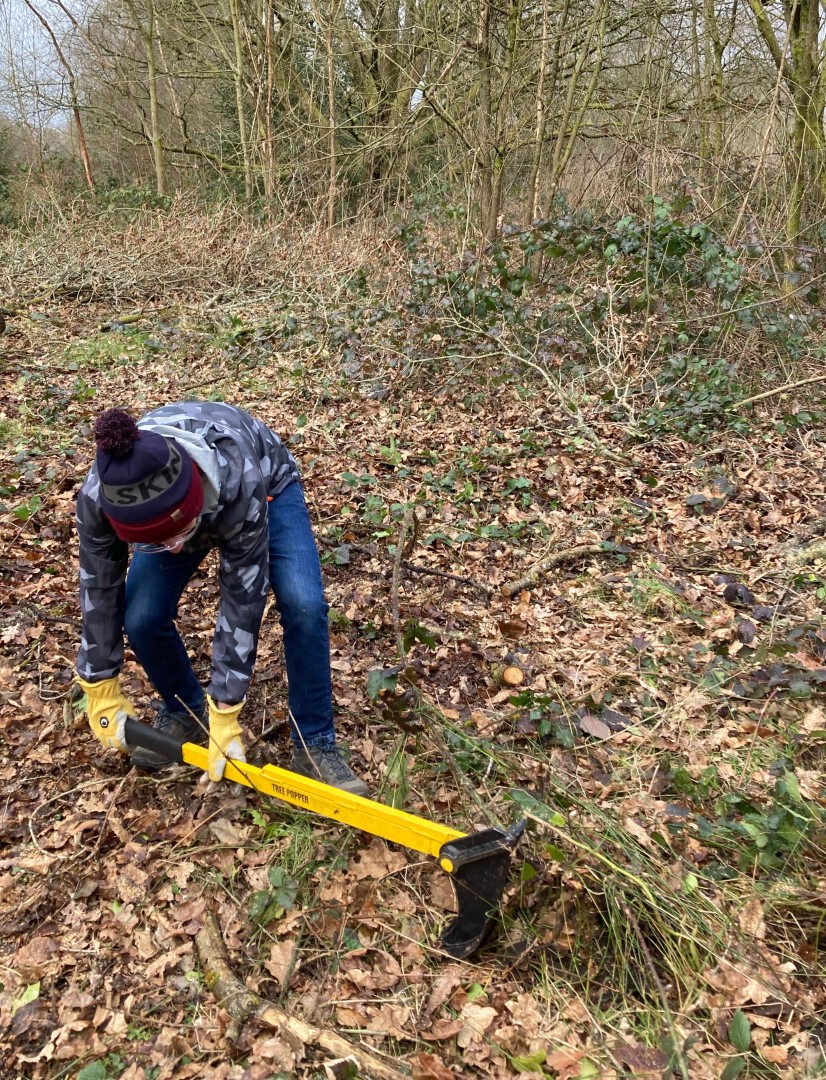
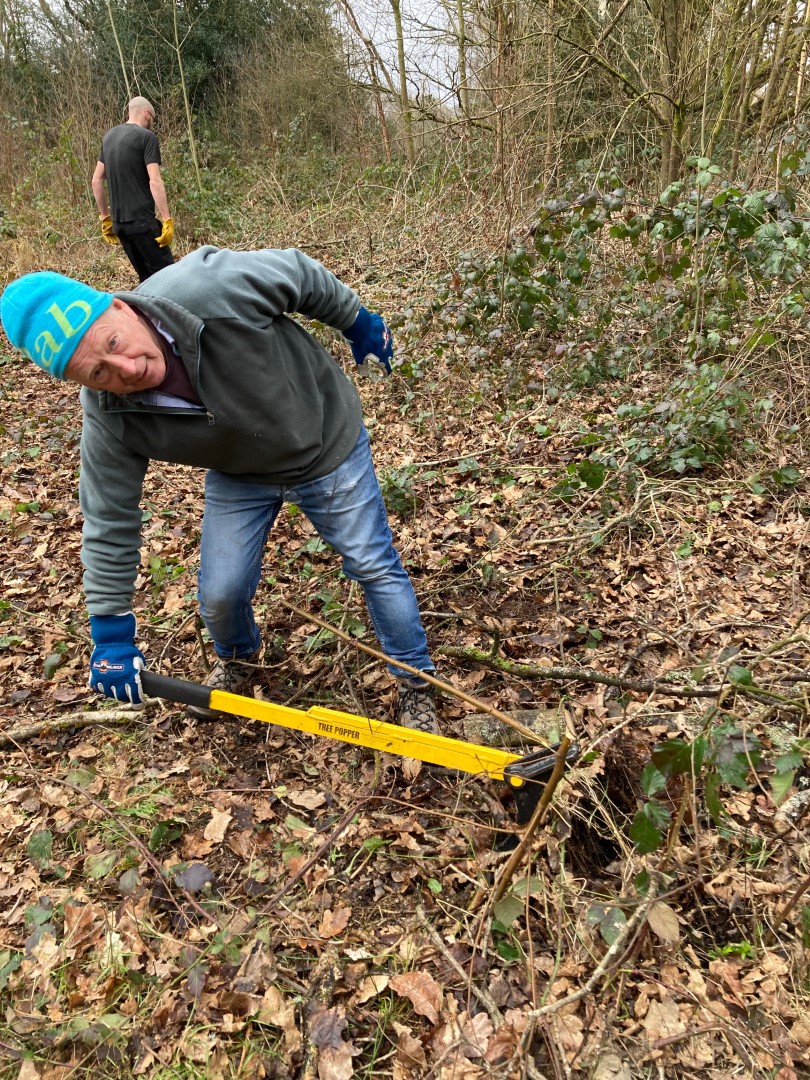
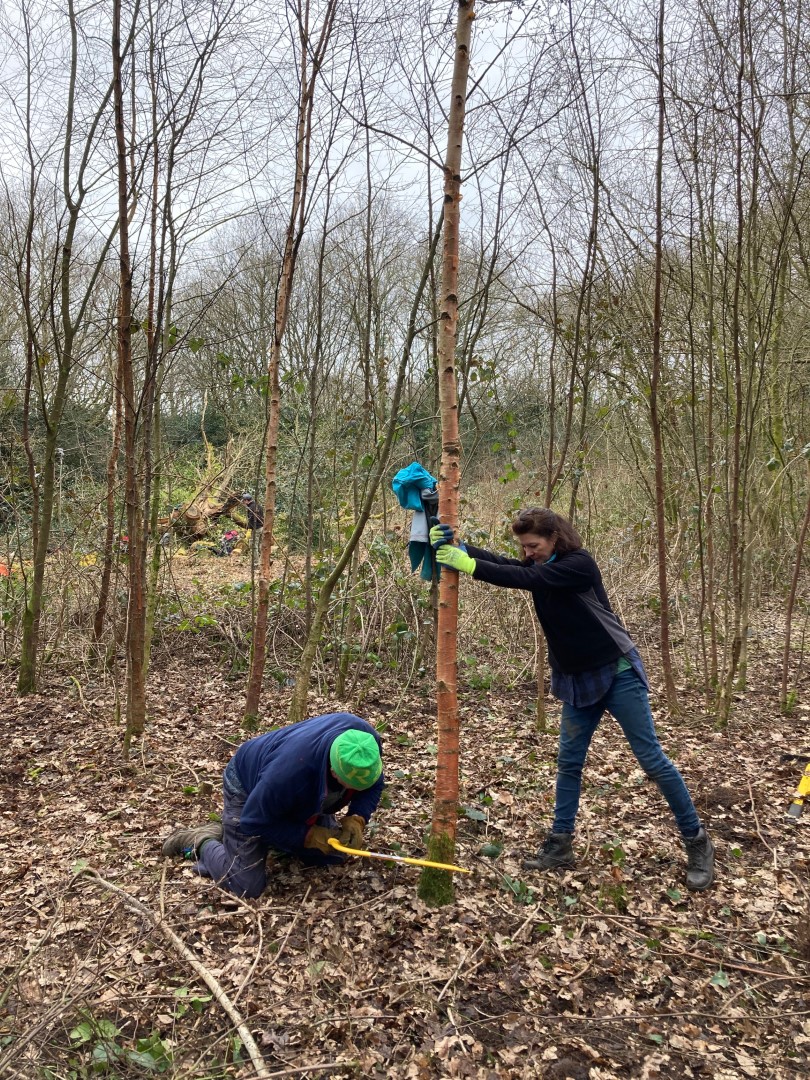
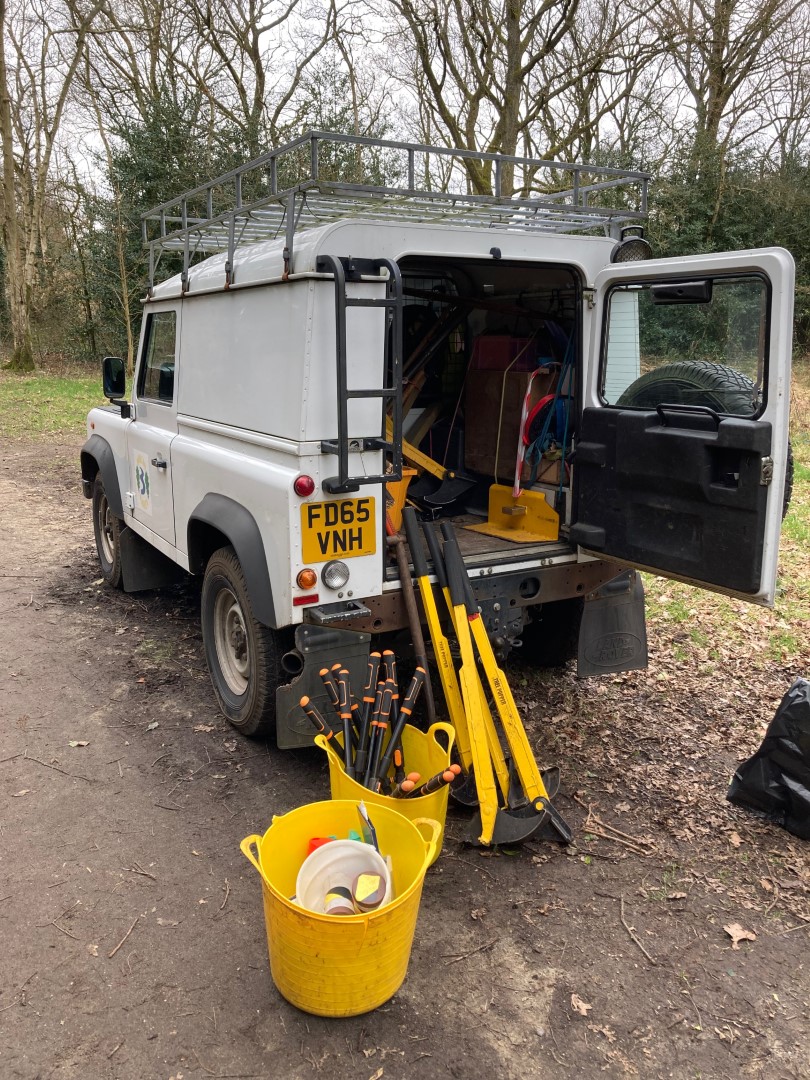
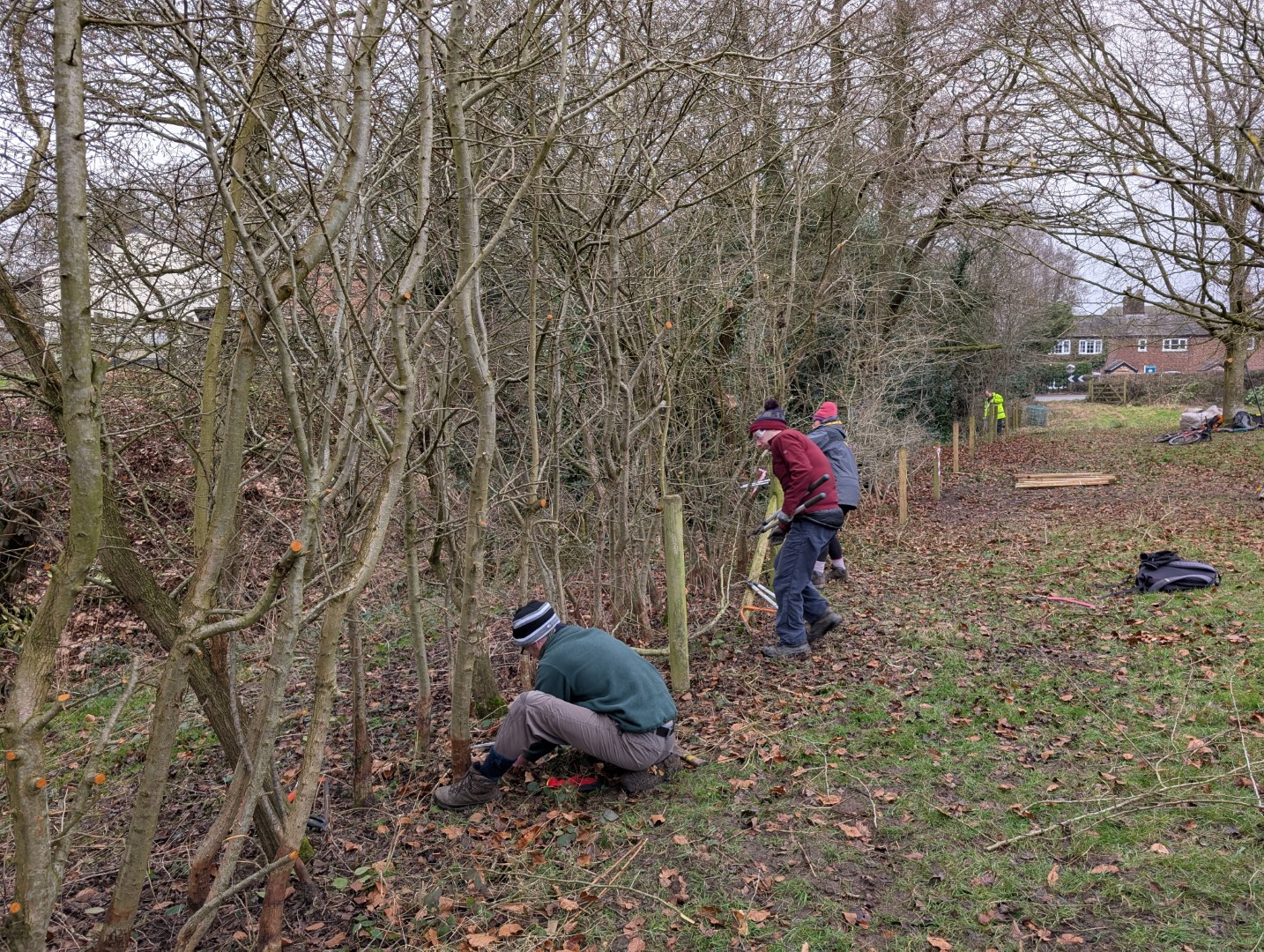
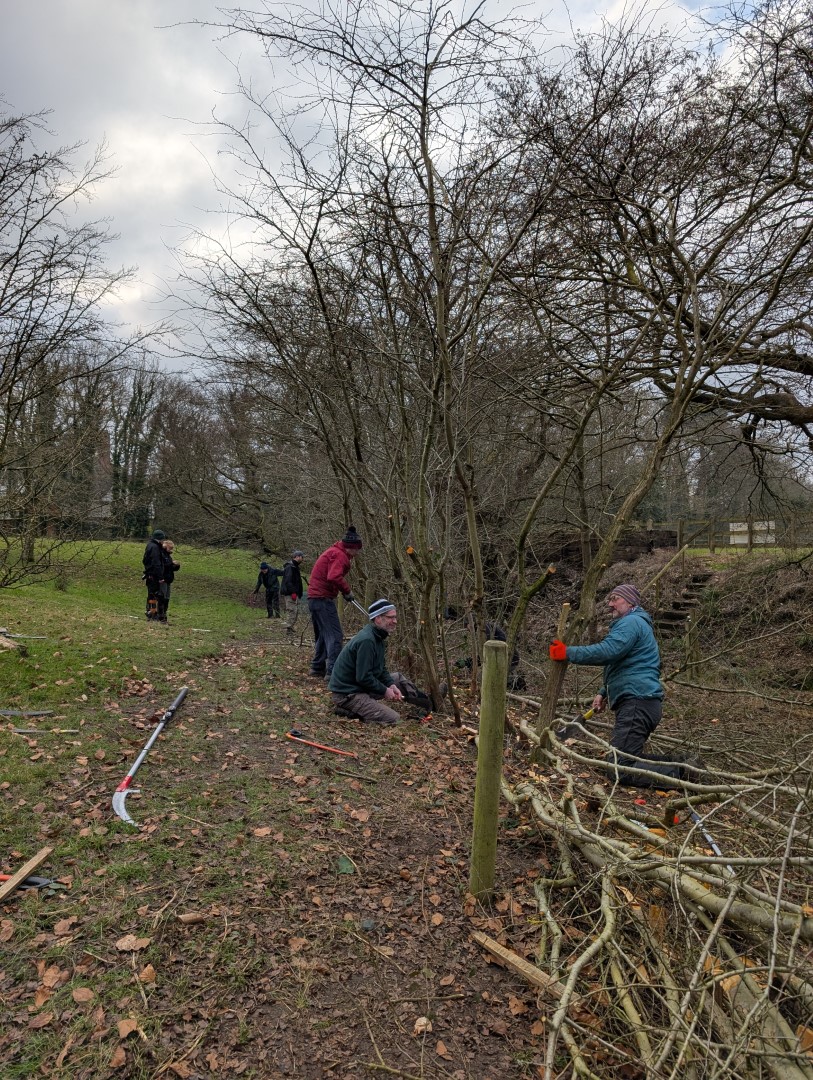
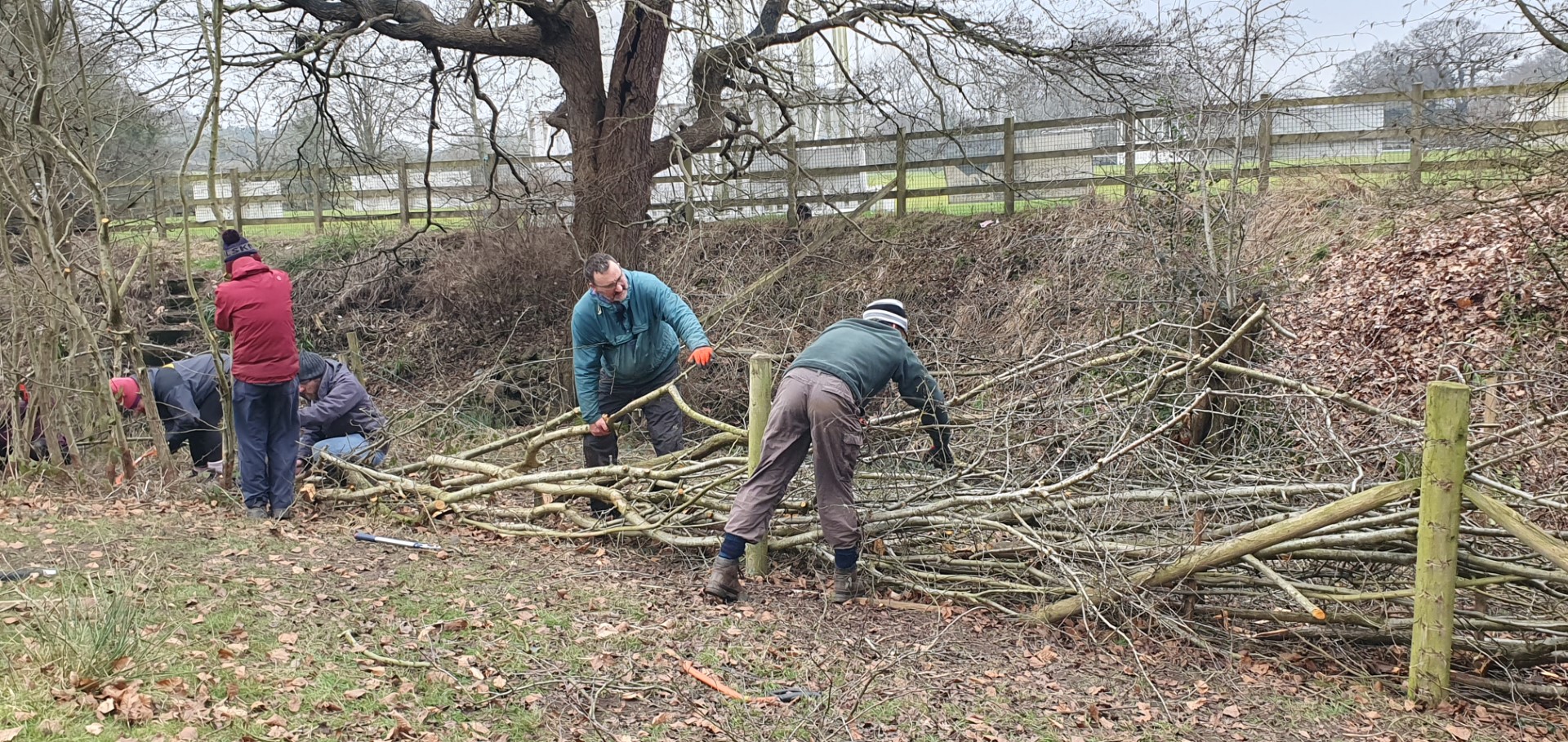
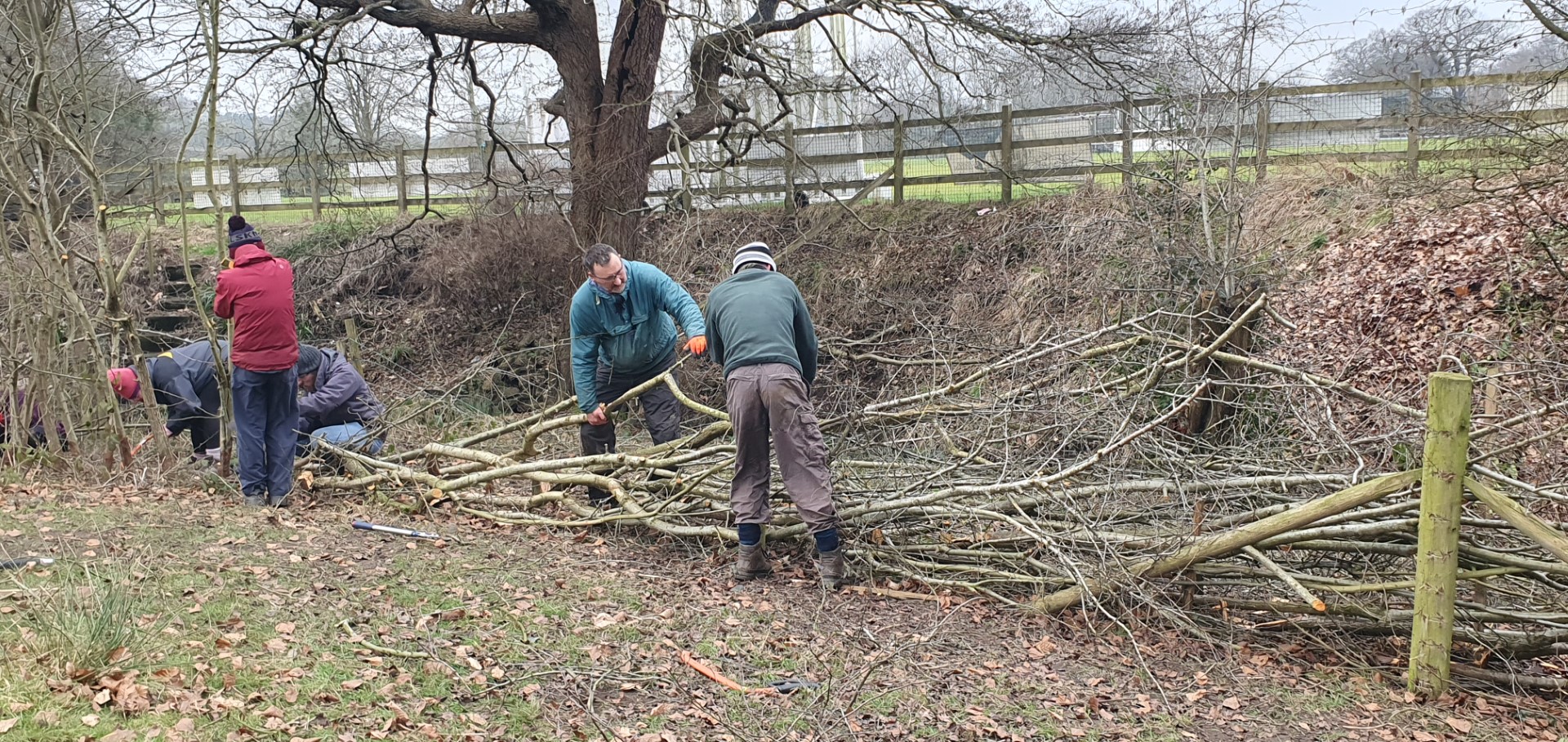
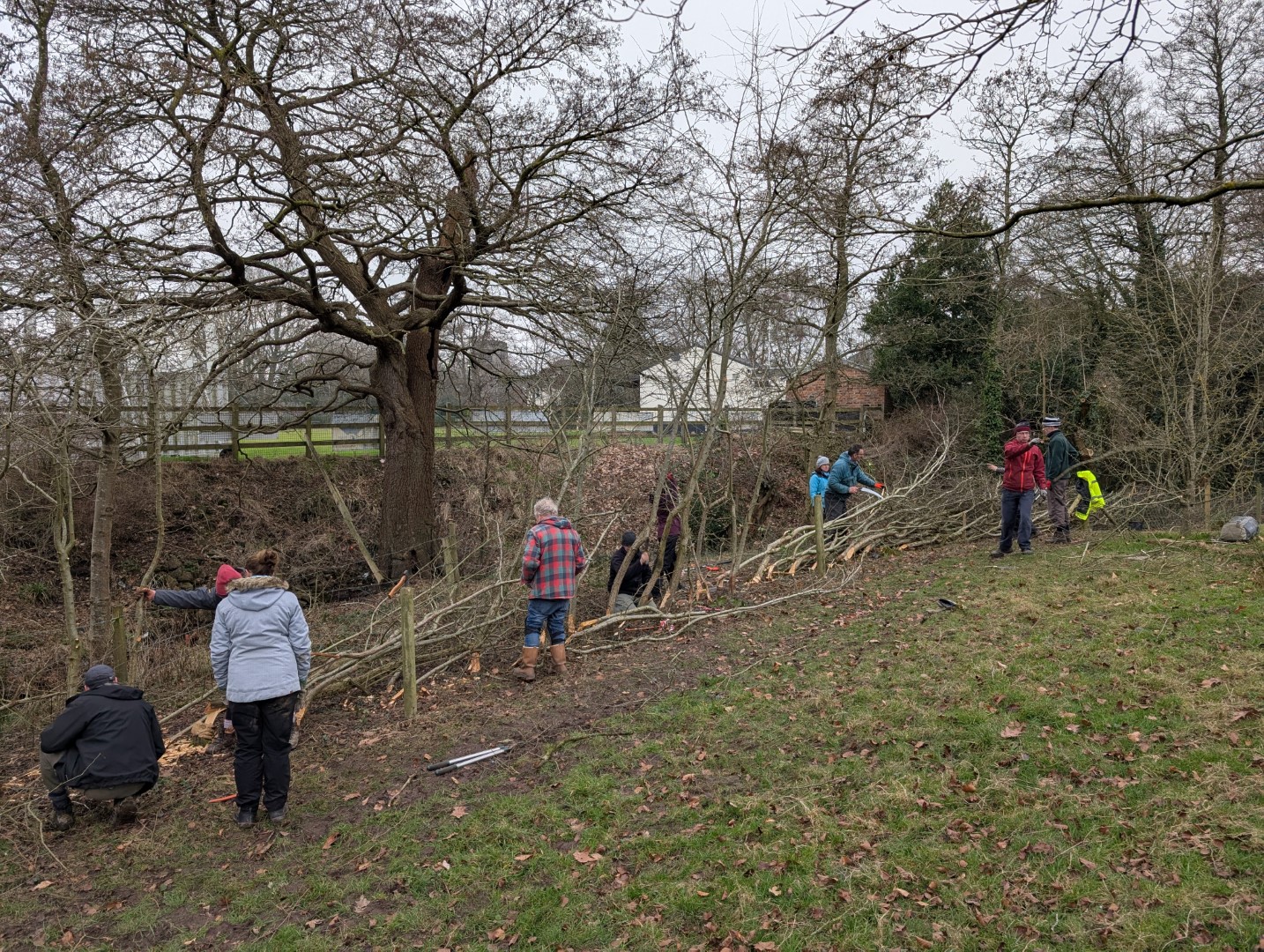
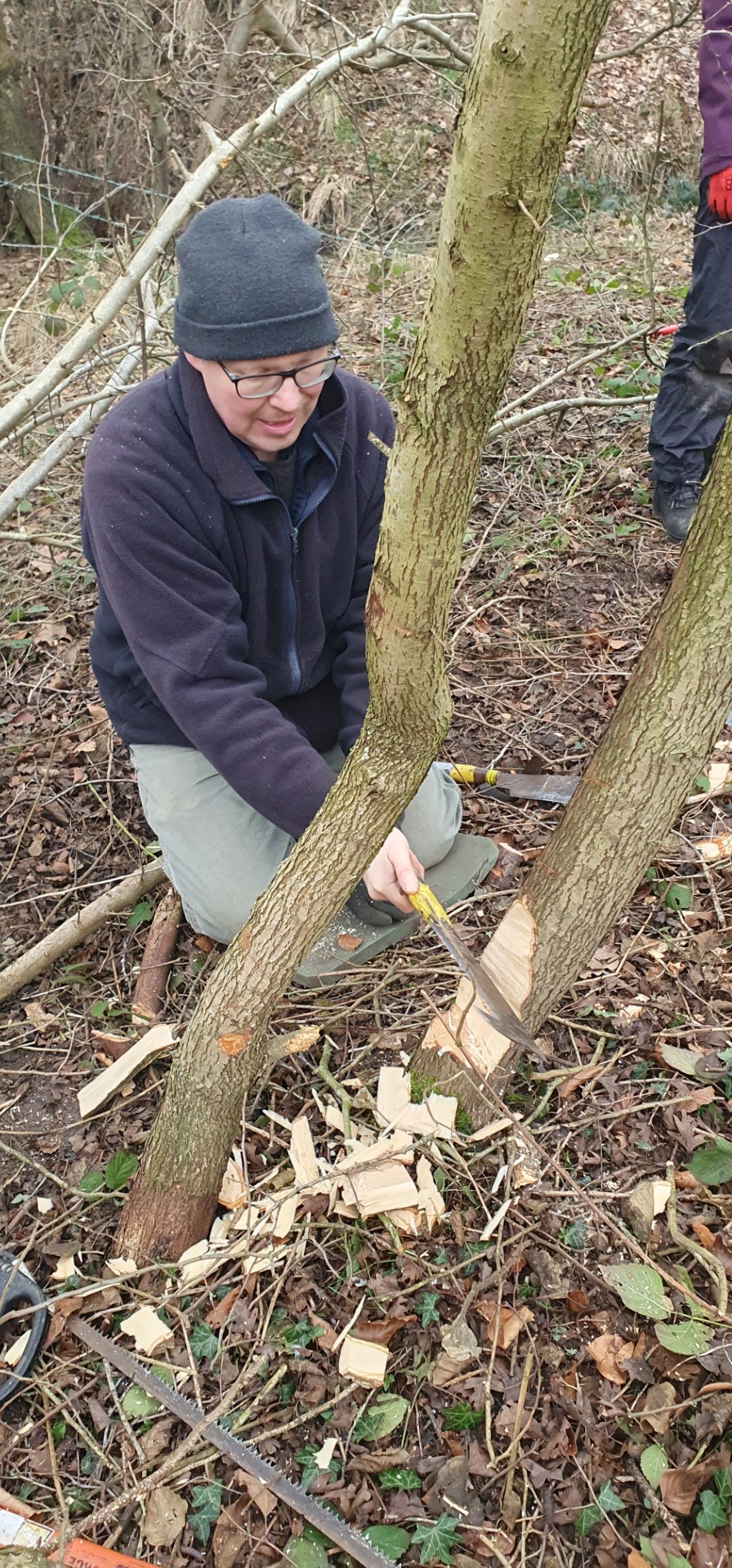
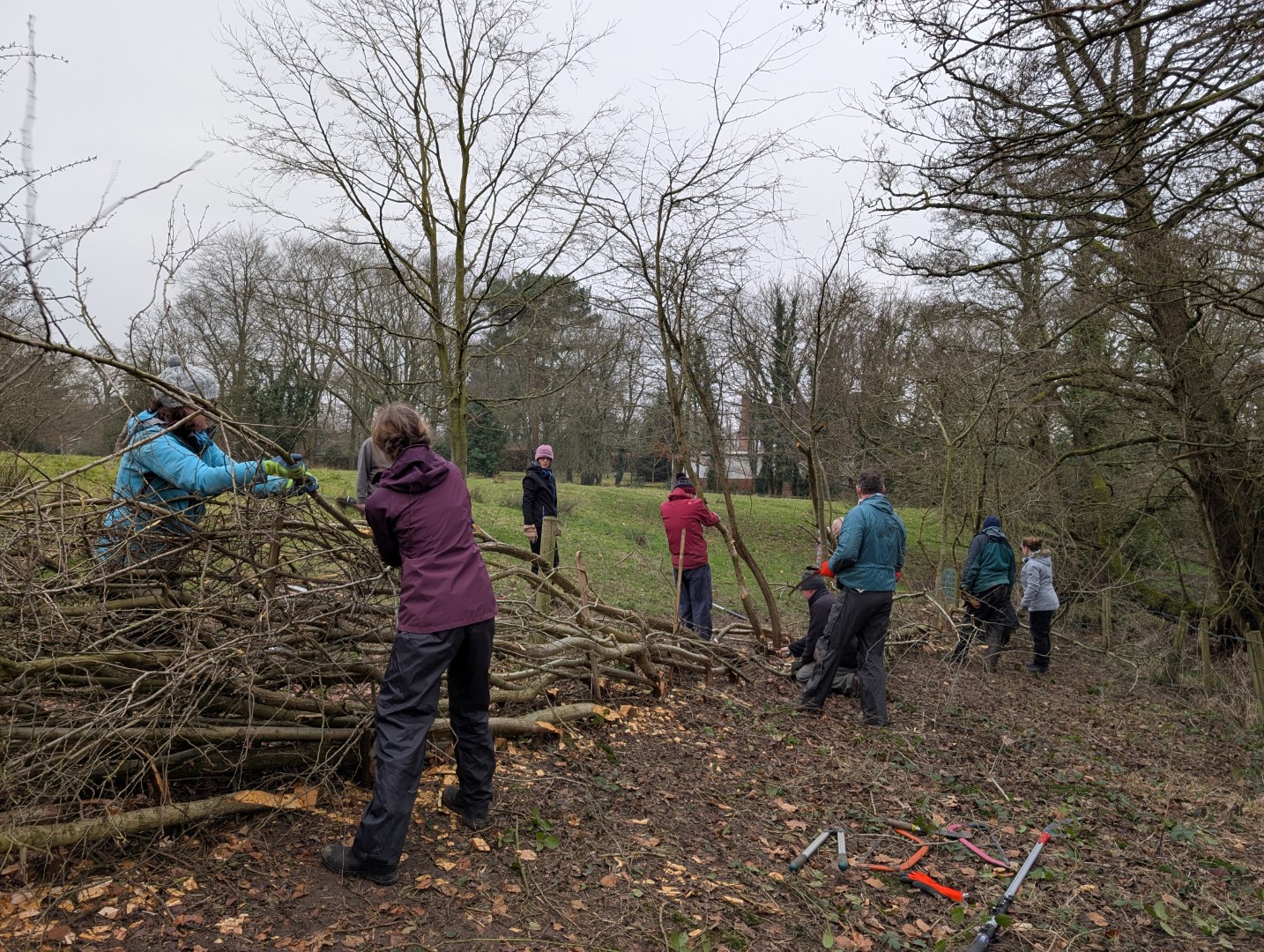
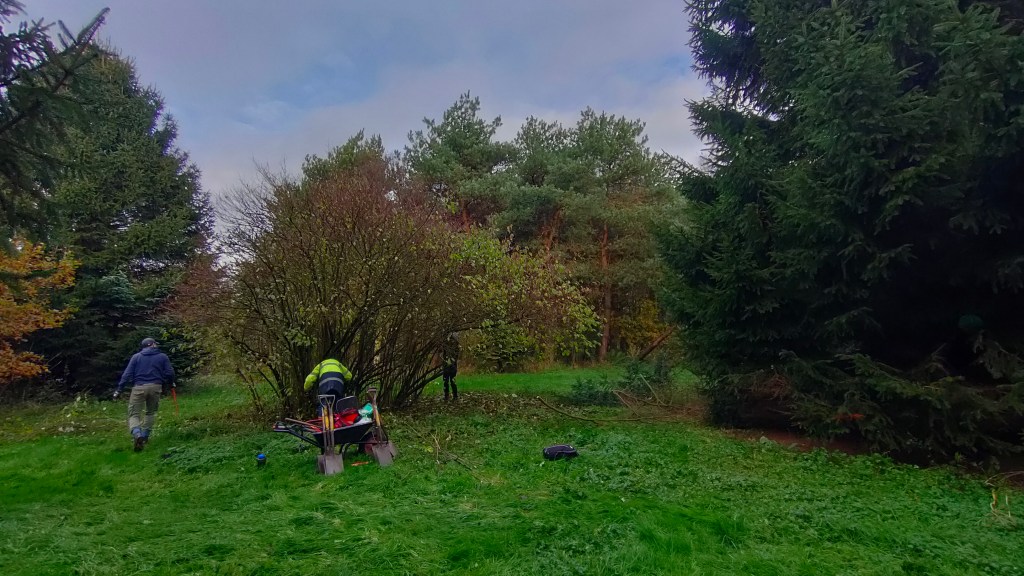
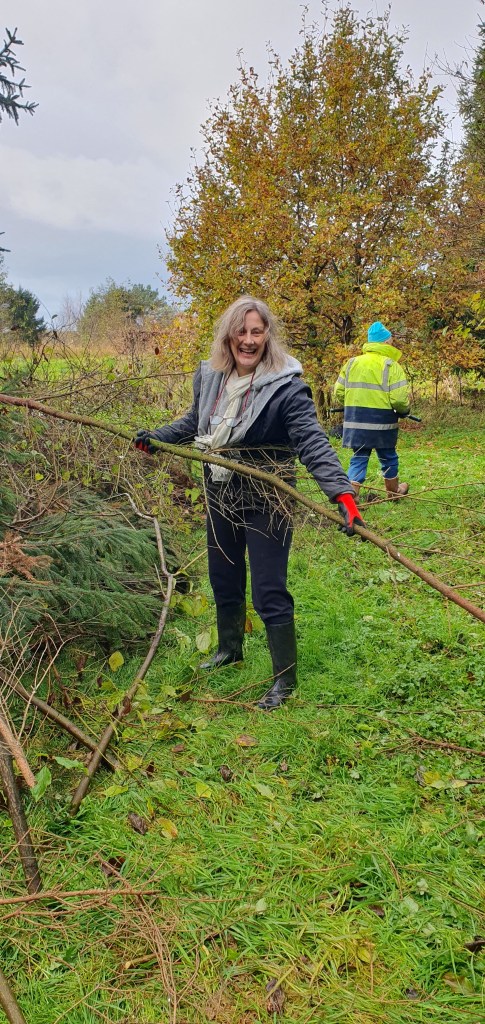
With Nicola, our nine volunteers and one canine associate (Rocky) set about clearing the felled oak, and making an enormous pile followed by extensive raking and pulling of the straggly brambles. Some volunteers tried out the bright yellow tree poppers to help fully remove invasive saplings including oak, holly, birch and alder. Others used spades and others used hand and bow saws to cut the bigger whips; some of which were over 20′ high as they had grown fast and close together. Any larger stumps were brushed with a Roundup mix to prevent regrowth from the rootstocks that were not removed. Lots of very co-operative working brought these slim but still weighty trees down safely. They were then cut up and much of this new debris laid into a brand-new dead hedge alongside the path towards the mere. Thicker offcuts ended up as logs for volunteers to take home for their stoves.
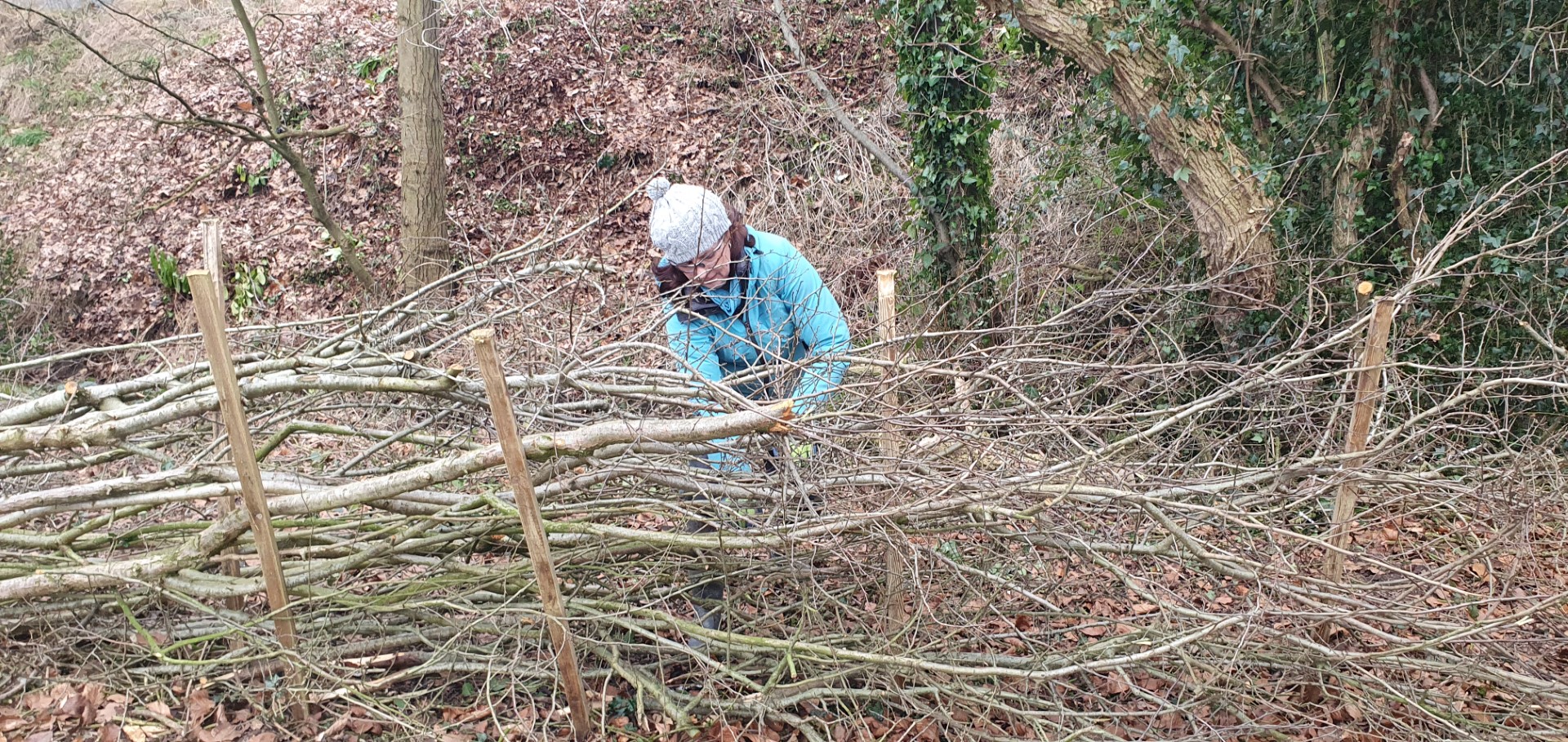
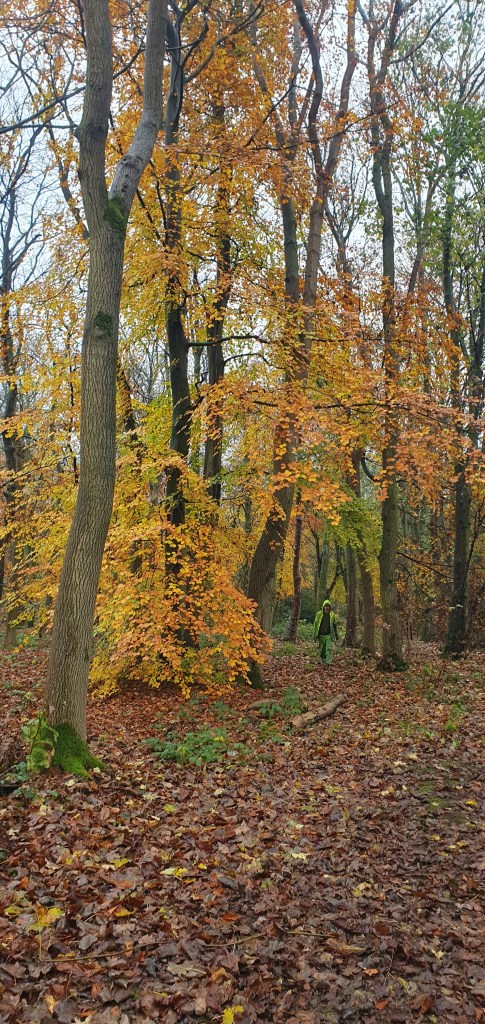
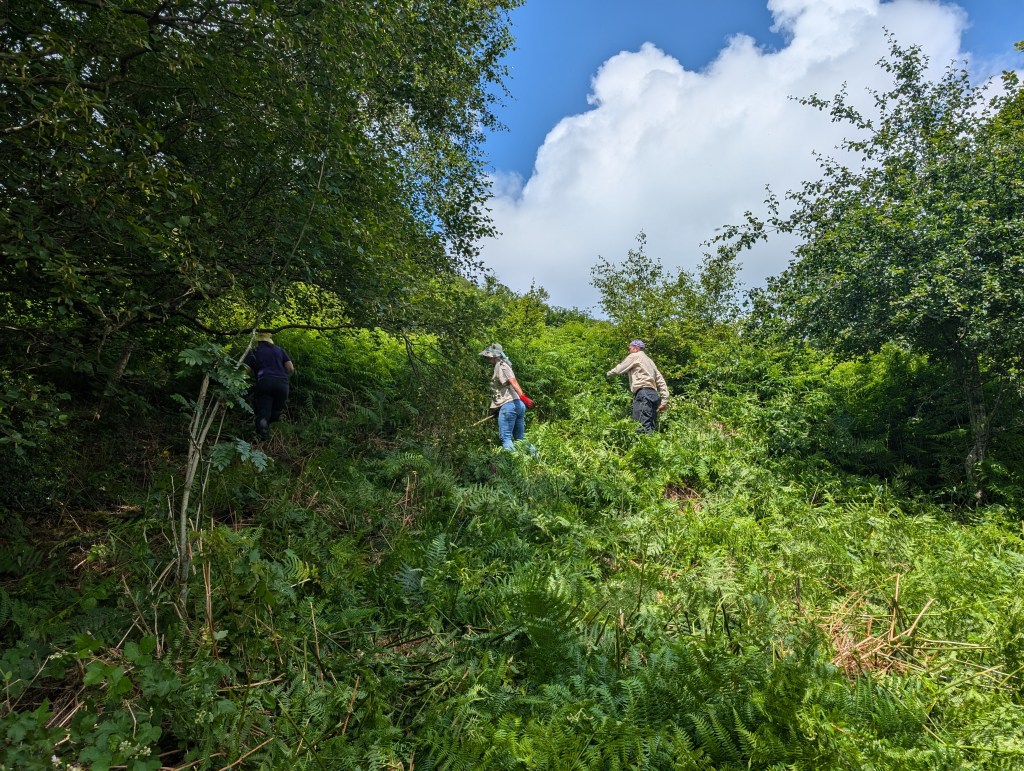
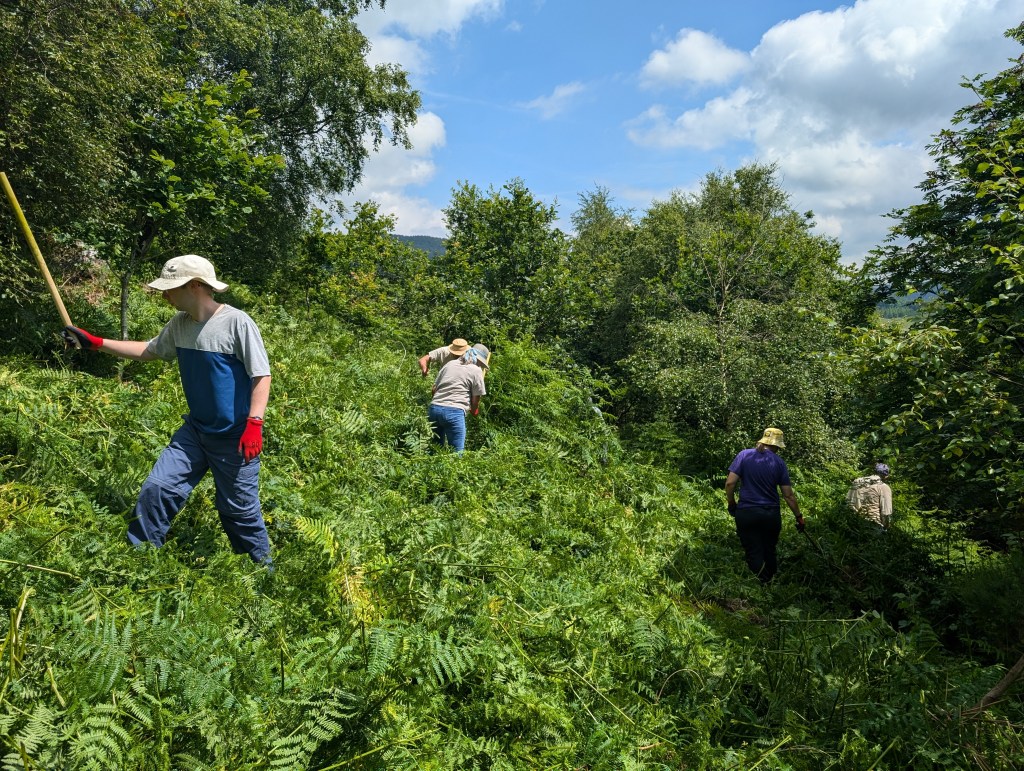
Pictures show the changing site as the group worked and shots of the ‘poppers’ show one technique.

Result – Site cleared nearly completely and left very trim for the heather reinstatement. Nicola was delighted with our efforts and keen to invite us along again to help progress this important project on what is one of Cheshire’s largest heathland areas, c. 70 acres. The group were tired but satisfied with a good-humoured day with happy chat and great weather and job well done!
Our activity for February (on Sunday 9th) was to tackle some hedgelaying with the National Trust at Mobberley Fields, a new site for us.

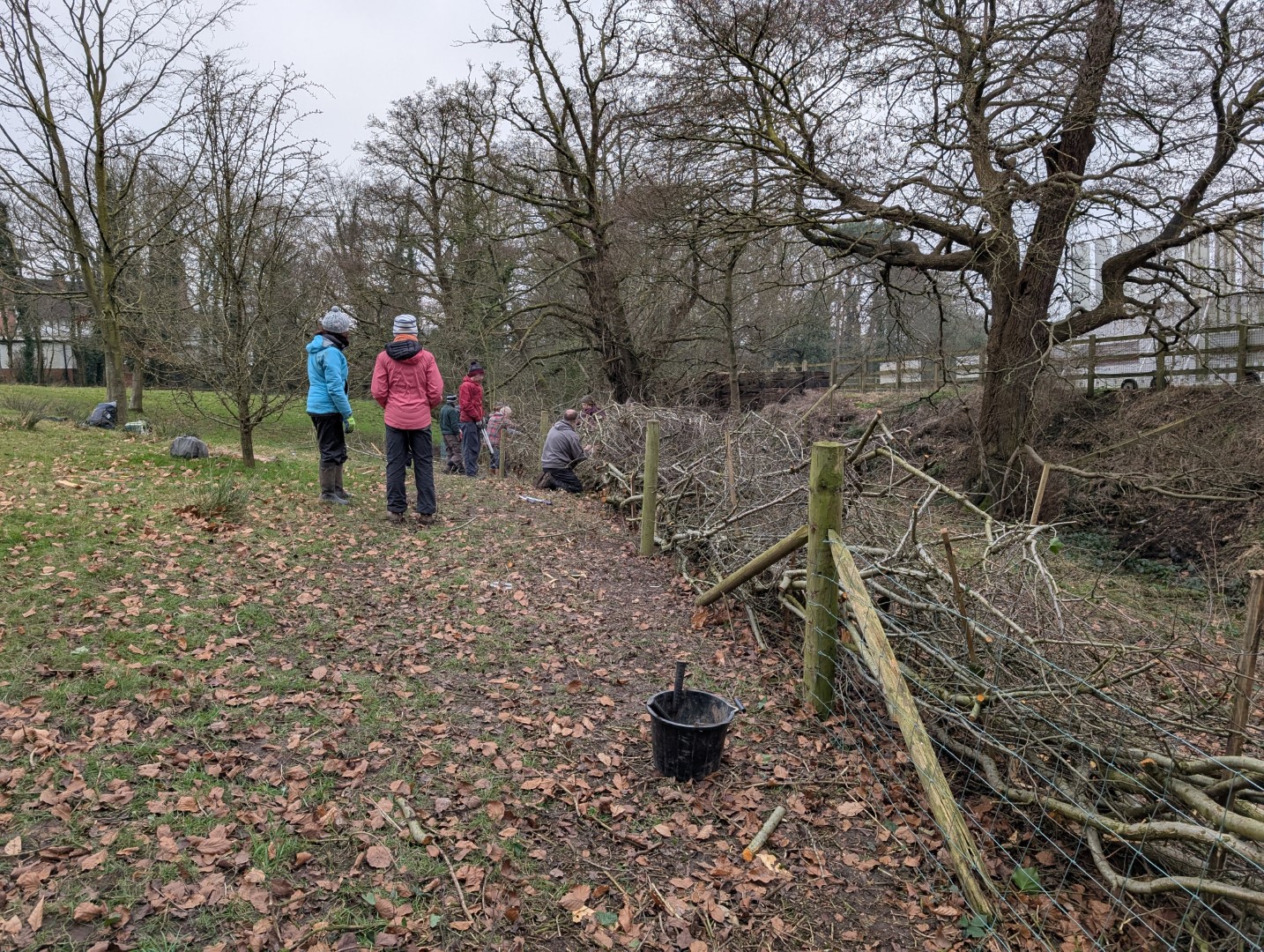
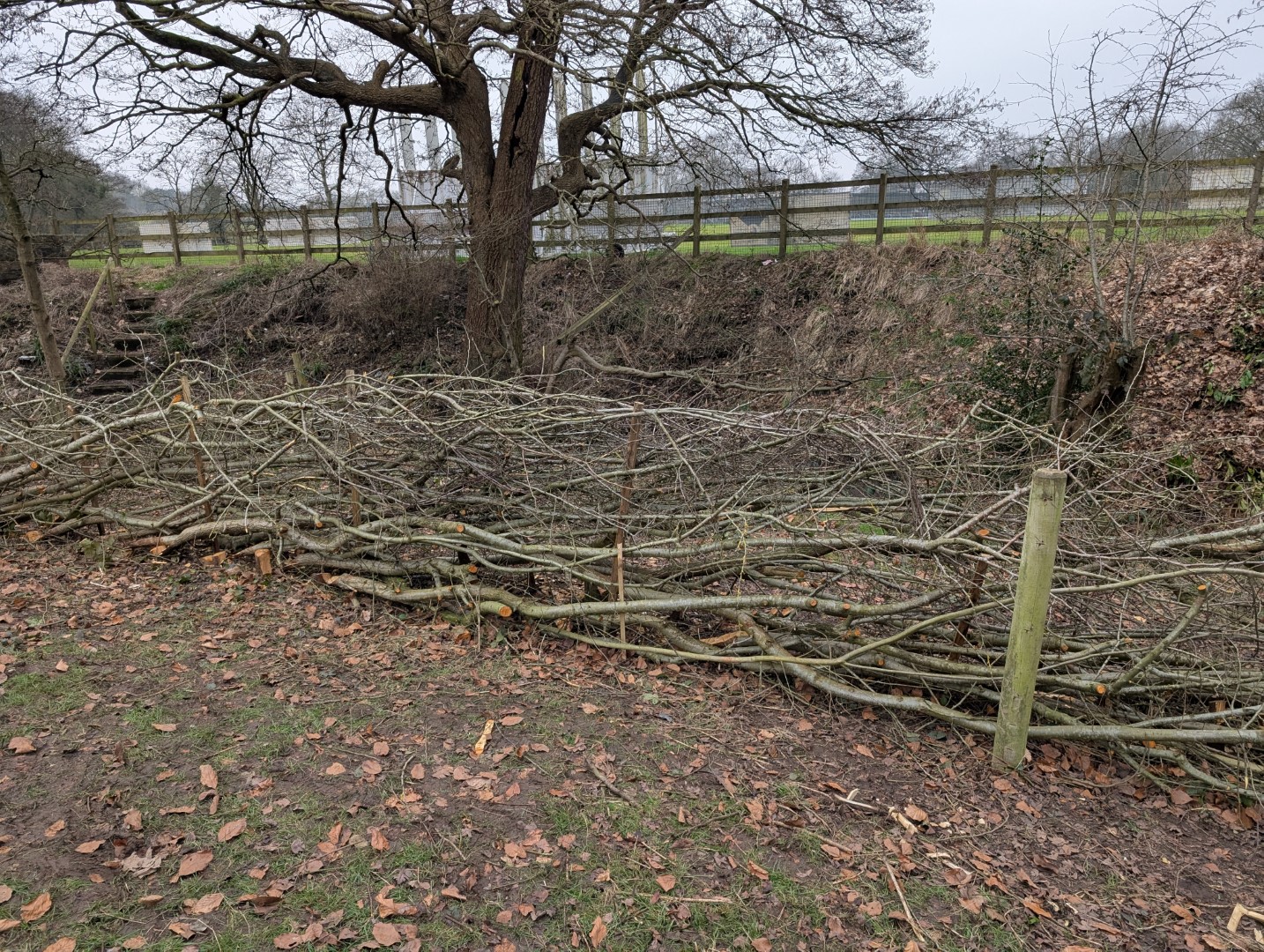
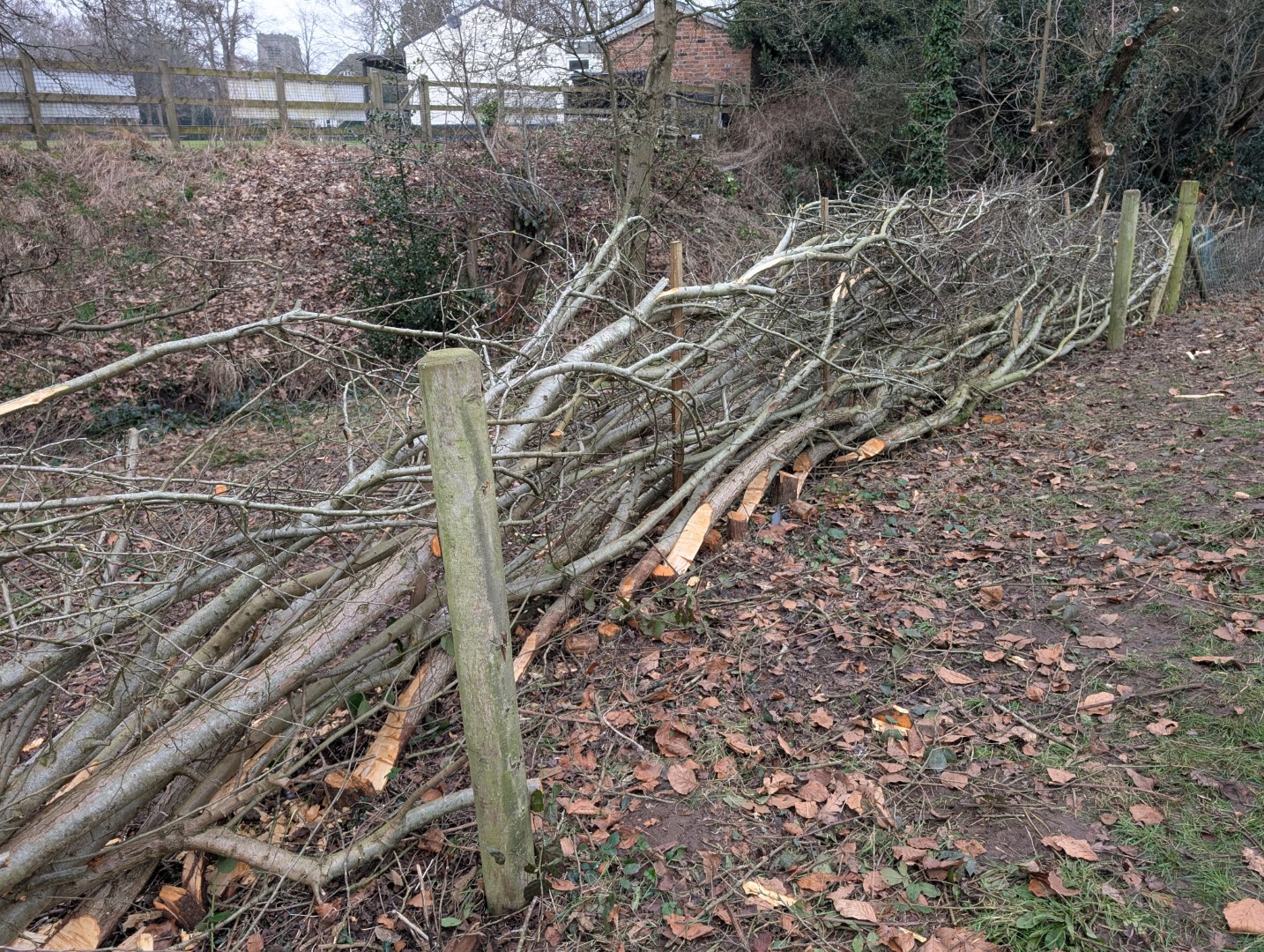
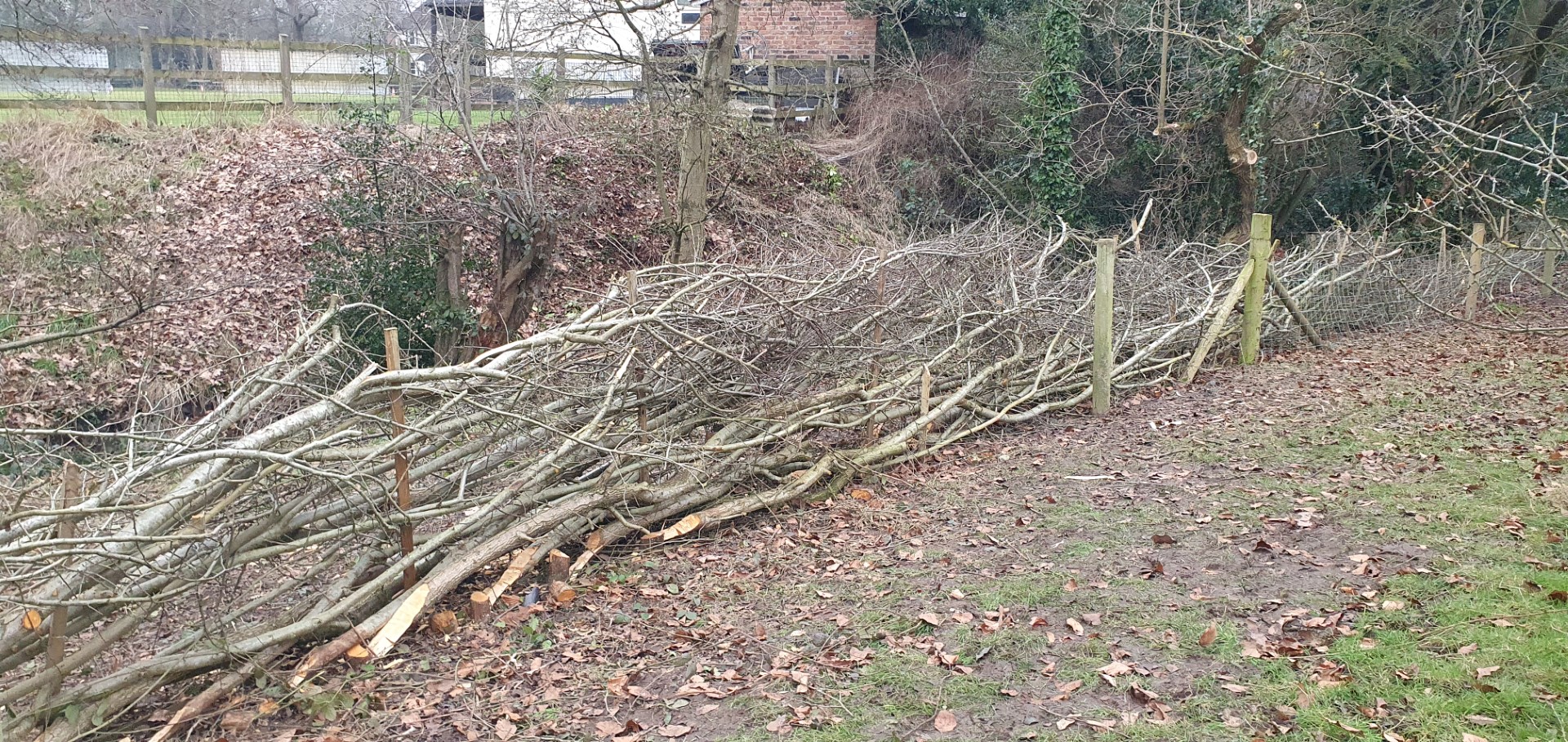
The hawthorn hedge marks the edge of the farmer’s field and the ancient craft of hedgelaying was used to create a barrier to prevent cows from the field from falling into the brook and gully behind. Of course a laid hedge also has biodiversity benefits – as well as looking great! By the end of the day, the whole hedge was completed by 16 strong volunteers. A fantastic SMCV team effort!

To conclude 2024, we joined the Friends of Longford Park on Sunday 8 December. We helped with some winter maintenance of the park’s wildlife garden and adjacent areas – such as coppicing, removing excess shrub spread, and other general management. Many thanks to the Friends for the warm welcome (and for arranging a dry day: the rain arrived just as we finished!)!

As it was our final activity of the year we gathered a little later in the day for a seasonal and end-of-year get-together – mince pies and mulled wine aplenty. Cheers!

Woodland work at Hollinwood

On Sunday 17th November we very much enjoyed volunteering at Hollinwood Scout Camp, near Worsley, Salford.

The camp on this site was founded in 2017, so is relatively new and is still being developed. It had had to move from the site where RHS Bridgewater is now, where it had previously been located for many decades.

Hollinwood truly has the potential to be an amazing asset not just for the local Salford community but for the whole of Greater Manchester and the North West. Hollinwood has 30 beautiful acres of woodland and meadows where young people are able to run around and be outdoors.

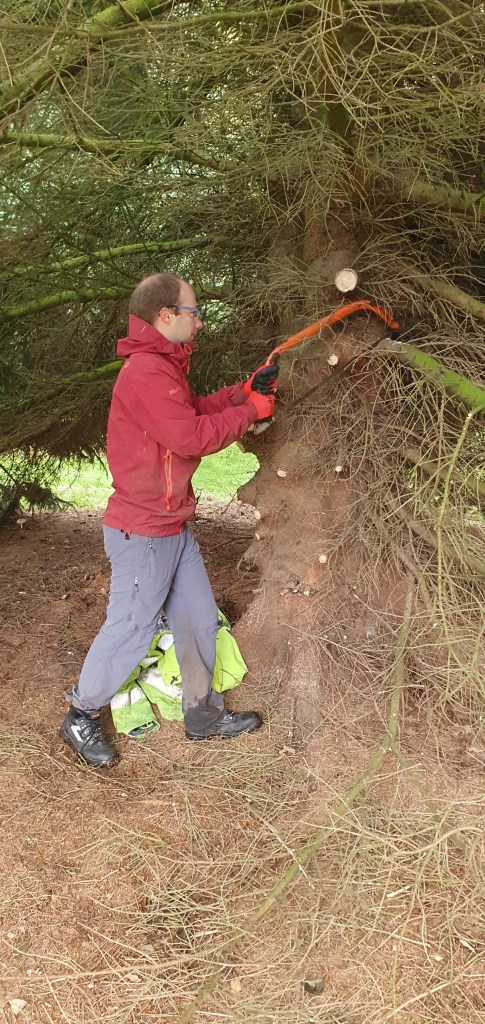
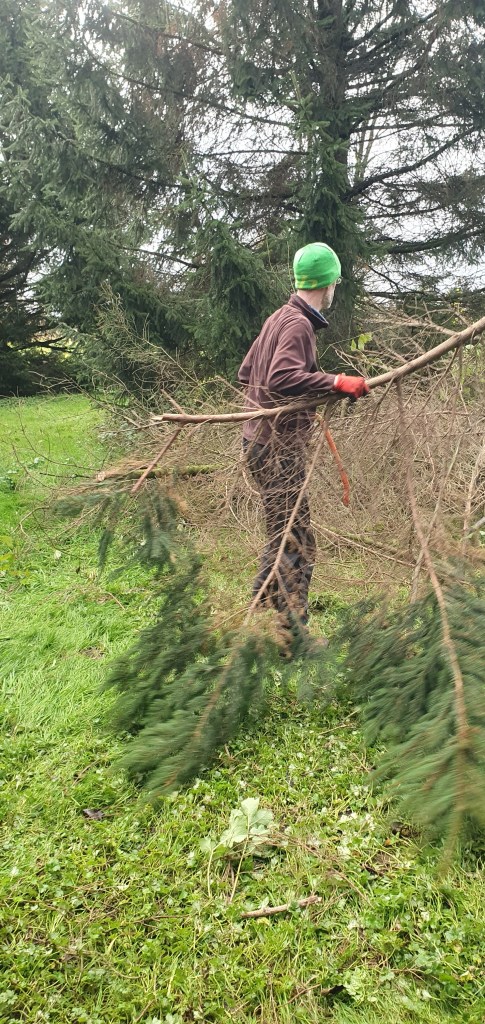
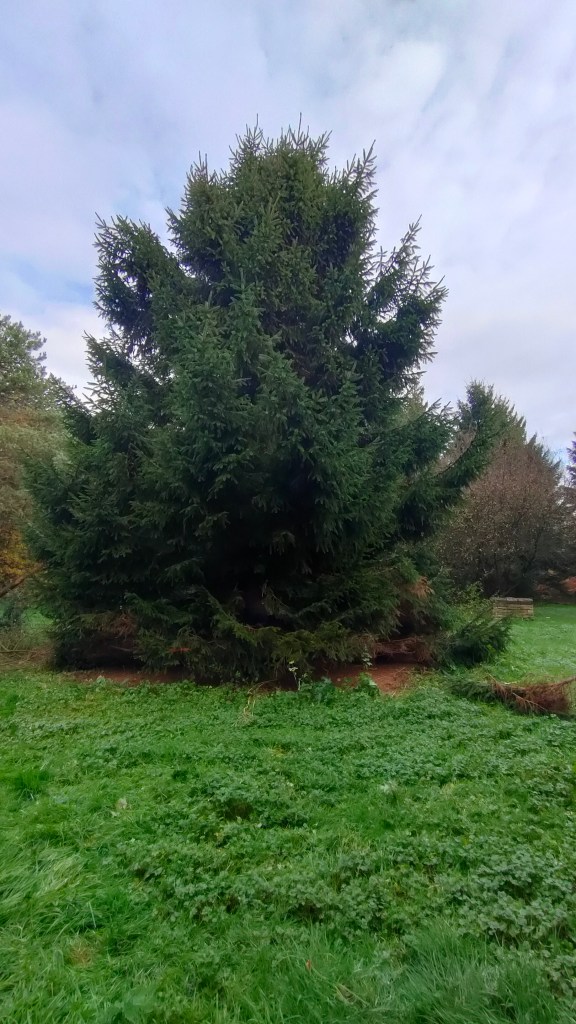
The task was helping to develop an open-air holistic area in a glade within the trees, for the Scouts to relax and reflect in. The task included trimming the bottom of a large conifer and also removing an unwieldy tree! The branches were then dragged (getting the steps in!) to the far side of the beautiful woodland, to create a natural fence line.

We all had a picnic sheltered from the rain under the trimmed conifer tree….a perfect spot!
Rhododendron at Spud Wood

On Sunday 13 October we were again removing rhododendron from this Woodland Trust site, on behalf of the Friends group. This seemed to be the last main area of rhododendron in this particular patch, so a satisfying section to clear. The woodland floor can begin to recover from the effect of long coverage by rhododendron, although this will take some time – but in due course, all being well, the wood’s biodiversity will greatly improve!

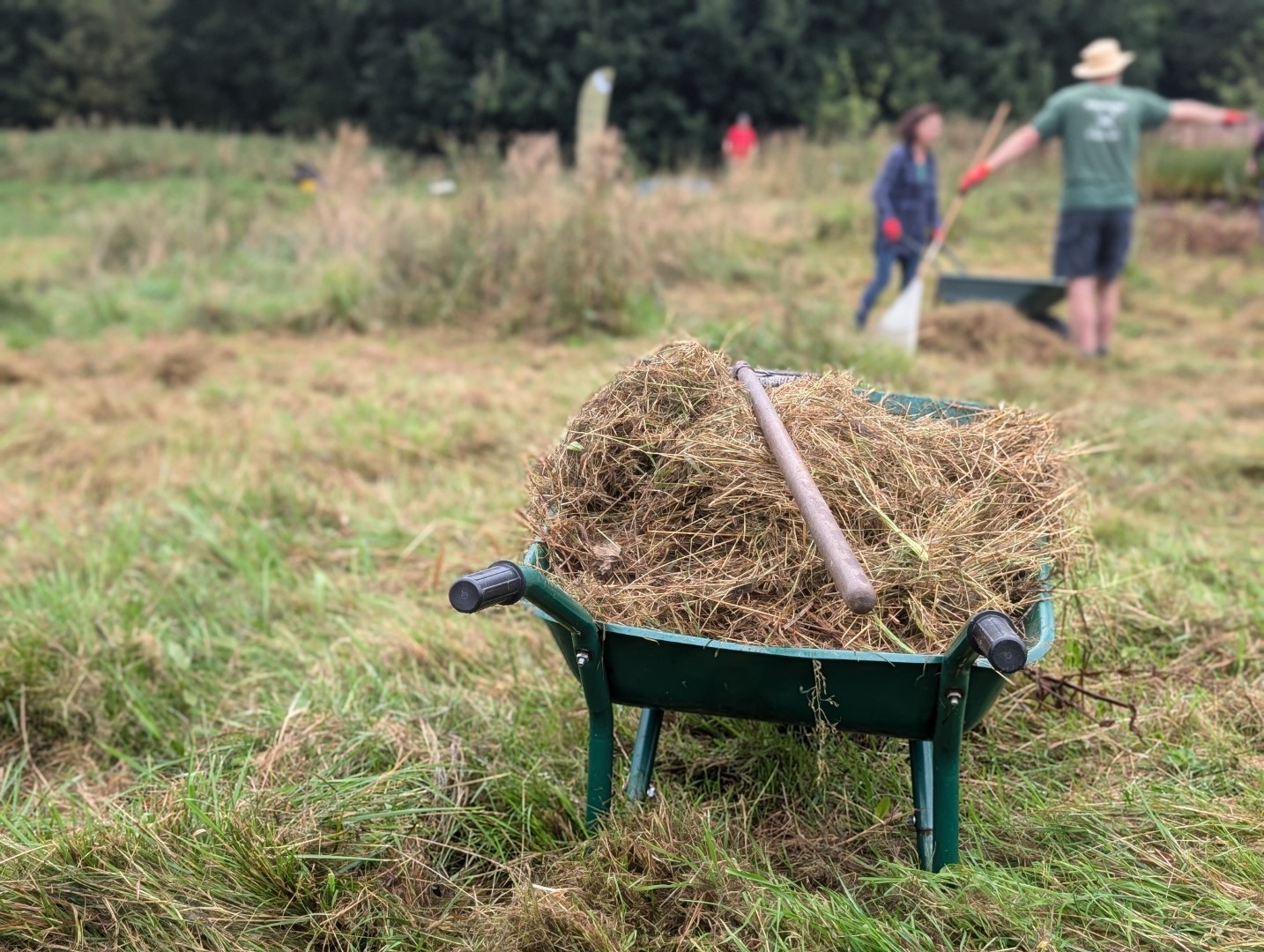
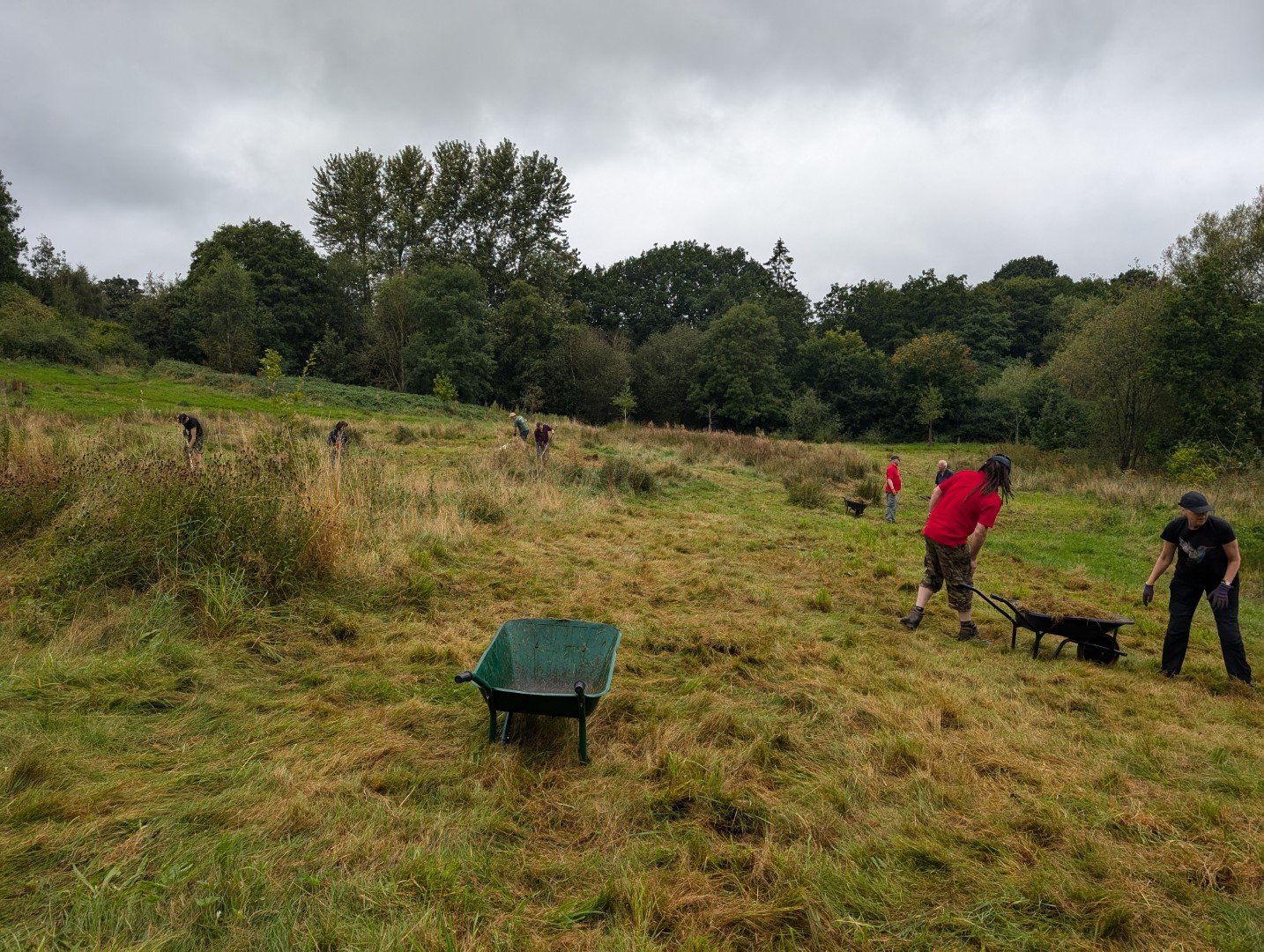
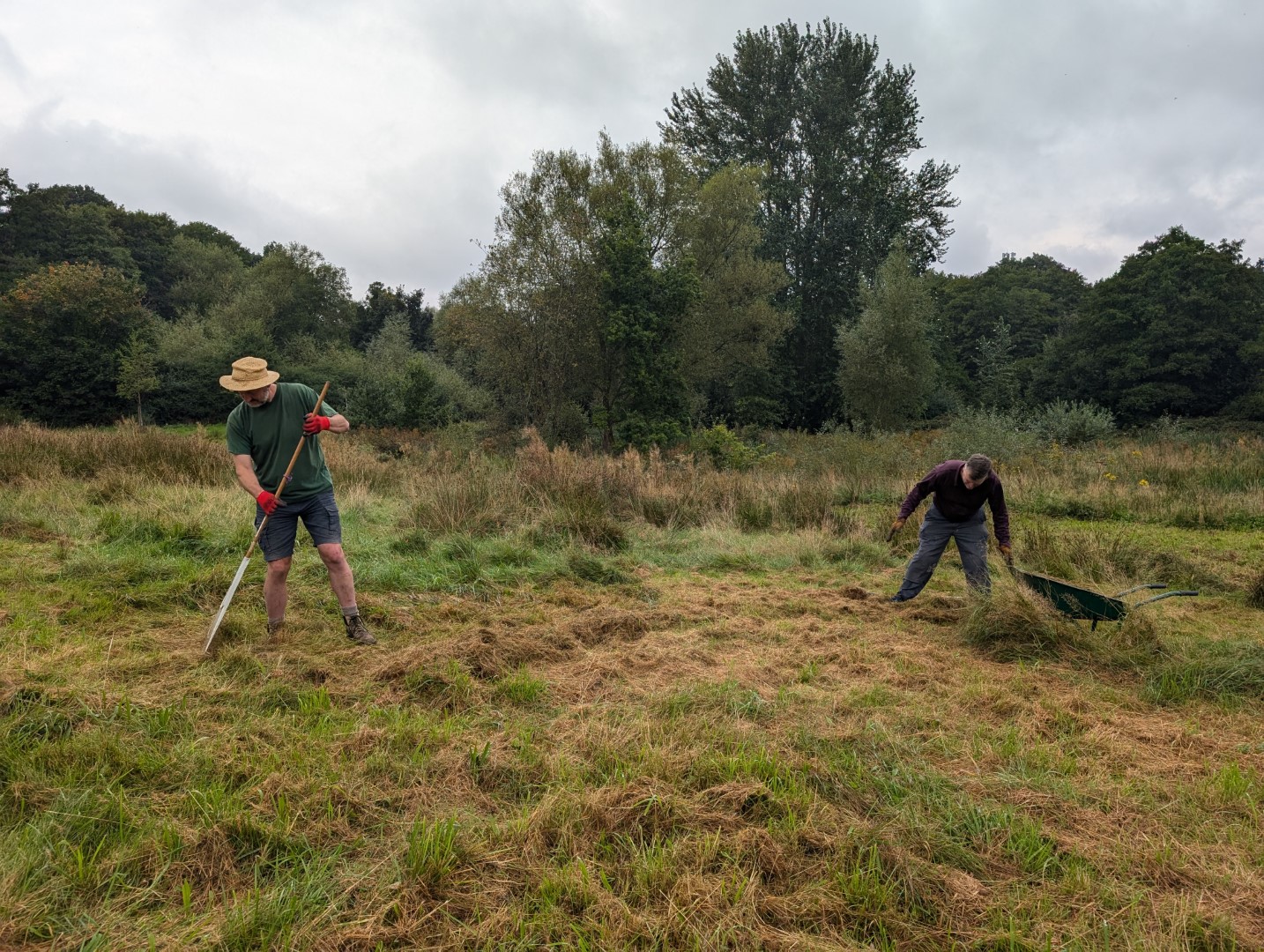
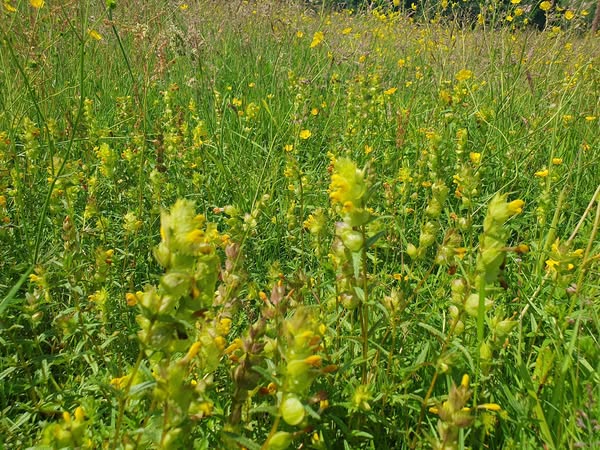
On Sunday 8 September we visited a new site for us: Happy Valley in Bramhall, part of Ladybrook Valley. We joined the Friends of Ladybrook Valley in their ongoing work to improve and restore a meadow. Our main activity was to rake off the grass, which had been cut a week or two previously; this will help to reduce nutrient levels in the ground, providing a better habitat for a range of wildflowers. In some areas we cleared patches of ground and sowed yellow-rattle seed. As a semi-parasite on grasses, yellow-rattle allows gives other traditional meadow species a chance to establish themselves.

Despite a poor weather forecast, the day remained dry for us. Thanks to the Friends for a warm welcome (and biscuits!).

Update, June 2025: The FoLV have confirmed that there is now yellow-rattle in the meadow!

Congleton Hydro

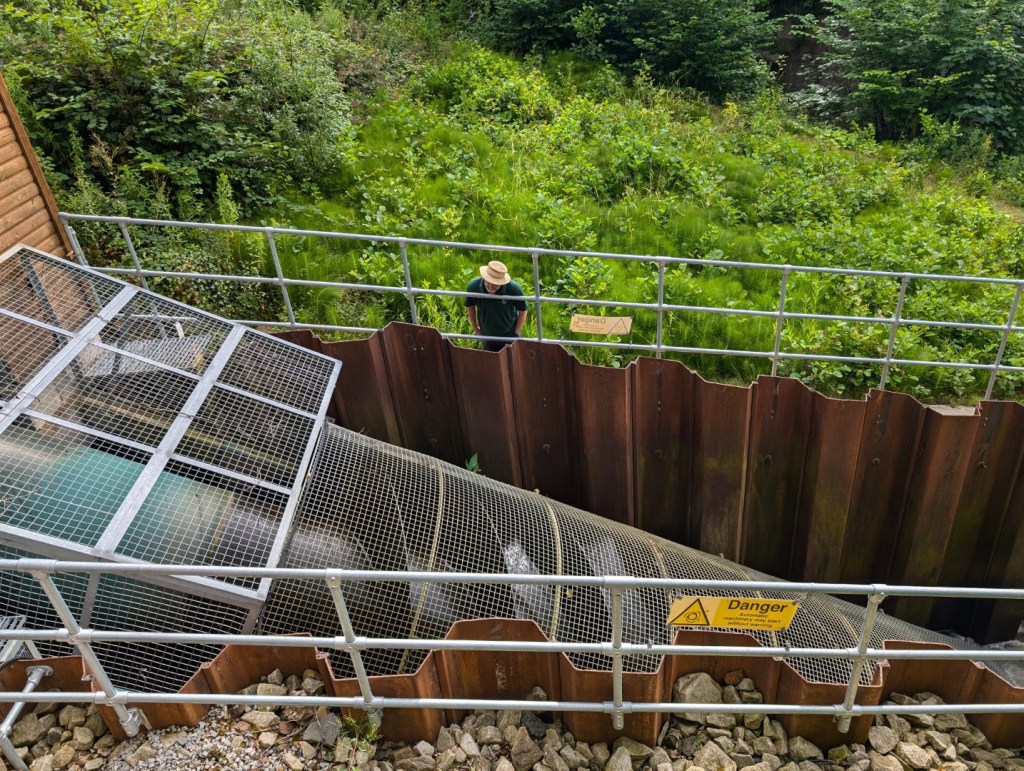
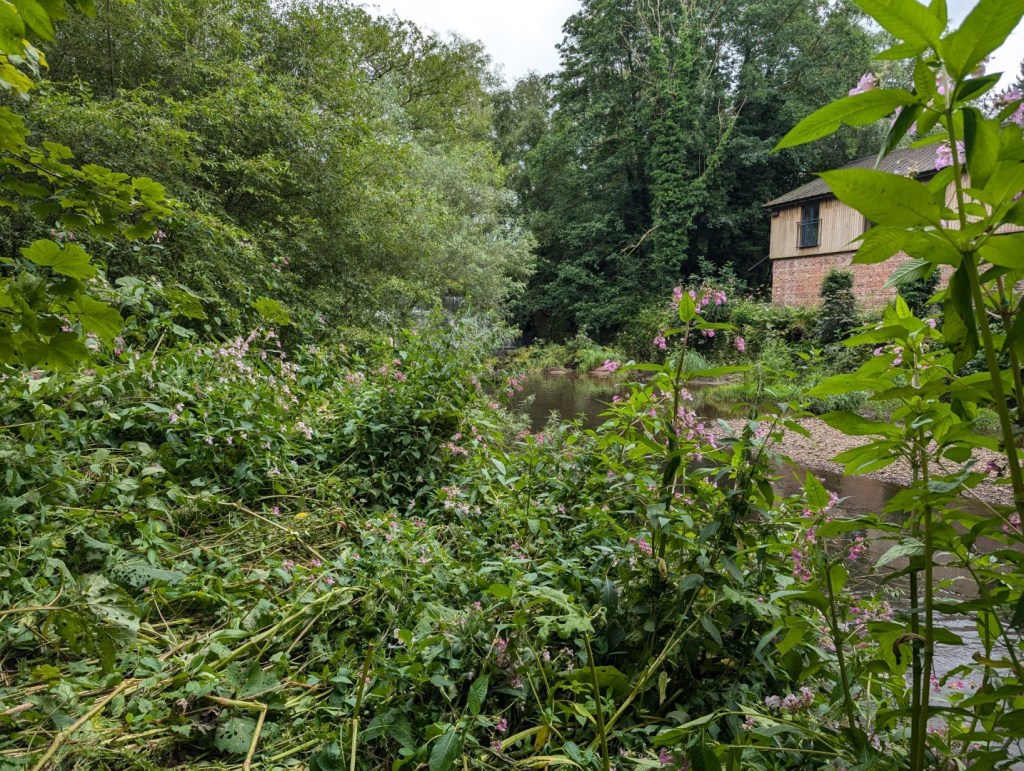
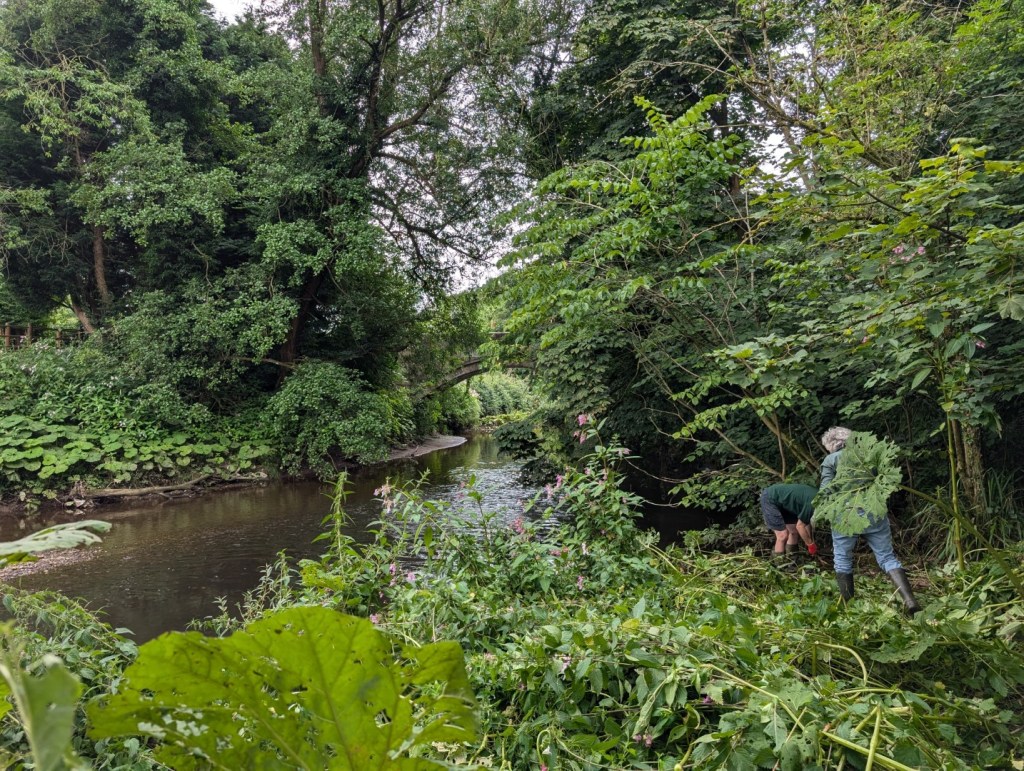
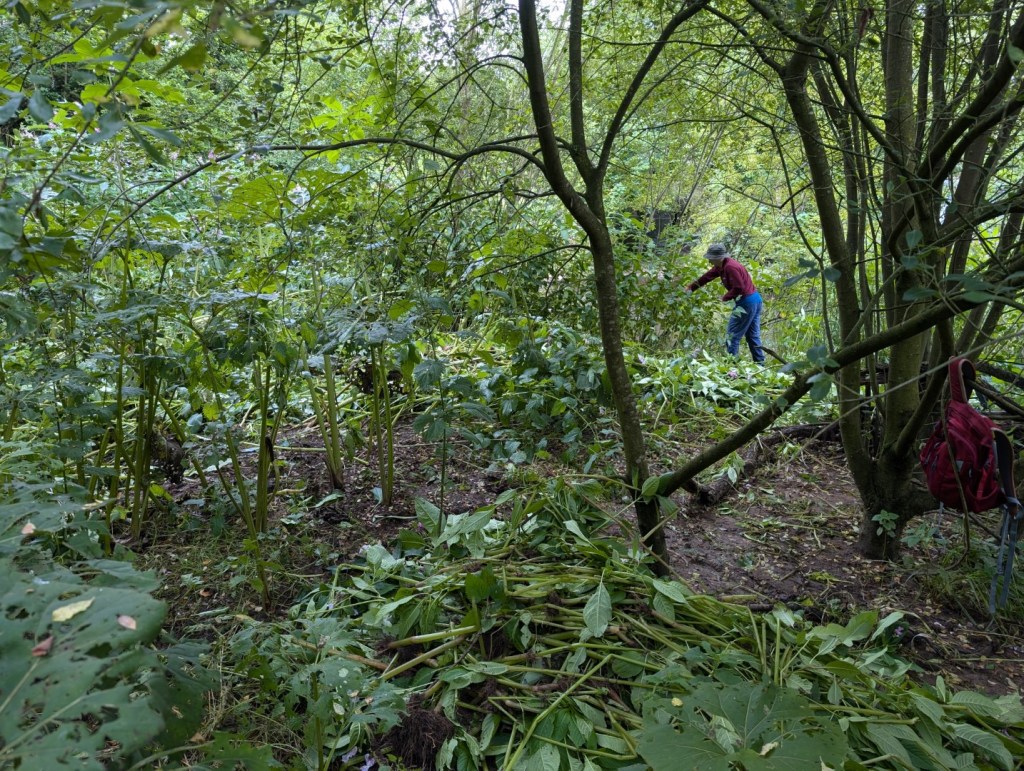
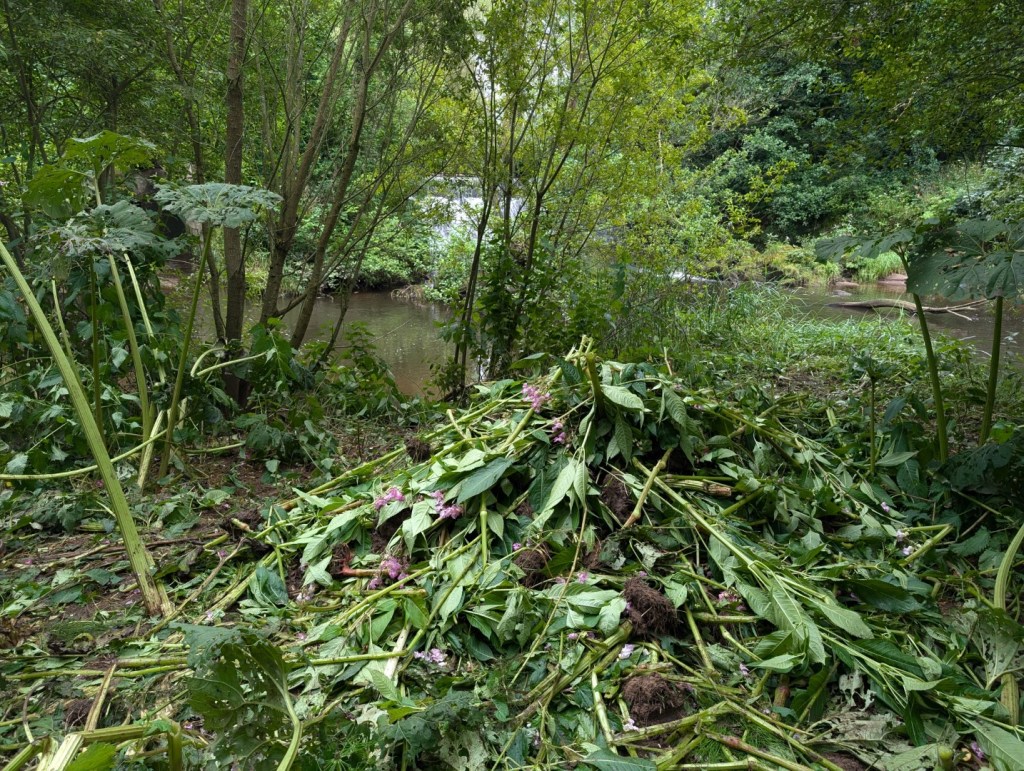
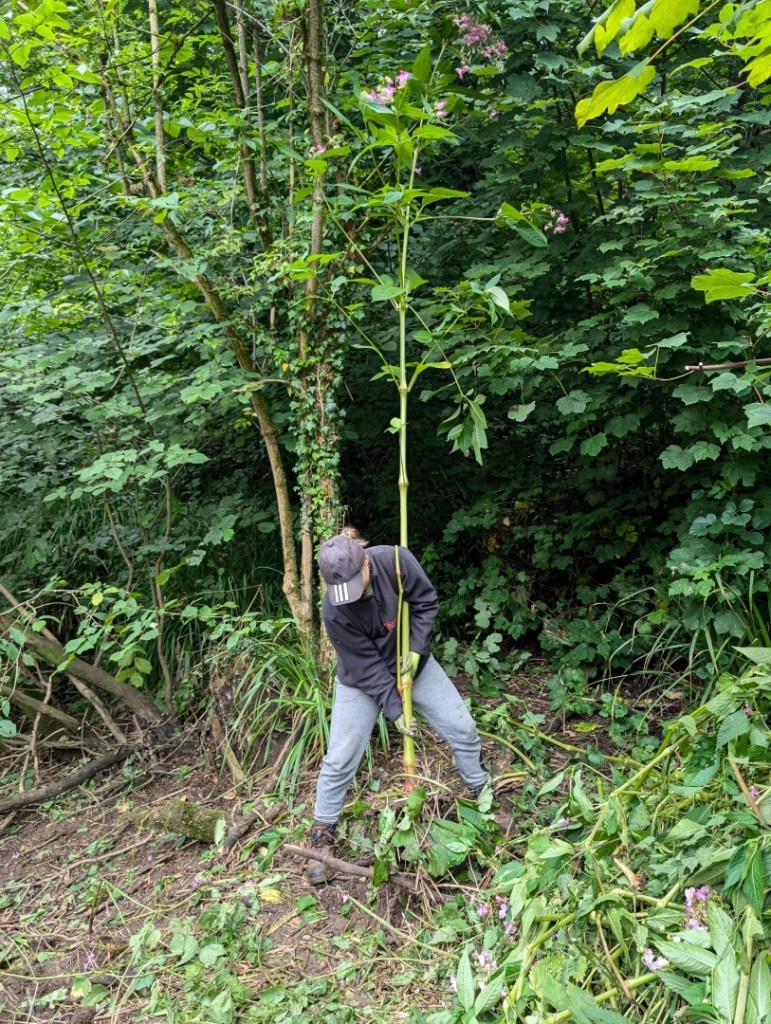
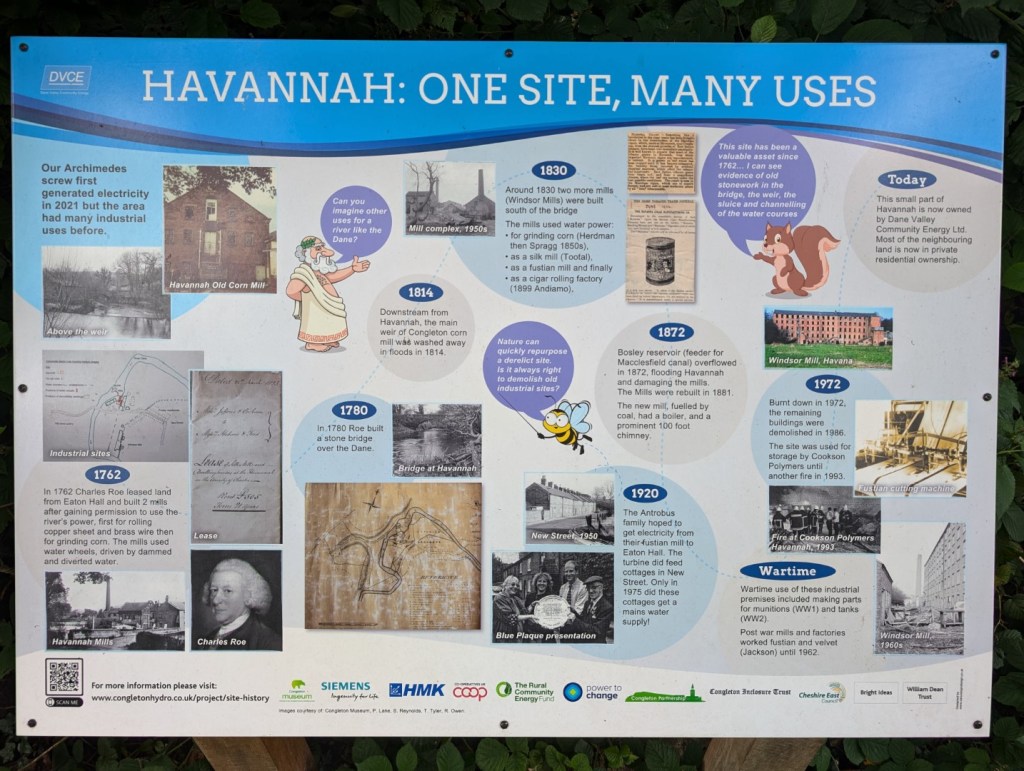
Sunday 21 July saw us at a new site for the group, Congleton Hydro. We helped with the removal of Himalayan balsam, which has established quite a presence around the site, and also got a chance to see Archie, the Archimedes screw, in action!

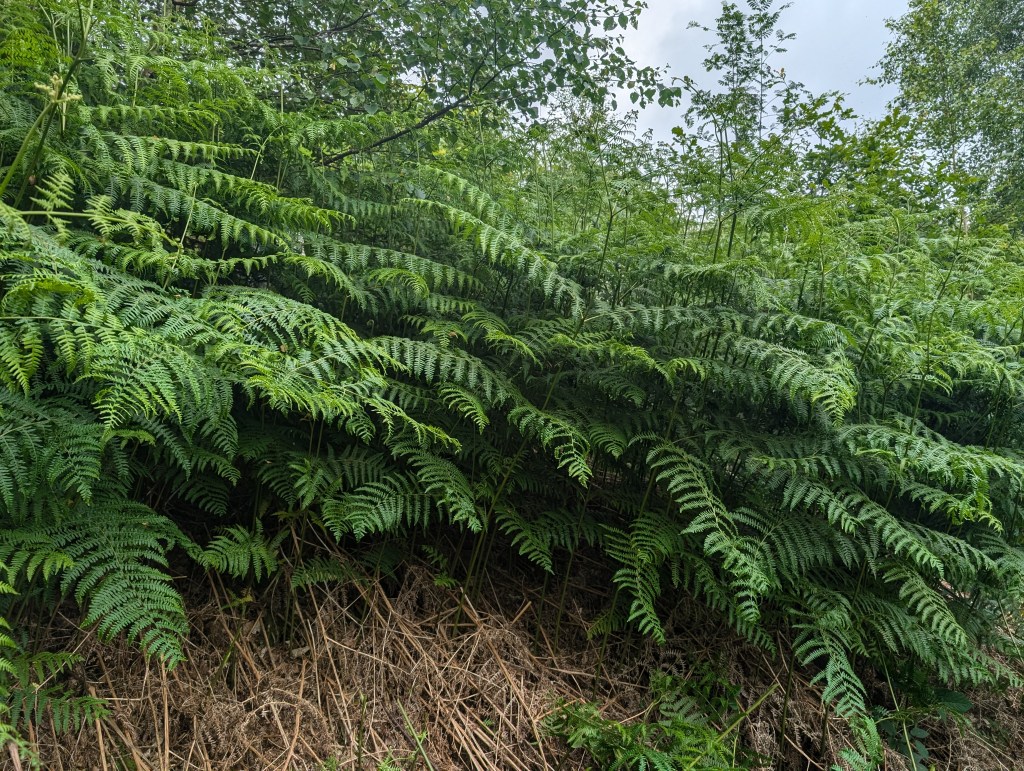
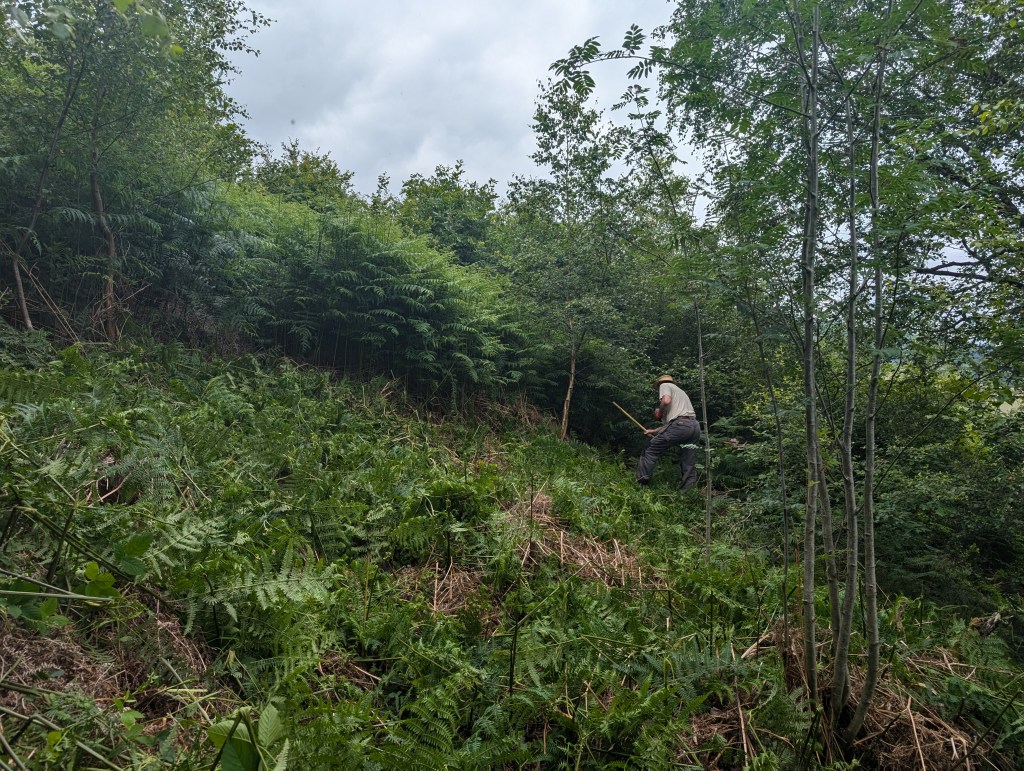
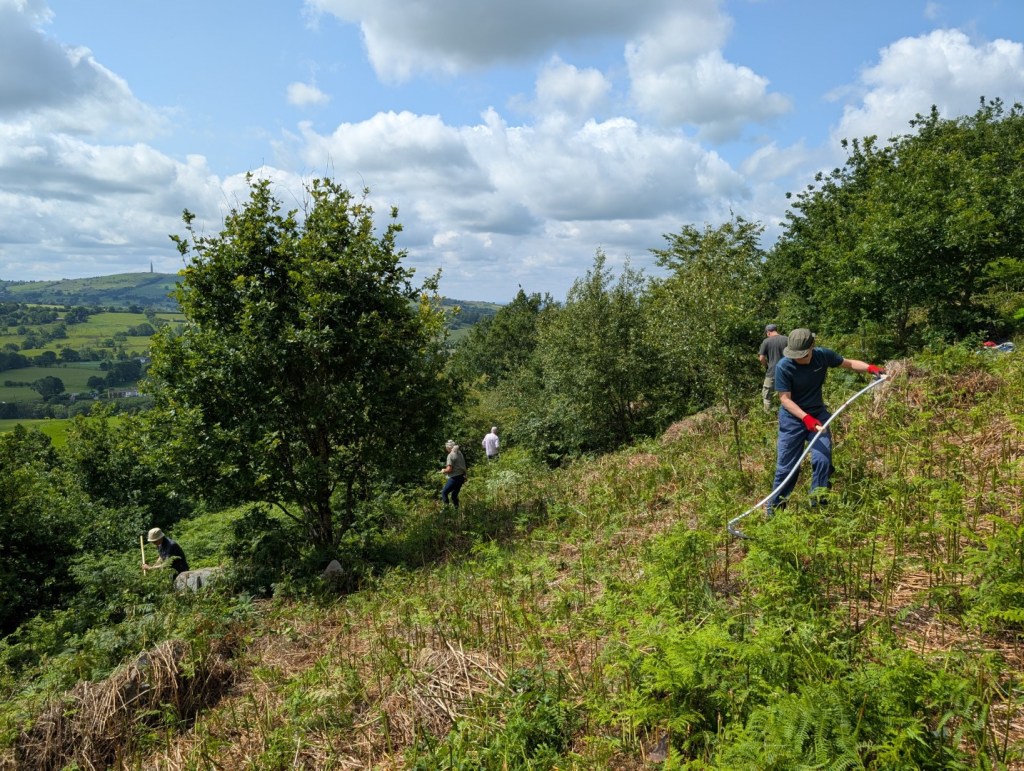
Following our visit here in May, we were back on 23 June to continue with the same work: suppressing bracken invading a heathland area by bashing it to break the stems. It was another warm summer day; and as it was over a month since our last visit, the bracken in the zone we tackled this time was of course much taller, but nonetheless we made good progress in completing the clearance of a good swathe of the slope. It will be interesting to see how this experimental means of control fares in the years ahead.

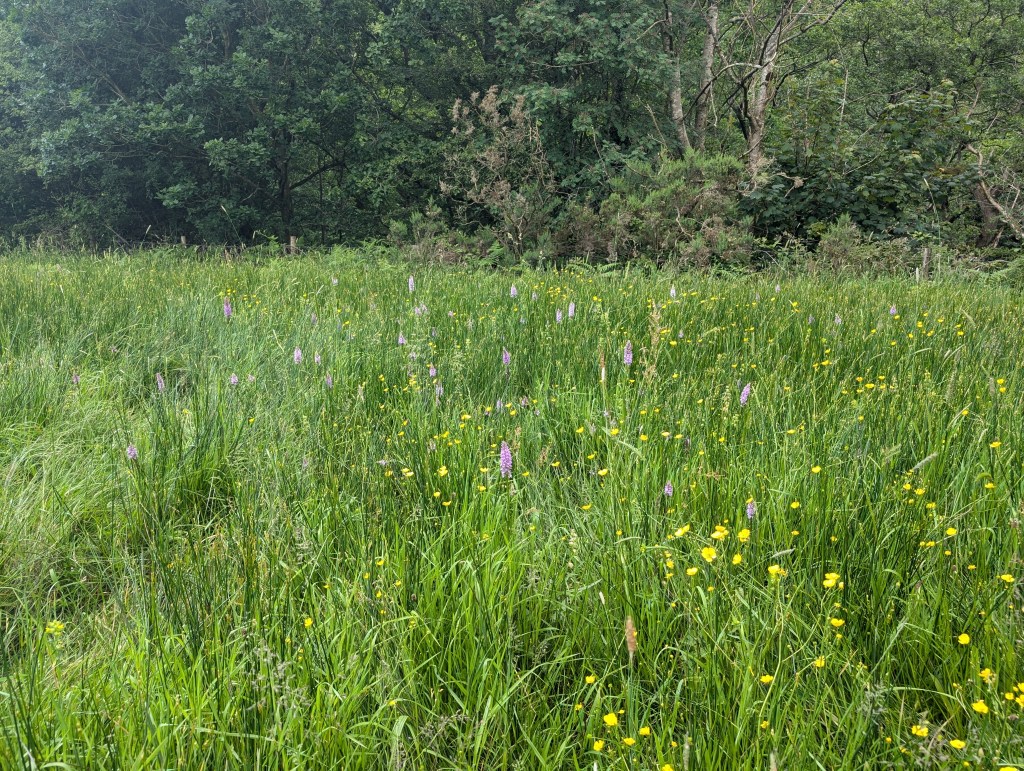
Of course, there was also time for a little stroll to see some other parts of Tegg’s Nose, including the lovely current display of orchids!

Our activity on 19 May was to help ranger Martin with the control of bracken on a slope of heathland at Tegg’s Nose Country Park. To reduce the use of chemicals on the site, this was the start of a trial to control the emerging bracken by physical means, i.e. by bashing the young stems with wooden poles (stiles or stales)! Good initial inroads were made, and the activity will continue in the weeks ahead (including by us again, on 23 June). As it was a warm, sunny day, this was energetic work – so a great opportunity for some of the day also to be taken up by Martin taking us on a wildlife walk and sharing his knowledge of the flora and fauna around us (moonwort, adder’s-tongue, pignut, green hairstreak butterfly, wall brown butterfly…).

More volunteers to progress this task on 23 June would be very welcome, so please come along to help us then if you can!

Last Sunday (16 February) we joined Trafford Wildlife at John o’ Jerusalem woodland, near Bowdon – a new location (new to us, that is!)! This is a site which Trafford Wildlife have only in the past several months become involved in looking after; it is a mature woodland, but one which has become overrun with rhododendron. Our task today was to help with the ongoing project of removing the invasive rhododendron, to bring more diversity back to the wood. Thanks to Trafford Wildlife volunteers for the welcome and the interesting introduction to this lovely site!